Department of Pharmacology, University of Minnesota, Minneapolis, MN 55455, USA.
Int Immunopharmacol. 2011 Nov;11(11):1809-15. doi: 10.1016/j.intimp.2011.07.009. Epub 2011 Jul 28.
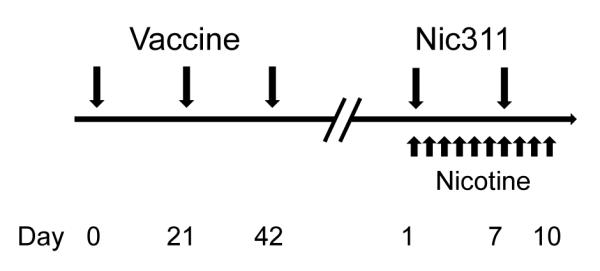
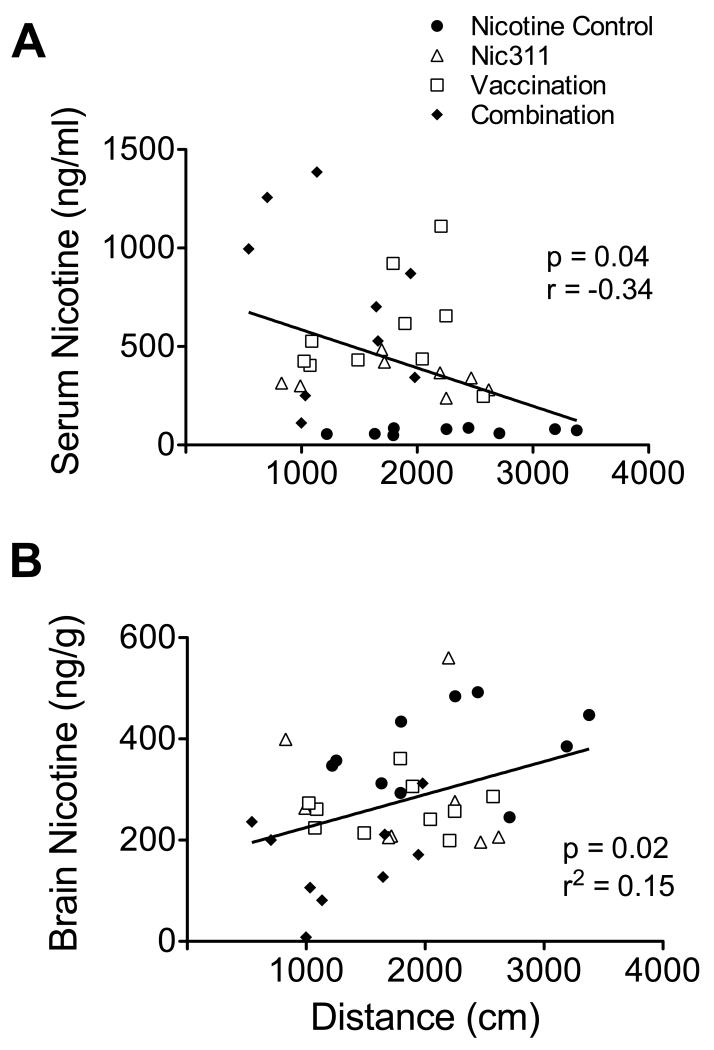
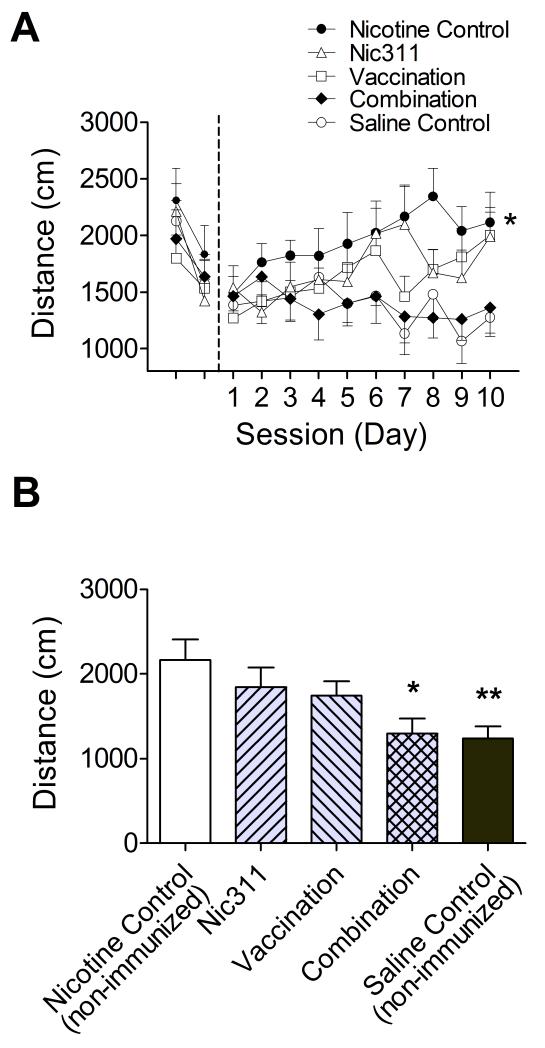
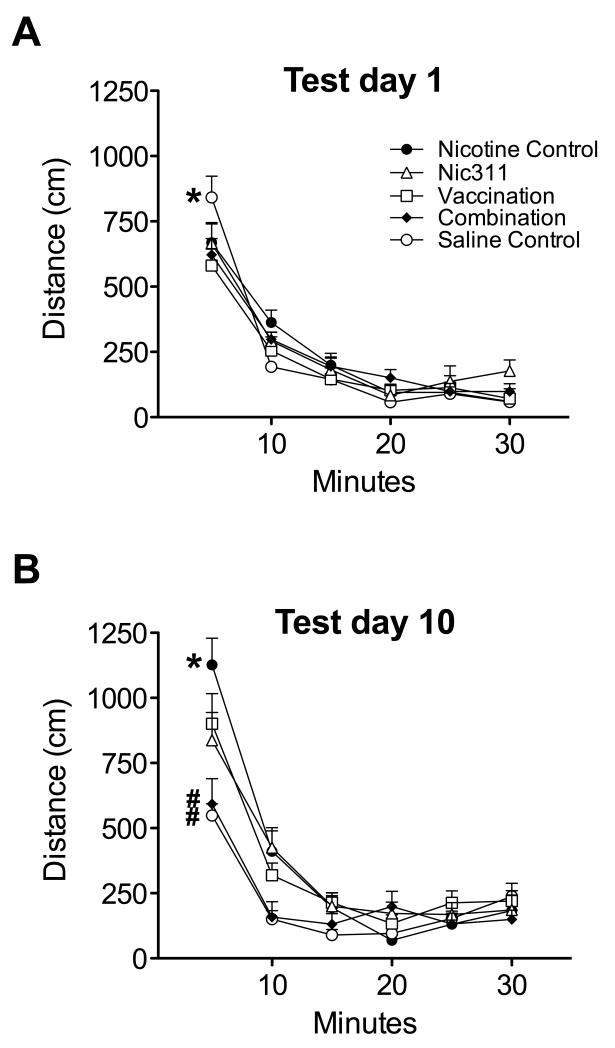
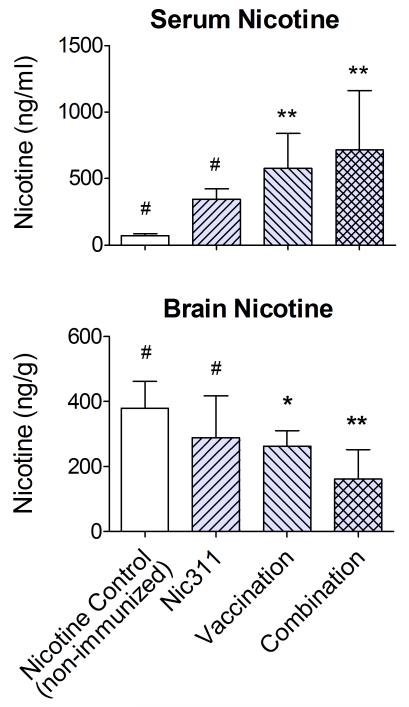
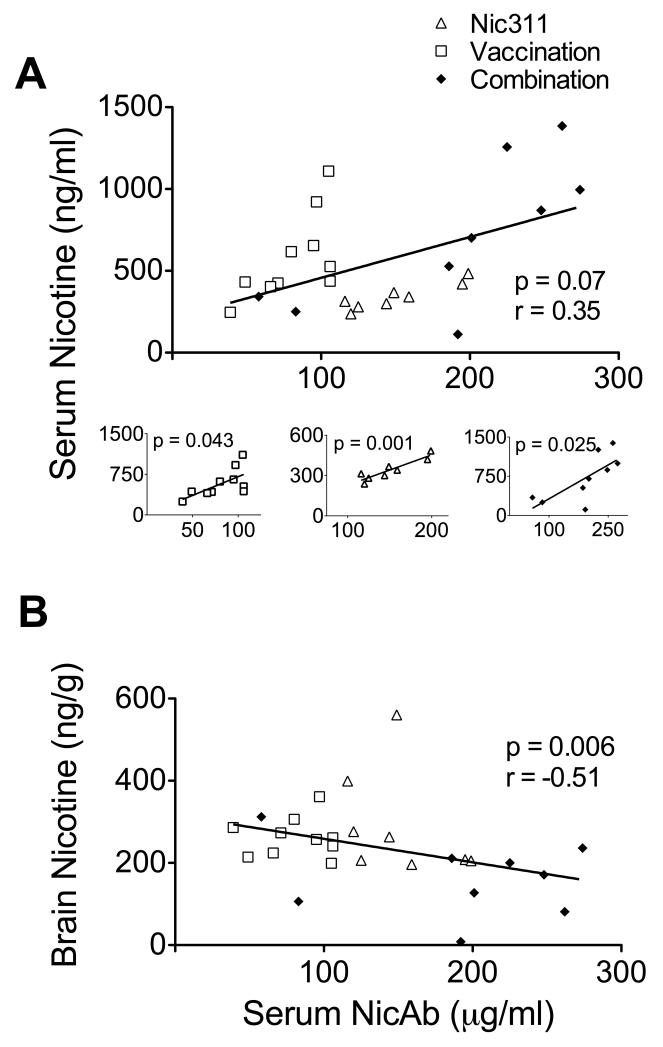
Nicotine vaccines have shown preliminary evidence of efficacy for enhancing smoking cessation rates, but the serum nicotine-specific antibody (NicAb) concentrations produced are highly variable and many subjects do not develop effective levels. As an alternative to vaccination, passive immunization with nicotine-specific monoclonal antibodies could produce more uniform serum NicAb concentrations, but its use is limited by their high cost and shorter elimination half-life. This study investigated supplementing vaccination with monoclonal antibodies in a targeted fashion to increase vaccine efficacy while minimizing the required monoclonal antibody dose. Rats were vaccinated and then given individualized supplemental doses of the nicotine-specific monoclonal antibody Nic311 to achieve a target total serum NicAb concentration known to be effective for blocking locomotor sensitization (LMS) to nicotine. Rats received vaccine, Nic311, both, or neither, followed by 0.3 mg/kg nicotine s.c. for 10 days to produce LMS. Combination immunotherapy completely blocked the development of LMS, while monotherapy with vaccine or Nic311 alone was only minimally effective. Lower brain nicotine levels were associated with reduced locomotor activity averaged over days 7-10. Despite its greater efficacy, combination immunotherapy did not reduce the variability in the resulting total serum NicAb concentrations. Variability in total serum NicAb concentrations was contributed to by both vaccine-generated antibody and by Nic311. These data show that combination immunotherapy, using a Nic311 dose that is by itself only minimally effective, can substantially enhance nicotine vaccine efficacy. However, variability in serum NicAb levels with combination immunotherapy may make translation of this approach challenging.
尼古丁疫苗已初步显示出提高戒烟率的效果,但产生的血清尼古丁特异性抗体 (NicAb) 浓度差异很大,许多受试者无法产生有效的水平。作为疫苗接种的替代方法,尼古丁特异性单克隆抗体的被动免疫可以产生更均匀的血清 NicAb 浓度,但由于其高成本和较短的半衰期,其使用受到限制。本研究通过有针对性地补充单克隆抗体来增强疫苗的功效,同时最小化所需的单克隆抗体剂量。大鼠接种疫苗,然后给予个体化补充剂量的尼古丁特异性单克隆抗体 Nic311,以达到已知有效阻断尼古丁引起的运动敏化 (LMS) 的目标总血清 NicAb 浓度。大鼠接受疫苗、Nic311、两者或两者都不接受,然后接受 0.3mg/kg 皮下尼古丁 10 天以产生 LMS。联合免疫疗法完全阻断了 LMS 的发展,而单独使用疫苗或 Nic311 进行单药治疗的效果则微乎其微。较低的大脑尼古丁水平与第 7-10 天平均运动活性降低有关。尽管联合免疫疗法的效果更好,但它并没有降低总血清 NicAb 浓度的变异性。总血清 NicAb 浓度的变异性归因于疫苗产生的抗体和 Nic311。这些数据表明,使用本身仅具有最小效果的 Nic311 剂量的联合免疫疗法可以显著增强尼古丁疫苗的功效。然而,联合免疫疗法时血清 NicAb 水平的变异性可能使这种方法的转化具有挑战性。