Department of Medical Pathomorphology, Medical University of Bialystok, Bialystok, Poland.
Med Sci Monit. 2011 Aug;17(8):BR216-220. doi: 10.12659/msm.881900.
Astrocytic tumors are the primary brain tumors, which often progress to glioblastoma, a highly malignant neoplasm of the central nervous system. There is much new data regarding to the formation and progression of these tumors; however, glioblastoma remains one of the most fatal neoplasms in humans. The aim of the study was to evaluate the role of c-erbB-2 protein expression in various groups of astrocytic tumors.
MATERIAL/METHODS: 65 cases of astrocytic tumors were divided into 3 groups: diffuse astrocytoma (group I; n=17 cases), anaplastic astrocytoma (group II; n=23 cases) and glioblastoma (group III; n=25 cases). C-erbB-2 protein expression was estimated semiquantitatively on immunohistochemically stained tissue sections using antibodies against c-erbB-2 protein. Statistical analysis was performed in all examined groups.
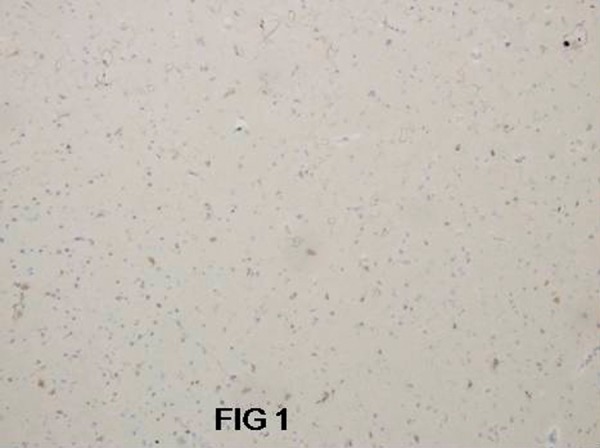
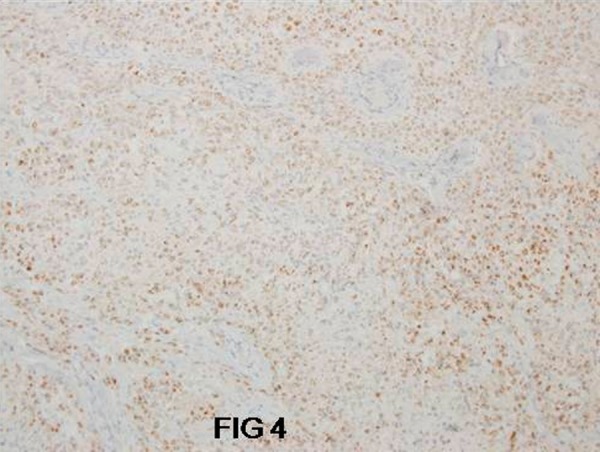
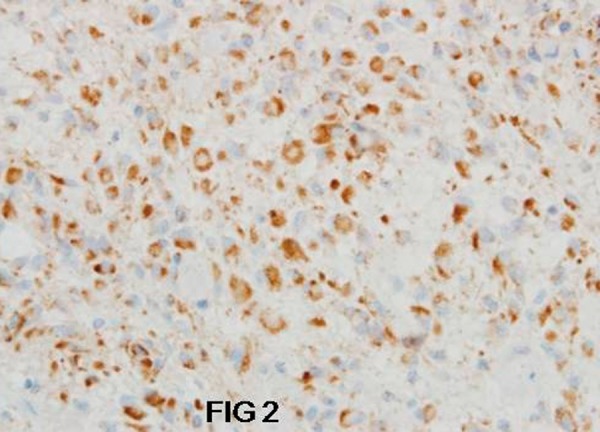
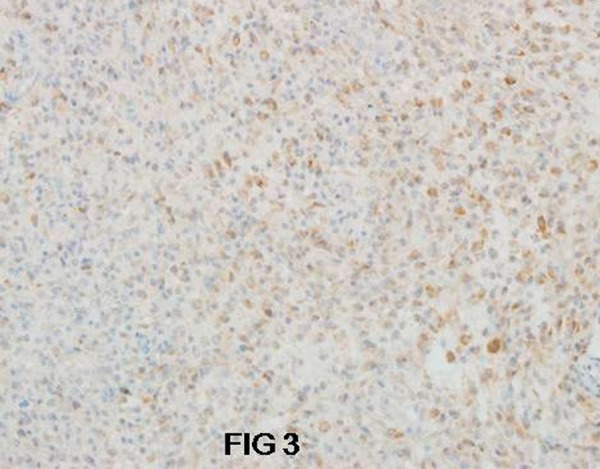
The c-erbB-2 protein expression was observed in 15 out of 17 cases (88.3%) in group I, 22 out of 25 cases (88%) cases in group II, and in 19 out of 23 cases (82.6%) in group III. There were no statistically significant differences between the examined groups. The strongest c-erbB-2 immunoexpression was observed in low grade astrocytomas (diffuse astrocytomas G2); in the glioblastoma group the c-erbB-2 protein expression was weak and 17.4% of cases were negative.
C-erbB-2 protooncogene alteration is an early phenomenon in glial tumor development and progression.
星形细胞瘤是原发性脑肿瘤,常发展为胶质母细胞瘤,这是一种高度恶性的中枢神经系统肿瘤。目前有许多关于这些肿瘤形成和进展的新数据;然而,胶质母细胞瘤仍然是人类最致命的肿瘤之一。本研究旨在评估 c-erbB-2 蛋白表达在不同星形细胞瘤组中的作用。
材料/方法:将 65 例星形细胞瘤分为 3 组:弥漫性星形细胞瘤(I 组;n=17 例)、间变性星形细胞瘤(II 组;n=23 例)和胶质母细胞瘤(III 组;n=25 例)。使用针对 c-erbB-2 蛋白的抗体,通过免疫组织化学染色组织切片对 c-erbB-2 蛋白表达进行半定量评估。对所有检查的组进行统计分析。
在 I 组的 17 例病例(88.3%)中观察到 c-erbB-2 蛋白表达,在 II 组的 25 例病例(88%)中观察到 22 例,在 III 组的 23 例病例(82.6%)中观察到 19 例。各组之间无统计学差异。在低级别星形细胞瘤(弥漫性星形细胞瘤 G2)中观察到最强的 c-erbB-2 免疫表达;在胶质母细胞瘤组中,c-erbB-2 蛋白表达较弱,17.4%的病例为阴性。
c-erbB-2 原癌基因改变是胶质肿瘤发生和发展的早期现象。