BGI-Shenzhen, Shenzhen, People's Republic of China.
Nat Biotechnol. 2011 Jul 31;29(8):735-41. doi: 10.1038/nbt.1932.
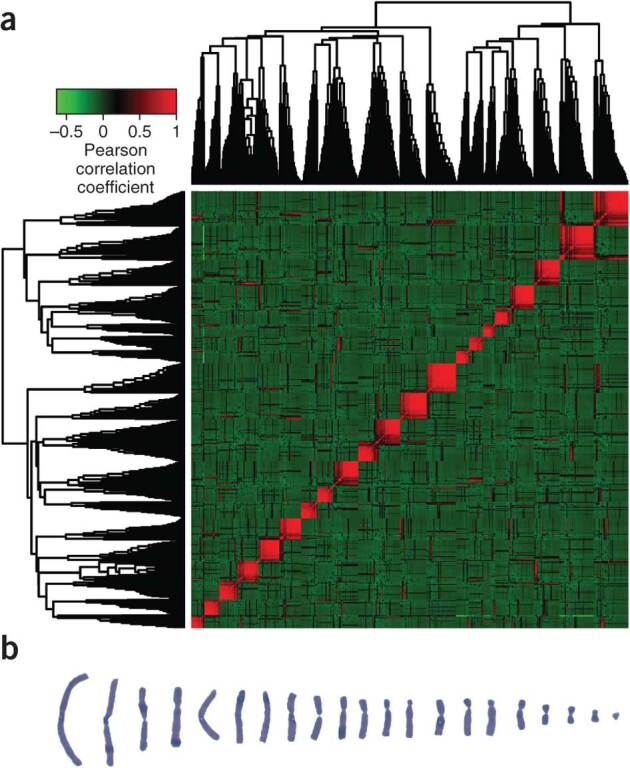
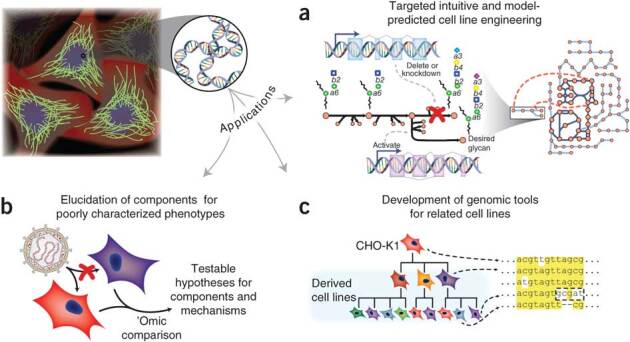
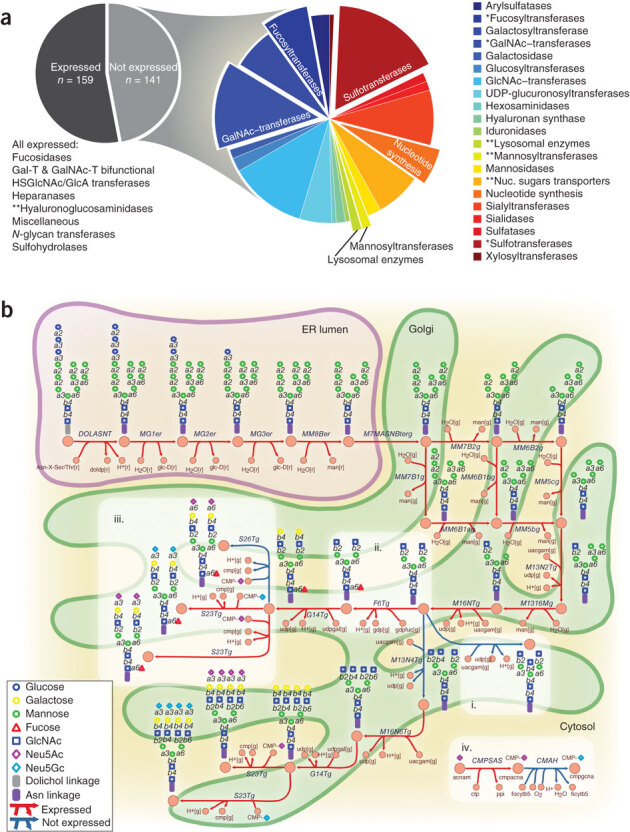
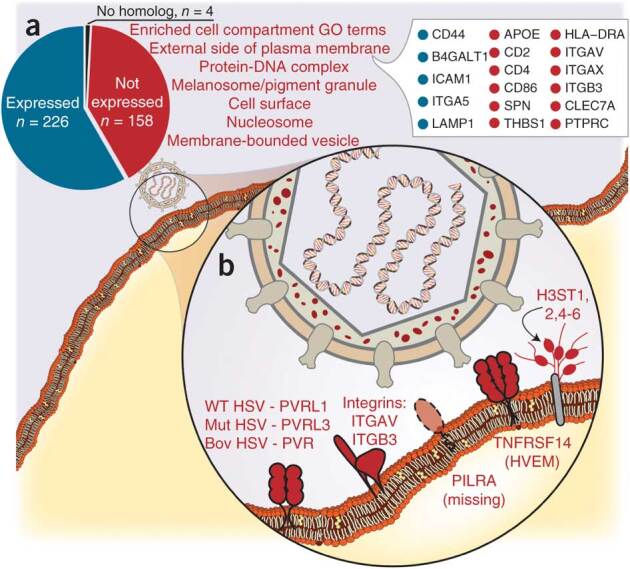
Chinese hamster ovary (CHO)-derived cell lines are the preferred host cells for the production of therapeutic proteins. Here we present a draft genomic sequence of the CHO-K1 ancestral cell line. The assembly comprises 2.45 Gb of genomic sequence, with 24,383 predicted genes. We associate most of the assembled scaffolds with 21 chromosomes isolated by microfluidics to identify chromosomal locations of genes. Furthermore, we investigate genes involved in glycosylation, which affect therapeutic protein quality, and viral susceptibility genes, which are relevant to cell engineering and regulatory concerns. Homologs of most human glycosylation-associated genes are present in the CHO-K1 genome, although 141 of these homologs are not expressed under exponential growth conditions. Many important viral entry genes are also present in the genome but not expressed, which may explain the unusual viral resistance property of CHO cell lines. We discuss how the availability of this genome sequence may facilitate genome-scale science for the optimization of biopharmaceutical protein production.
中国仓鼠卵巢(CHO)衍生细胞系是生产治疗性蛋白的首选宿主细胞。在这里,我们呈现 CHO-K1 始祖细胞系的基因组草图序列。该组装包含 24.583 亿碱基对的基因组序列,预测有 24383 个基因。我们将大多数组装的支架与通过微流控技术分离的 21 条染色体相关联,以确定基因在染色体上的位置。此外,我们还研究了与糖基化相关的基因,糖基化会影响治疗性蛋白的质量,以及病毒易感性基因,这些基因与细胞工程和监管问题有关。CHO-K1 基因组中存在大多数与人类糖基化相关的基因的同源物,尽管其中 141 个同源物在指数生长条件下不表达。许多重要的病毒进入基因也存在于基因组中,但不表达,这可能解释了 CHO 细胞系异常的抗病毒能力。我们讨论了这个基因组序列的可用性如何促进用于优化生物制药蛋白生产的基于基因组规模的科学研究。