Department of Pathology, University of California San Francisco, San Francisco, CA 94143-0511, USA.
Cytokine. 2011 Oct;56(1):116-21. doi: 10.1016/j.cyto.2011.07.005. Epub 2011 Jul 31.
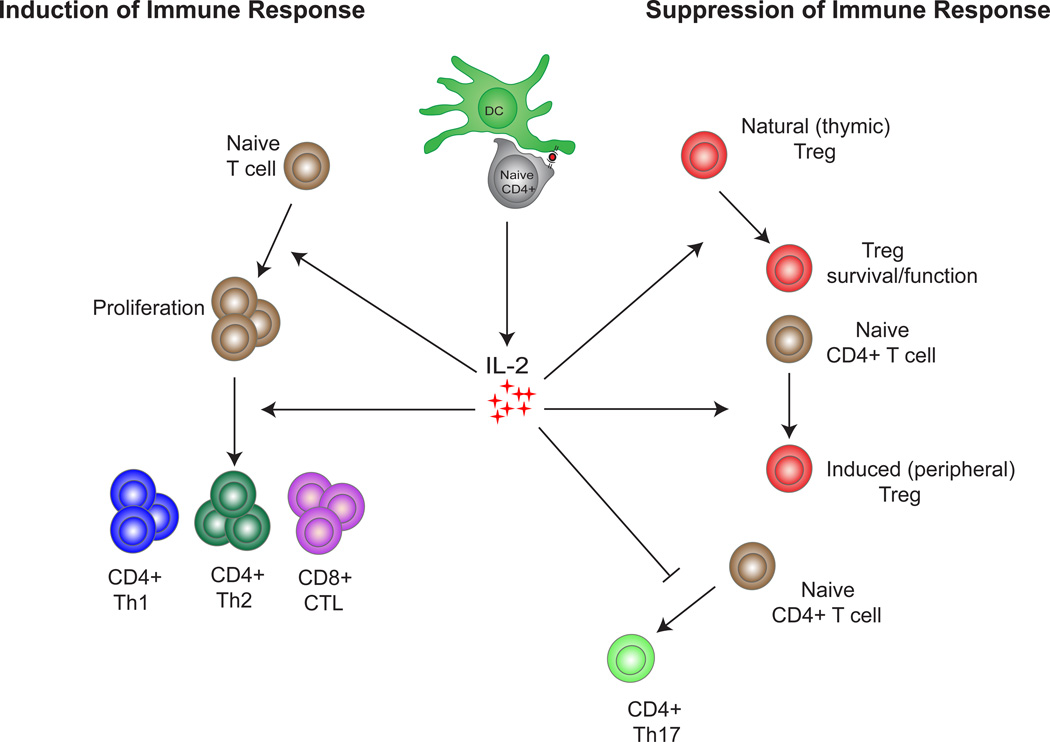
Regulation of the magnitude and quality of immune responses is dependent on the integration of multiple signals which typically operate through positive and negative feedback loops. Cytokines that promote or limit T cell expansion and differentiation are often both present in the complex lymphoid environment where antigen-initiated T cell responses take place. The nature and strength of the cytokine signal received by the responding cell, as well as by surrounding regulatory cells, will determine the extent of clonal expansion and the progression towards effector and memory cell differentiation. The mechanisms that determine how much cytokine is produced and how cytokine activities are controlled by receptor expression and intracellular regulators of signaling are not fully understood. Here we discuss the opposing functions of two members of the common receptor gamma chain (γc) cytokines, IL-2 and IL-7 in the generation and regulation of immune responses in vivo.
免疫应答的幅度和质量的调节依赖于多个信号的整合,这些信号通常通过正反馈和负反馈环起作用。促进或限制 T 细胞扩增和分化的细胞因子通常都存在于复杂的淋巴环境中,抗原引发的 T 细胞反应就在这里发生。应答细胞以及周围调节细胞接收到的细胞因子信号的性质和强度将决定克隆扩增的程度以及向效应细胞和记忆细胞分化的进展。决定细胞因子产生多少以及细胞因子活性如何通过受体表达和信号转导的细胞内调节剂来控制的机制尚未完全阐明。在这里,我们讨论了共同受体 γ 链 (γc) 细胞因子的两个成员,IL-2 和 IL-7 在体内免疫应答的产生和调节中的相反功能。