Department of Social Sciences, Division of Clinical Psychology and Neuropsychology, Institute of Psychology, University of Gdańsk, Bażyńskiego 4, 80-952 Gdańsk, Poland.
Neuropsychol Rev. 2011 Sep;21(3):271-87. doi: 10.1007/s11065-011-9175-9. Epub 2011 Aug 2.
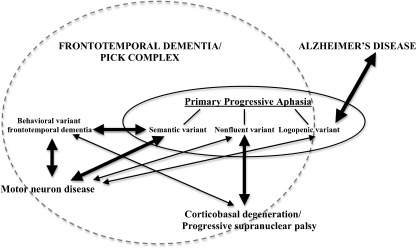
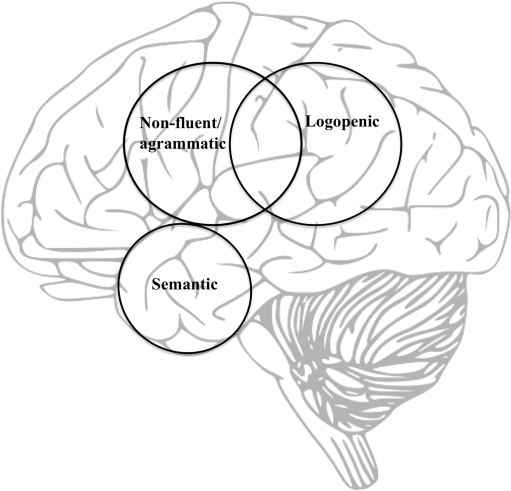
Primary progressive aphasia (PPA), typically resulting from a neurodegenerative disease such as frontotemporal dementia/Pick Complex or Alzheimer's disease, is a heterogeneous clinical condition characterized by a progressive loss of specific language functions with initial sparing of other cognitive domains. Based on the constellation of symptoms, PPA has been classified into a nonfluent, semantic, or logopenic variant. This review of the literature aims to characterize the speech and language impairment, cognition, neuroimaging, pathology, genetics, and epidemiology associated with each of these variants. Some therapeutic recommendations, theoretical implications, and directions for future research have been also provided.
原发性进行性失语症(PPA)通常是由神经退行性疾病引起的,如额颞叶痴呆/皮克复合体或阿尔茨海默病,是一种异质性临床病症,其特征是特定语言功能进行性丧失,而其他认知领域最初不受影响。根据症状组合,PPA 已分为非流利型、语义型或流畅性言语障碍型。对这些变体相关的言语和语言障碍、认知、神经影像学、病理学、遗传学和流行病学进行文献综述。还提供了一些治疗建议、理论意义和未来研究方向。