Justus-Liebig-University c/o NeuroCode AG, Sportparkstr, 9, 35578 Wetzlar, Germany.
BMC Psychiatry. 2011 Aug 2;11:123. doi: 10.1186/1471-244X-11-123.
Psychiatric patients often suffer from stress, anxiety and depression. Various plant extracts are known to fight stress (valerian), anxiety (passion flower) or depression (St. John's wort). NEURAPAS® balance is a mixture of these three extracts and has been designed to cover this complex of psychiatric conditions. The study was initiated to quantitatively assess the effect of this combination on brain electric activity.
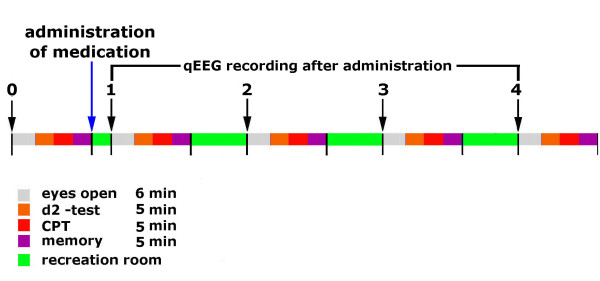
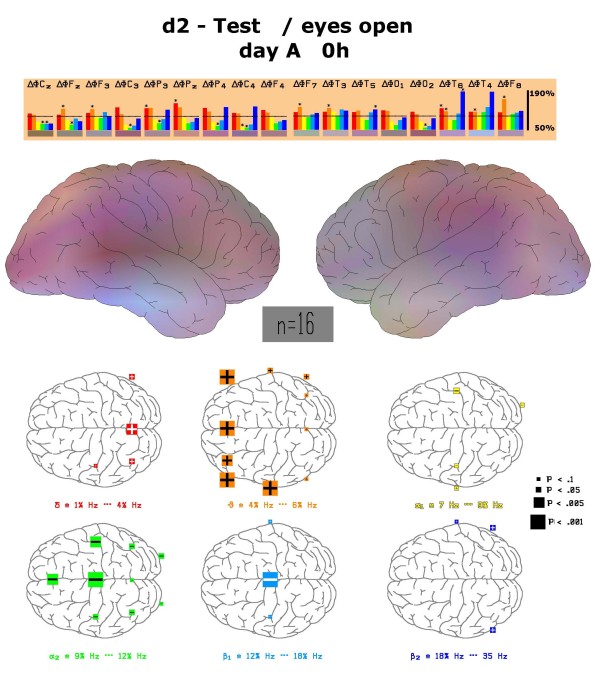
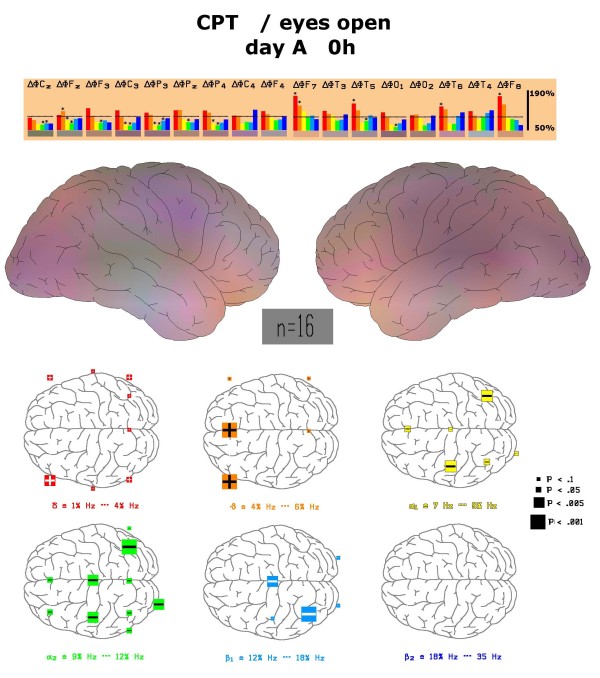
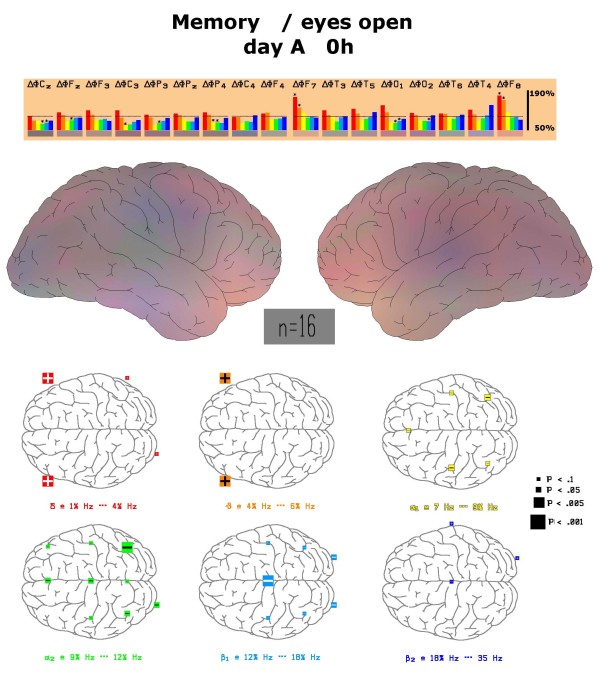
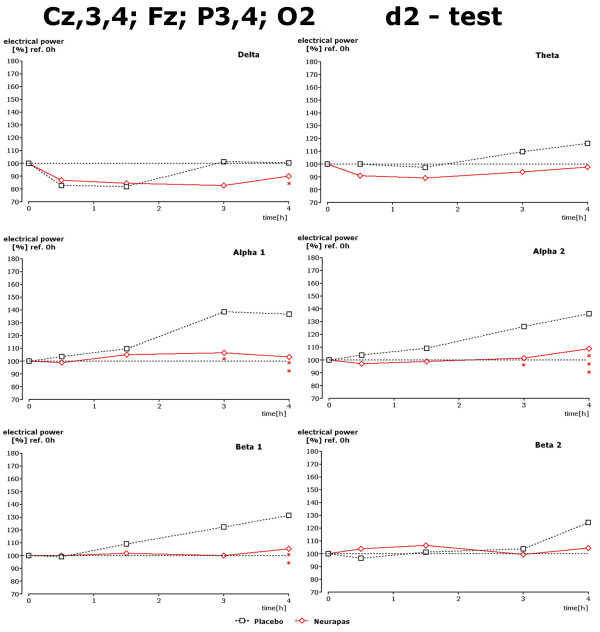
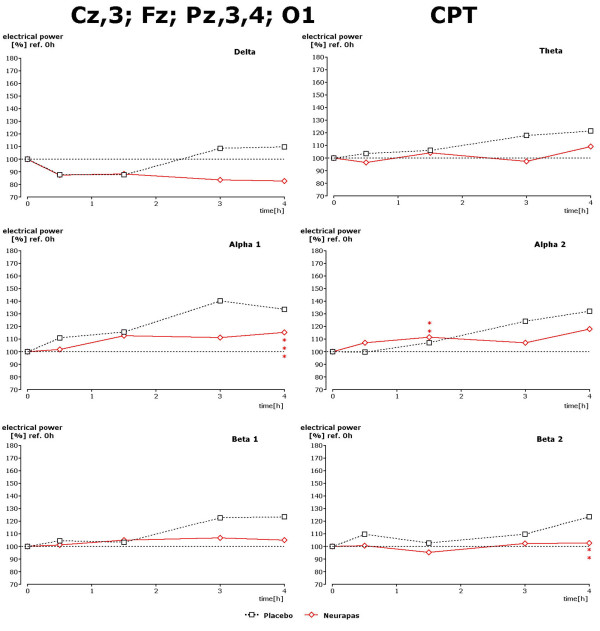
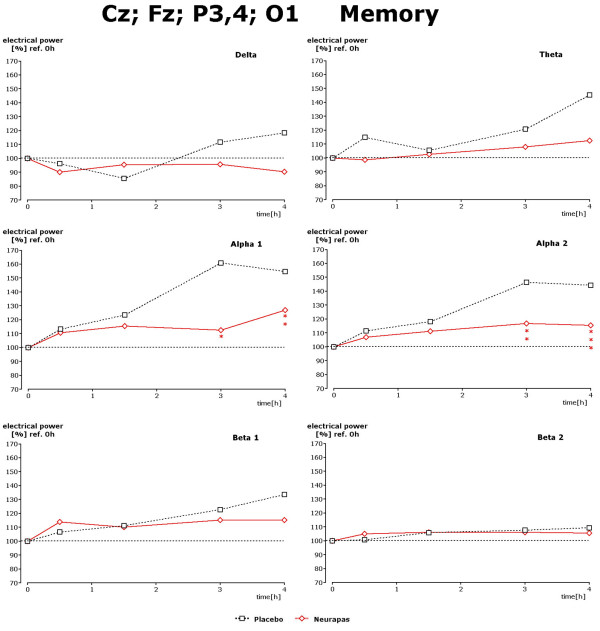
Quantitative electroencephalogram (EEG) current source density (CSD) recording from 16 healthy male and female human volunteers (average age 49 years) was used in a randomized, placebo-controlled cross over study. Recordings were performed 0. 5, 1. 5, 3 and 4 hours after administration of the preparations under the conditions of 6 min eyes open and 5 min d2 concentration test, mathematical calculation test and memory test, respectively. All variables (electric power within 6 frequency ranges at 17 electrode positions) were fed into a linear discriminant analysis (eyes open condition). In the presence of mental load these variables were used to construct brain maps of frequency changes.
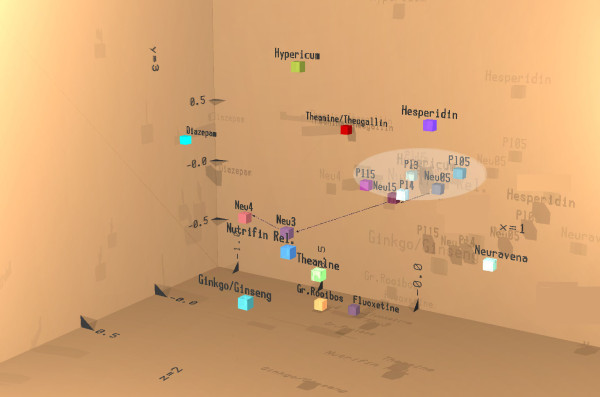
Under the condition of mental load, centro-parietal spectral power remained statistically significantly lower within alpha1, alpha2 and beta1 frequencies in the presence of verum in comparison to placebo. Discriminant analysis revealed a difference to placebo 3 and 4 hours after intake of 6 tablets of NEURAPAS® balance. Data location within the polydimensional space was projected into the area of the effects of sedative and anti-depressive reference drugs tested earlier under identical conditions. Results appeared closer to the effects of fluoxetine than to St. John's wort.
Analysis of the neurophysiological changes following the intake of NEURAPAS® balance revealed a similarity of frequency changes to those of calming and anti-depressive drugs on the EEG without impairment of cognition.
ClinicalTrials.gov: NCT01047605.
精神病人常受压力、焦虑和抑郁的困扰。各种植物提取物被认为能对抗压力(缬草根)、焦虑(西番莲)或抑郁(圣约翰草)。NEURAPAS®平衡是这三种提取物的混合物,旨在治疗这些复杂的精神疾病。本研究旨在定量评估该组合对脑电活动的影响。
使用来自 16 名健康男性和女性志愿者(平均年龄 49 岁)的定量脑电图(EEG)电流源密度(CSD)记录,进行随机、安慰剂对照交叉研究。在 6 分钟睁眼和 5 分钟 d2 浓度测试、数学计算测试和记忆测试条件下,分别在给药后 0.5、1.5、3 和 4 小时记录。所有变量(17 个电极位置的 6 个频率范围内的电功率)均输入线性判别分析(睁眼条件)。在存在精神负荷的情况下,使用这些变量构建频率变化的脑图。
在精神负荷条件下,与安慰剂相比,真药存在时,alpha1、alpha2 和 beta1 频率范围内的中央-顶叶光谱功率仍然具有统计学显著降低。判别分析显示,与安慰剂相比,在摄入 6 片 NEURAPAS®平衡后 3 小时和 4 小时有差异。数据在多维空间中的位置被投影到在相同条件下测试的镇静和抗抑郁参考药物的作用区域。结果更接近氟西汀的作用,而不是圣约翰草。
分析摄入 NEURAPAS®平衡后的神经生理变化表明,在不损害认知的情况下,EEG 上的频率变化与镇静和抗抑郁药物相似。
ClinicalTrials.gov:NCT01047605。