GlaxoSmithKline Biologicals, Wavre, Belgium.
Malar J. 2011 Aug 4;10:221. doi: 10.1186/1475-2875-10-221.
An effective malaria vaccine, deployed in conjunction with other malaria interventions, is likely to substantially reduce the malaria burden. Efficacy against severe malaria will be a key driver for decisions on implementation. An initial study of an RTS, S vaccine candidate showed promising efficacy against severe malaria in children in Mozambique. Further evidence of its protective efficacy will be gained in a pivotal, multi-centre, phase III study. This paper describes the case definitions of severe malaria used in this study and the programme for standardized assessment of severe malaria according to the case definition.
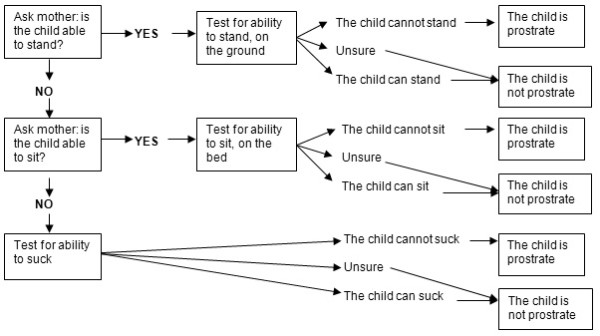
Case definitions of severe malaria were developed from a literature review and a consensus meeting of expert consultants and the RTS, S Clinical Trial Partnership Committee, in collaboration with the World Health Organization and the Malaria Clinical Trials Alliance. The same groups, with input from an Independent Data Monitoring Committee, developed and implemented a programme for standardized data collection.The case definitions developed reflect the typical presentations of severe malaria in African hospitals. Markers of disease severity were chosen on the basis of their association with poor outcome, occurrence in a significant proportion of cases and on an ability to standardize their measurement across research centres. For the primary case definition, one or more clinical and/or laboratory markers of disease severity have to be present, four major co-morbidities (pneumonia, meningitis, bacteraemia or gastroenteritis with severe dehydration) are excluded, and a Plasmodium falciparum parasite density threshold is introduced, in order to maximize the specificity of the case definition. Secondary case definitions allow inclusion of co-morbidities and/or allow for the presence of parasitaemia at any density. The programmatic implementation of standardized case assessment included a clinical algorithm for evaluating seriously sick children, improvements to care delivery and a robust training and evaluation programme for clinicians.
The case definition developed for the pivotal phase III RTS, S vaccine study is consistent with WHO recommendations, is locally applicable and appropriately balances sensitivity and specificity in the diagnosis of severe malaria. Processes set up to standardize severe malaria data collection will allow robust assessment of the efficacy of the RTS, S vaccine against severe malaria, strengthen local capacity and benefit patient care for subjects in the trial.
Clinicaltrials.gov NCT00866619.
有效的疟疾疫苗与其他疟疾干预措施结合使用,可能会大大降低疟疾负担。疫苗对重症疟疾的疗效将是实施决策的关键驱动因素。一项 RTS,S 候选疫苗的初步研究表明,该疫苗在莫桑比克儿童中对重症疟疾有良好的疗效。在一项关键的、多中心、III 期研究中,将获得更多关于其保护疗效的证据。本文介绍了该研究中使用的重症疟疾病例定义,以及根据病例定义进行重症疟疾标准化评估的方案。
重症疟疾的病例定义是通过文献回顾和专家顾问共识会议以及 RTS,S 临床试验合作组与世界卫生组织和疟疾临床试验联盟合作制定的。同一组专家在独立数据监测委员会的意见的基础上,制定并实施了标准化数据收集方案。制定的病例定义反映了非洲医院重症疟疾的典型表现。选择疾病严重程度的标志物是基于它们与不良结局的相关性、在大量病例中的发生情况以及在研究中心之间标准化测量的能力。对于主要病例定义,必须存在一个或多个临床和/或实验室疾病严重程度标志物,排除四种主要合并症(肺炎、脑膜炎、菌血症或伴有严重脱水的胃肠炎),并引入疟原虫密度阈值,以最大程度提高病例定义的特异性。次要病例定义允许合并症的存在,或允许任何密度的寄生虫血症的存在。标准化病例评估的方案实施包括用于评估重病儿童的临床算法、改善护理服务以及为临床医生提供强大的培训和评估计划。
为关键的 III 期 RTS,S 疫苗研究制定的病例定义符合世界卫生组织的建议,具有本地适用性,并在诊断重症疟疾时适当平衡了敏感性和特异性。为标准化重症疟疾数据收集而建立的流程将能够对 RTS,S 疫苗预防重症疟疾的疗效进行强有力的评估,加强当地能力,并使试验中的患者受益。
Clinicaltrials.gov NCT00866619。