Ward Jeremy L, Harting Matthew T, Cox Charles S, Mercer David W
Department of Surgery, New York University Langone Medical Center, New York, New York 10016, USA.
J Trauma. 2011 Jun;70(6):1471-9. doi: 10.1097/TA.0b013e31821c38bd.
Endotoxemia from lipopolysaccharide (LPS) induces systemic cytokine production, whereas traumatic brain injury (TBI) increases intracerebral cytokine production. In anesthetic doses, ketamine has potent anti-inflammatory properties. However, its anti-inflammatory effects at subanesthetic doses and its effects on TBI-induced inflammation have not been fully investigated. We hypothesized that ketamine would attenuate both LPS- and TBI-induced inflammatory responses.
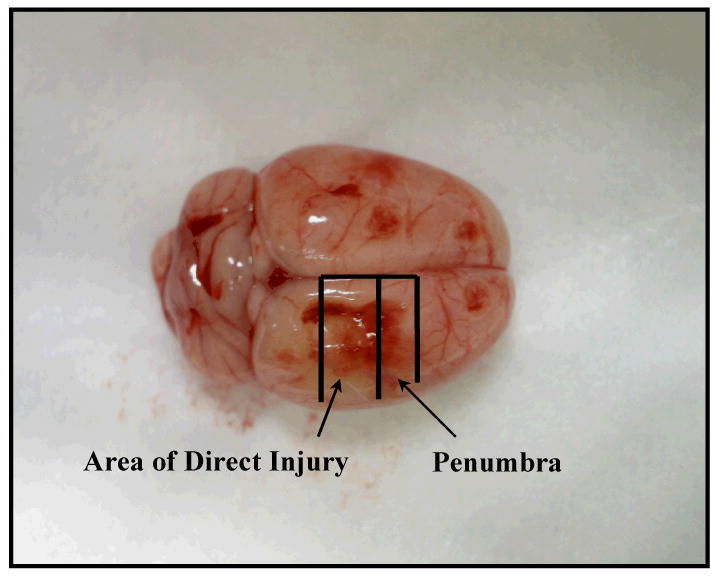
Male rats received intraperitoneal (i.p.) ketamine (70 mg/kg, 7 mg/kg, or 1 mg/kg) or saline 1 hour before LPS (20 mg/kg i.p.) or saline. Five hours after LPS, rats were killed. Serum was collected for cytokine analysis. In other experiments, male rats were given ketamine (7 mg/kg i.p.) or saline 1 hour before induction of TBI with controlled cortical impact (or sham). One hour and 6 hours after injury, brain was extracted for analysis of cerebral edema and cytokine production.
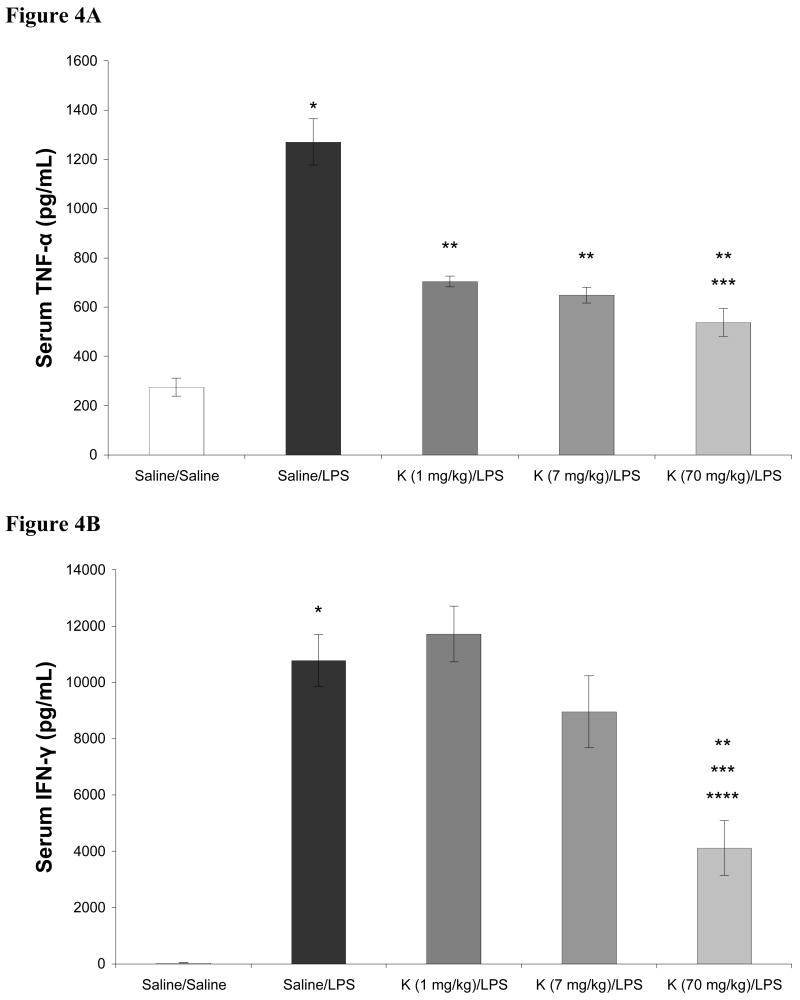
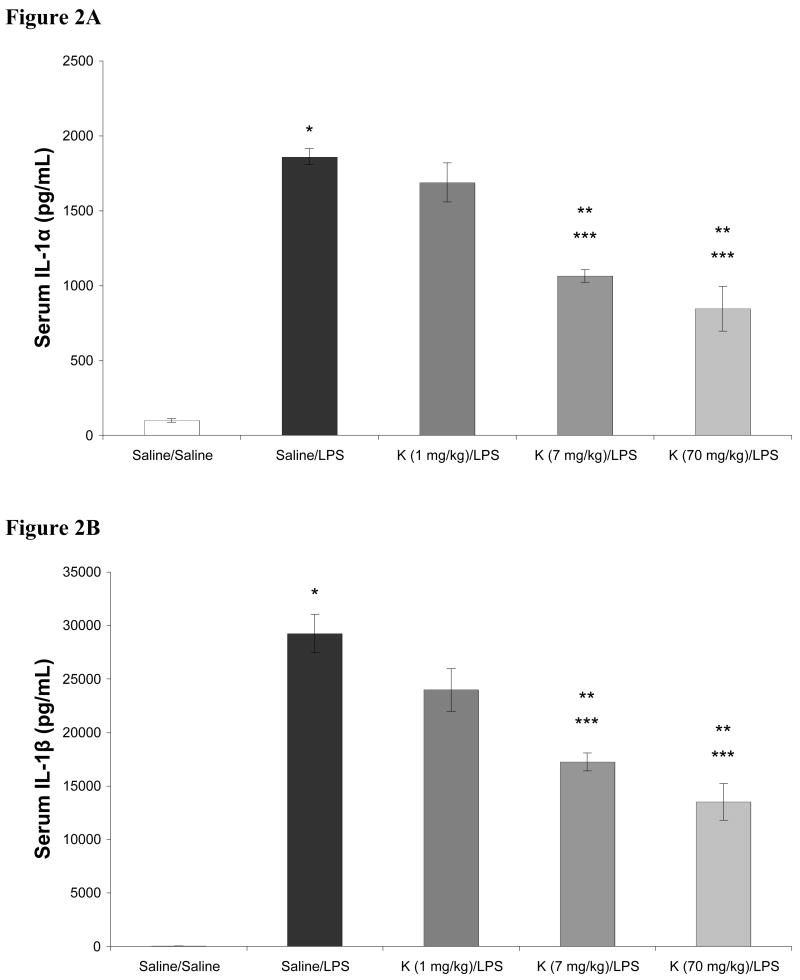
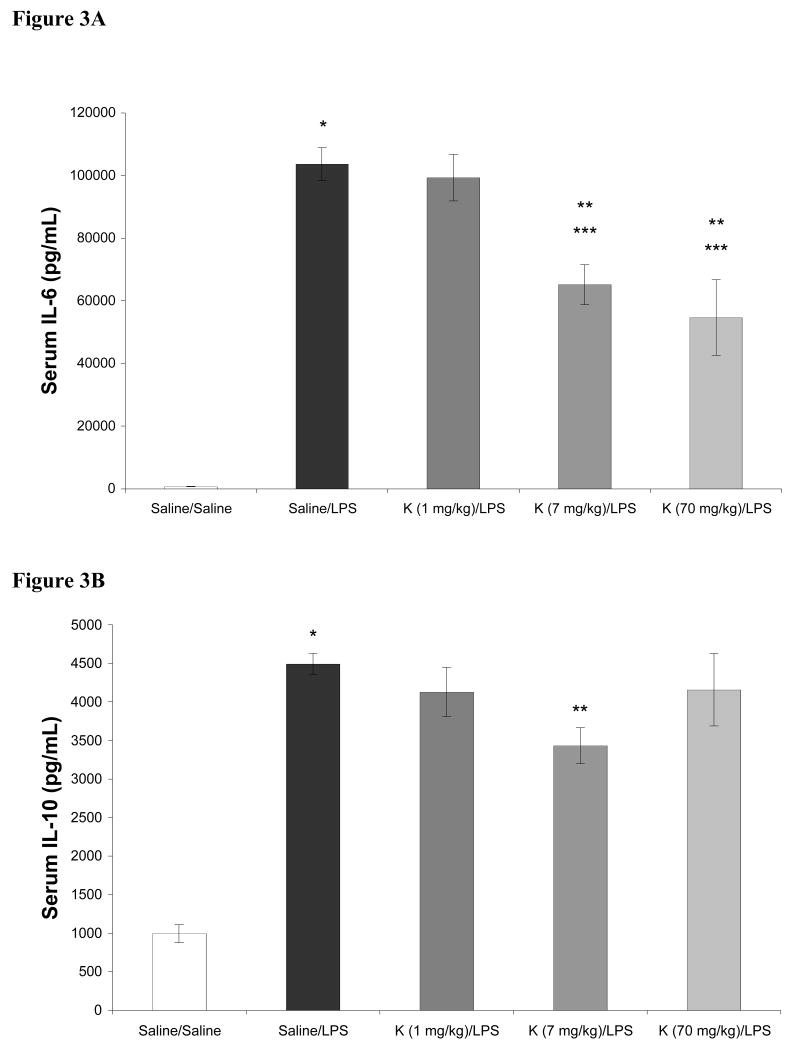
LPS increased the serum concentrations of interleukin (IL)-1α, IL-1β, IL-6, IL-10, tumor necrosis factor-α, and interferon-γ. Ketamine dose dependently attenuated these changes. TBI caused cerebral edema and increased concentrations of cerebral IL-1α, IL-1β, IL-6, IL-10, and tumor necrosis factor-α. However, ketamine had minimal effect on TBI-induced inflammation.
Although ketamine did not seem to exert any beneficial effects against TBI in the rat, it did not exacerbate cytokine production or enhance cerebral edema as some studies have suggested.
脂多糖(LPS)引起的内毒素血症可诱导全身细胞因子的产生,而创伤性脑损伤(TBI)会增加脑内细胞因子的产生。在麻醉剂量下,氯胺酮具有强大的抗炎特性。然而,其在亚麻醉剂量下的抗炎作用及其对TBI诱导的炎症的影响尚未得到充分研究。我们假设氯胺酮会减轻LPS和TBI诱导的炎症反应。
雄性大鼠在腹腔注射LPS(20 mg/kg)或生理盐水前1小时腹腔注射氯胺酮(70 mg/kg、7 mg/kg或1 mg/kg)或生理盐水。LPS注射后5小时,处死大鼠。收集血清进行细胞因子分析。在其他实验中,雄性大鼠在通过控制性皮质撞击诱导TBI(或假手术)前1小时腹腔注射氯胺酮(7 mg/kg)或生理盐水。损伤后1小时和6小时,取出大脑分析脑水肿和细胞因子产生情况。
LPS增加了血清中白细胞介素(IL)-1α、IL-1β、IL-6、IL-10、肿瘤坏死因子-α和干扰素-γ的浓度。氯胺酮剂量依赖性地减轻了这些变化。TBI导致脑水肿,并增加了脑内IL-1α、IL-1β、IL-6、IL-10和肿瘤坏死因子-α的浓度。然而,氯胺酮对TBI诱导的炎症影响极小。
尽管氯胺酮似乎对大鼠TBI没有任何有益作用,但它并未像一些研究所表明的那样加剧细胞因子产生或加重脑水肿。