Department of Surgery, Vanderbilt University Medical Center, Nashville, Tennessee, United States of America.
PLoS One. 2011;6(7):e22009. doi: 10.1371/journal.pone.0022009. Epub 2011 Jul 19.
Metallothionein 3 (MT3) maintains intracellular metal homeostasis and protects against reactive oxygen species (ROS)-induced DNA damage. In this study, we investigated the epigenetic alterations and gene expression of the MT3 gene in esophageal adenocarcinomas (EACs).
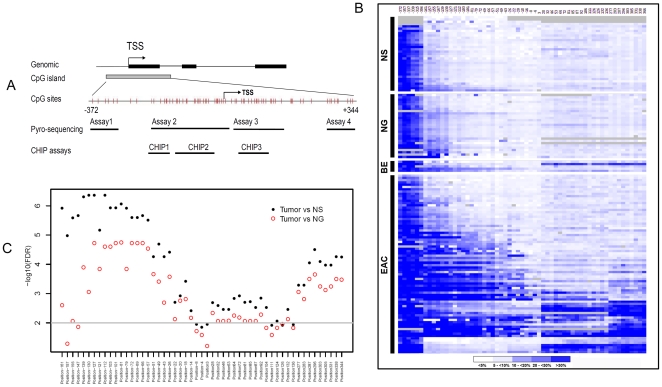
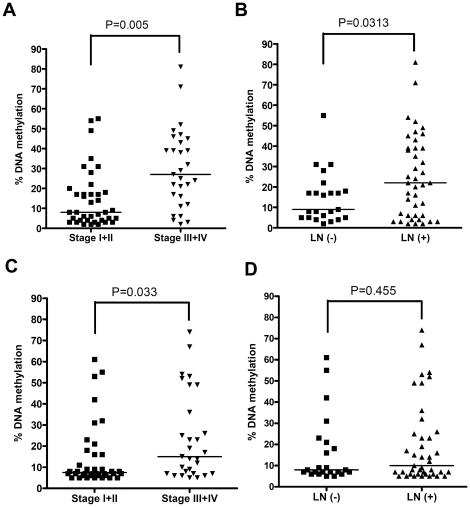
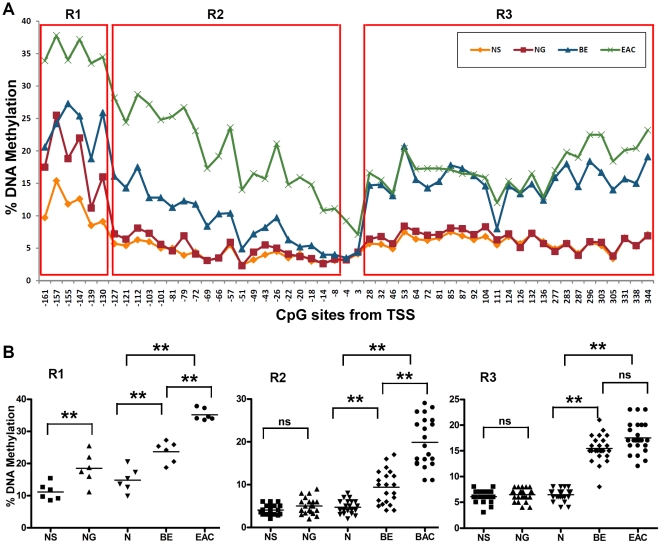
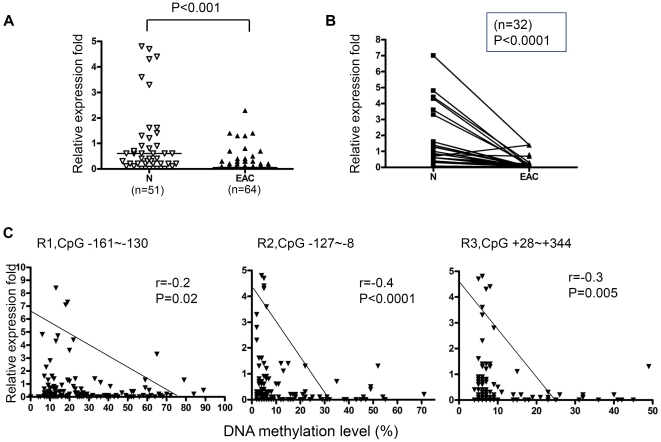
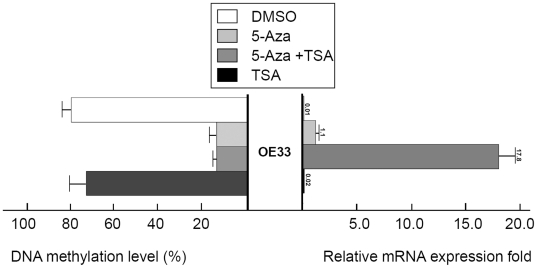
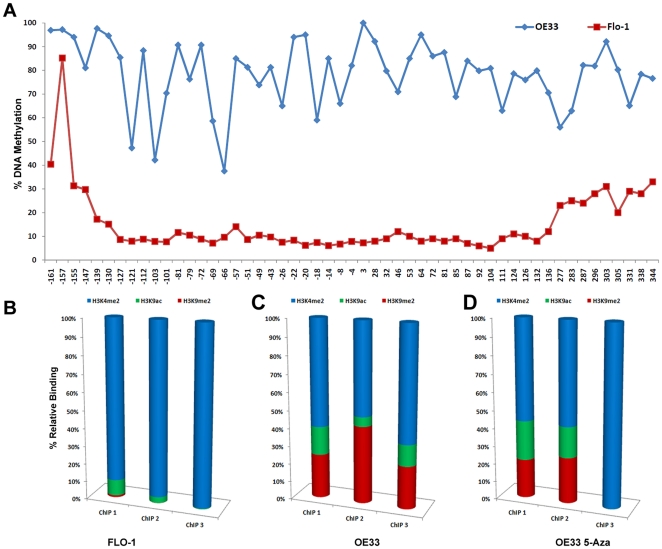
Using quantitative bisulfite pyrosequencing, we detected unique DNA methylation profiles in the MT3 promoter region. The CpG nucleotides from -372 to -306 from the transcription start site (TSS) were highly methylated in tumor (n = 64) and normal samples (n = 51), whereas CpG nucleotides closest to the TSS (-4 and +3) remained unmethylated in all normal and most tumor samples. Conversely, CpG nucleotides in two regions (from -139 to -49 and +296 to +344) were significantly hypermethylated in EACs as compared to normal samples [FDR<0.001, -log10(FDR)>3.0]. The DNA methylation levels from -127 to -8 CpG sites showed the strongest correlation with MT3 gene expression (r = -0.4, P<0.0001). Moreover, the DNA hypermethylation from -127 to -8 CpG sites significantly correlated with advanced tumor stages and lymph node metastasis (P = 0.005 and P = 0.0313, respectively). The ChIP analysis demonstrated a more repressive histone modification (H3K9me2) and less active histone modifications (H3K4me2, H3K9ace) in OE33 cells than in FLO-1 cells; concordant with the presence of higher DNA methylation levels and silencing of MT3 expression in OE33 as compared to FLO-1 cells. Treatment of OE33 cells with 5-Aza-deoxycitidine restored MT3 expression with demethylation of its promoter region and reversal of the histone modifications towards active histone marks.
In summary, EACs are characterized by frequent epigenetic silencing of MT3. The choice of specific regions in the CpG island is a critical step in determining the functional role and prognostic value of DNA methylation in cancer cells.
金属硫蛋白 3(MT3)维持细胞内金属稳态并防止活性氧(ROS)诱导的 DNA 损伤。在这项研究中,我们研究了食管腺癌(EAC)中 MT3 基因的表观遗传改变和基因表达。
使用定量亚硫酸氢盐焦磷酸测序,我们检测到 MT3 启动子区域独特的 DNA 甲基化谱。从转录起始位点(TSS)开始,-372 到-306 位的 CpG 核苷酸在肿瘤(n=64)和正常样本(n=51)中高度甲基化,而最接近 TSS 的 CpG 核苷酸(-4 和+3)在所有正常和大多数肿瘤样本中均未甲基化。相反,与正常样本相比,EAC 中两个区域(-139 到-49 和+296 到+344)的 CpG 核苷酸显著过度甲基化[FDR<0.001,-log10(FDR)>3.0]。-127 到-8 CpG 位点的 DNA 甲基化水平与 MT3 基因表达呈最强相关性(r=-0.4,P<0.0001)。此外,-127 到-8 CpG 位点的 DNA 过度甲基化与肿瘤晚期和淋巴结转移显著相关(P=0.005 和 P=0.0313)。ChIP 分析表明,OE33 细胞中的组蛋白修饰(H3K9me2)更为抑制,活性组蛋白修饰(H3K4me2,H3K9ace)较少;与 OE33 细胞中更高的 DNA 甲基化水平和 MT3 表达沉默一致,而 FLO-1 细胞则相反。用 5-Aza-脱氧胞苷处理 OE33 细胞可恢复 MT3 表达,同时使启动子区域去甲基化,并使组蛋白修饰向活性组蛋白标记逆转。
总之,EAC 的特征是 MT3 的频繁表观遗传沉默。CpG 岛中特定区域的选择是决定癌细胞中 DNA 甲基化的功能作用和预后价值的关键步骤。