Department of Surgery, University of Miami Miller School of Medicine, Miami, FL, USA; Sylvester Comprehensive Cancer Center, University of Miami Miller School of Medicine, Miami, FL, USA.
Department of Surgery, University of Miami Miller School of Medicine, Miami, FL, USA; Sylvester Comprehensive Cancer Center, University of Miami Miller School of Medicine, Miami, FL, USA; Department of Veterans Affairs, Miami Healthcare System, Miami, FL, USA.
Redox Biol. 2021 May;41:101894. doi: 10.1016/j.redox.2021.101894. Epub 2021 Feb 14.
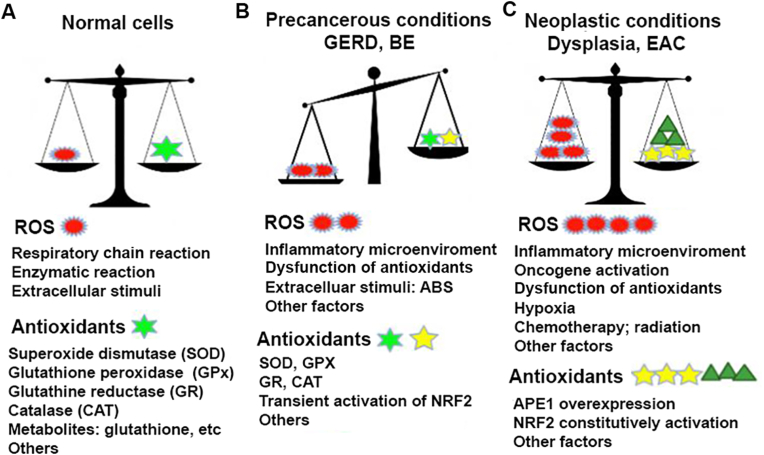
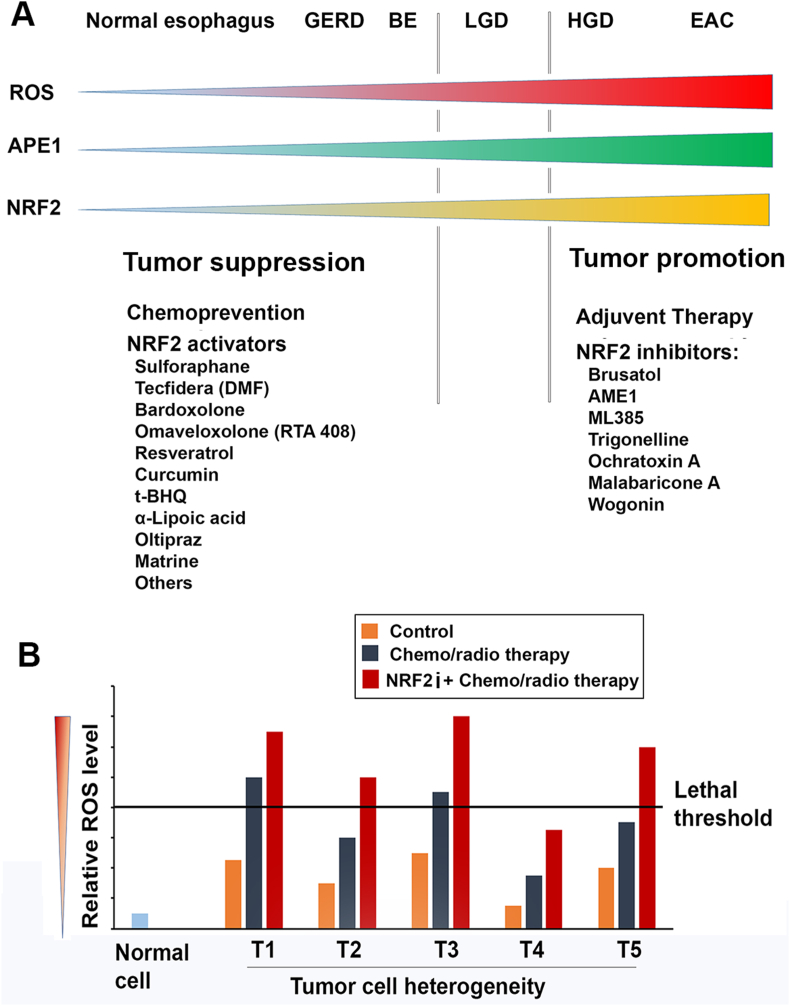
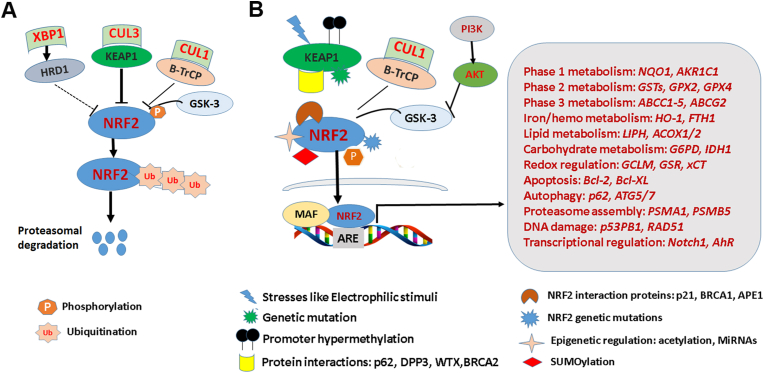
Esophageal adenocarcinoma (EAC) is the dominant form of esophageal malignancies in the United States and other industrialized countries. The incidence of EAC has been rising rapidly during the past four decades. Barrett's esophagus (BE) is the main precancerous condition for EAC, where a metaplastic columnar epithelium replaces normal squamous mucosa of the lower esophagus. The primary risk factor for BE and EAC are chronic gastroesophageal reflux disease (GERD), obesity and smoking. During the BE-dysplasia-EAC sequence, esophageal cells are under a tremendous burden of accumulating reactive oxygen species (ROS) and oxidative stress. While normal cells have intact antioxidant machinery to maintain a balanced anti-tumorigenic physiological response, the antioxidant capacity is compromised in neoplastic cells with a pro-tumorigenic development antioxidant response. The accumulation of ROS, during the neoplastic progression of the GERD-BE-EAC sequence, induces DNA damage, lipid peroxidation and protein oxidation. Neoplastic cells adapt to oxidative stress by developing a pro-tumorigenic antioxidant response that keeps oxidative damage below lethal levels while promoting tumorigenesis, progression, and resistance to therapy. In this review, we will summarize the recent findings on oxidative stress in tumorigenesis in the context of the GERD-BE-EAC process. We will discuss how EAC cells adapt to increased ROS. We will review APE1 and NRF2 signaling mechanisms in the context of EAC. Finally, we will discuss the potential clinical significance of applying antioxidants or NRF2 activators as chemoprevention and NRF2 inhibitors in treating EAC patients.
食管腺癌(EAC)是美国和其他工业化国家中主要的食管恶性肿瘤形式。在过去的四十年中,EAC 的发病率迅速上升。巴雷特食管(BE)是 EAC 的主要癌前病变,其中化生的柱状上皮取代了食管下段的正常鳞状黏膜。BE 和 EAC 的主要危险因素是慢性胃食管反流病(GERD)、肥胖和吸烟。在 BE-异型增生-EAC 序列中,食管细胞承受着大量活性氧(ROS)和氧化应激的累积。虽然正常细胞具有完整的抗氧化机制来维持平衡的抗肿瘤生理反应,但在具有促肿瘤发展的抗氧化反应的肿瘤细胞中,抗氧化能力受损。在 GERD-BE-EAC 序列的肿瘤进展过程中,ROS 的积累会导致 DNA 损伤、脂质过氧化和蛋白质氧化。肿瘤细胞通过产生促肿瘤的抗氧化反应来适应氧化应激,使氧化损伤保持在致死水平以下,同时促进肿瘤发生、进展和对治疗的耐药性。在这篇综述中,我们将总结 GERD-BE-EAC 过程中与肿瘤发生相关的氧化应激的最新发现。我们将讨论 EAC 细胞如何适应增加的 ROS。我们将在 EAC 的背景下讨论 APE1 和 NRF2 信号机制。最后,我们将讨论应用抗氧化剂或 NRF2 激活剂作为化学预防以及 NRF2 抑制剂治疗 EAC 患者的潜在临床意义。