Human Genetics Group, Spanish National Cancer Research Centre (CNIO), Madrid, Spain.
PLoS Genet. 2011 Jul;7(7):e1002182. doi: 10.1371/journal.pgen.1002182. Epub 2011 Jul 28.
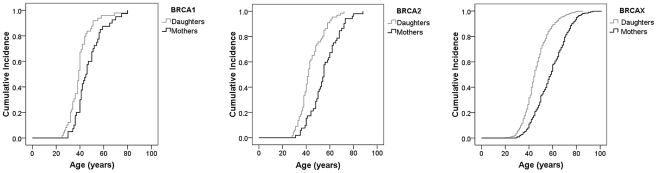
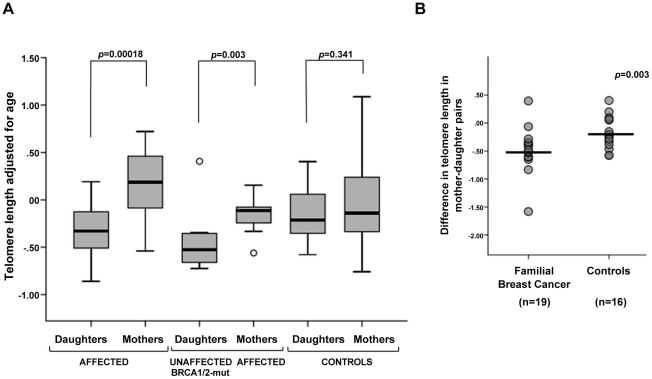
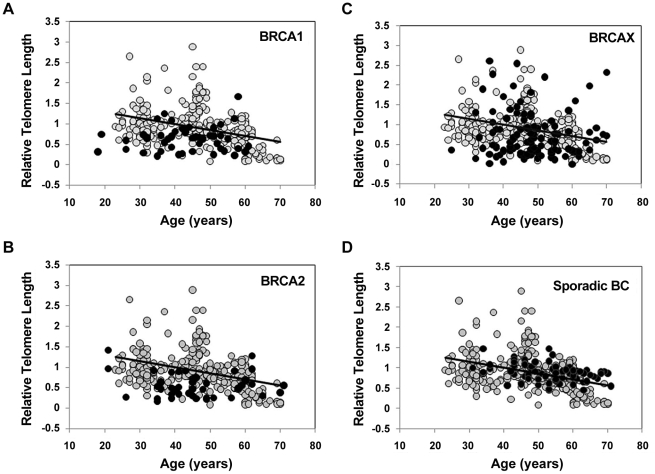
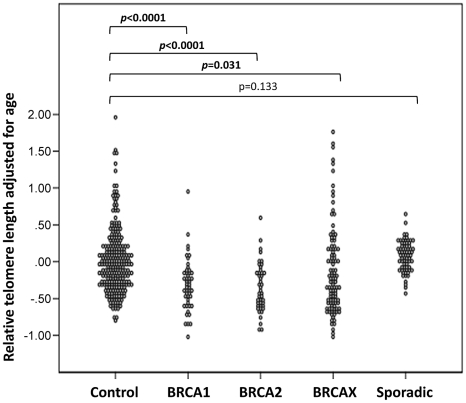
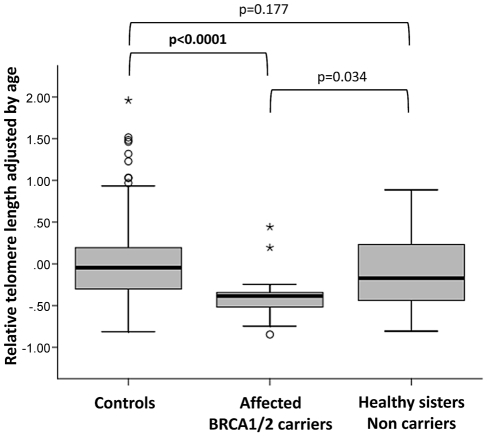
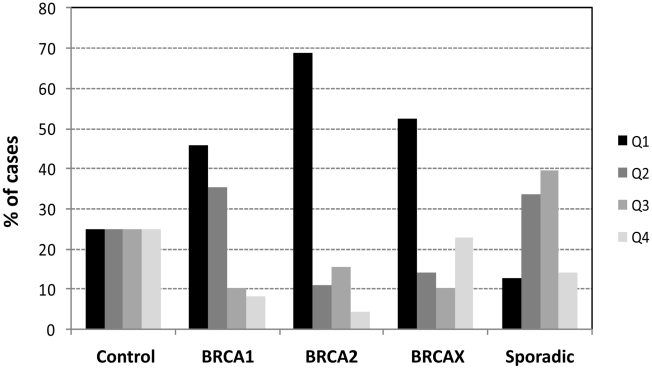
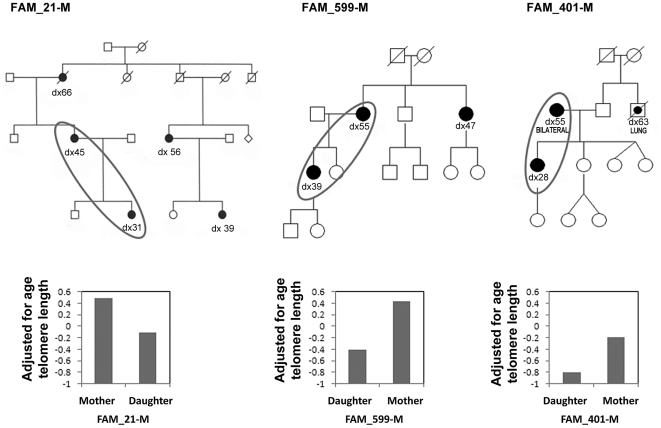
There is increasing evidence suggesting that short telomeres and subsequent genomic instability contribute to malignant transformation. Telomere shortening has been described as a mechanism to explain genetic anticipation in dyskeratosis congenita and Li-Fraumeni syndrome. Since genetic anticipation has been observed in familial breast cancer, we aimed to study telomere length in familial breast cancer patients and hypothesized that genetic defects causing this disease would affect telomere maintenance resulting in shortened telomeres. Here, we first investigated age anticipation in mother-daughter pairs with breast cancer in 623 breast cancer families, classified as BRCA1, BRCA2, and BRCAX. Moreover, we analyzed telomere length in DNA from peripheral blood leukocytes by quantitative PCR in a set of 198 hereditary breast cancer patients, and compared them with 267 control samples and 71 sporadic breast cancer patients. Changes in telomere length in mother-daughter pairs from breast cancer families and controls were also evaluated to address differences through generations. We demonstrated that short telomeres characterize hereditary but not sporadic breast cancer. We have defined a group of BRCAX families with short telomeres, suggesting that telomere maintenance genes might be susceptibility genes for breast cancer. Significantly, we described that progressive telomere shortening is associated with earlier onset of breast cancer in successive generations of affected families. Our results provide evidence that telomere shortening is associated with earlier age of cancer onset in successive generations, suggesting that it might be a mechanism of genetic anticipation in hereditary breast cancer.
越来越多的证据表明,端粒较短和随后的基因组不稳定性导致恶性转化。端粒缩短被描述为一种机制,可以解释先天性角化不良症和 Li-Fraumeni 综合征中的遗传预期。由于家族性乳腺癌中观察到遗传预期,我们旨在研究家族性乳腺癌患者的端粒长度,并假设导致这种疾病的遗传缺陷会影响端粒维持,导致端粒缩短。在这里,我们首先在 623 个乳腺癌家族中研究了患有乳腺癌的母女对的年龄预期,这些家族被分类为 BRCA1、BRCA2 和 BRCAX。此外,我们通过定量 PCR 分析了来自外周血白细胞的 DNA 中的端粒长度,在一组 198 名遗传性乳腺癌患者中,并将其与 267 个对照样本和 71 名散发性乳腺癌患者进行了比较。还评估了乳腺癌家族和对照组中母女对端粒长度的变化,以解决通过世代产生的差异。我们证明,短端粒特征是遗传性而非散发性乳腺癌。我们已经定义了一组具有短端粒的 BRCAX 家族,这表明端粒维持基因可能是乳腺癌的易感基因。重要的是,我们描述了在受影响家族的连续几代中,端粒缩短与乳腺癌发病年龄较早有关。我们的结果提供了证据表明,端粒缩短与连续几代中癌症发病年龄较早有关,这表明它可能是遗传性乳腺癌遗传预期的一种机制。