College of Horticulture, Nanjing Agricultural University, Nanjing City, Jiangsu Province, China.
PLoS One. 2011;6(7):e21259. doi: 10.1371/journal.pone.0021259. Epub 2011 Jul 28.
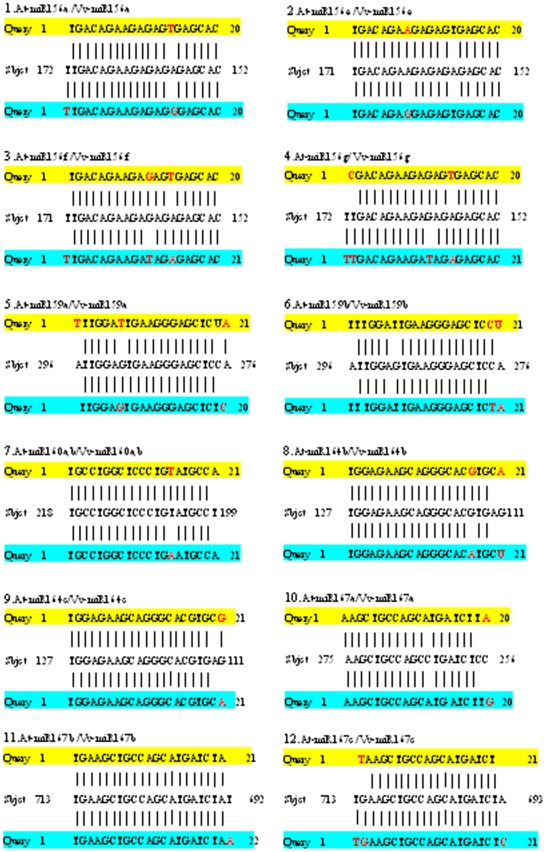
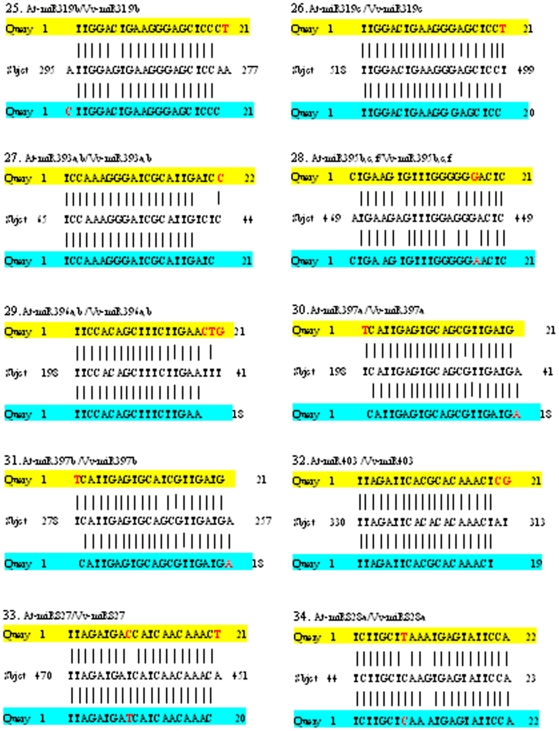
Alignment analysis of the Vv-miRNAs identified from various grapevine cultivars indicates that over 30% orthologous Vv-miRNAs exhibit a 1-3 nucleotide discrepancy only at their ends, suggesting that this sequence discrepancy is not a random event, but might mainly derive from divergence of cultivars. With advantages of miR-RACE technology in determining precise sequences of potential miRNAs from bioinformatics prediction, the precise sequences of vv-miRNAs predicted computationally can be verified with miR-RACE in a different grapevine cultivar. This presents itself as a new approach for large scale discovery of precise miRNAs in different grapevine varieties.
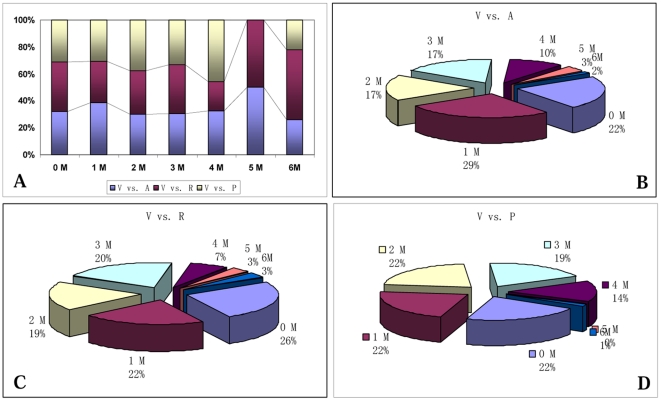
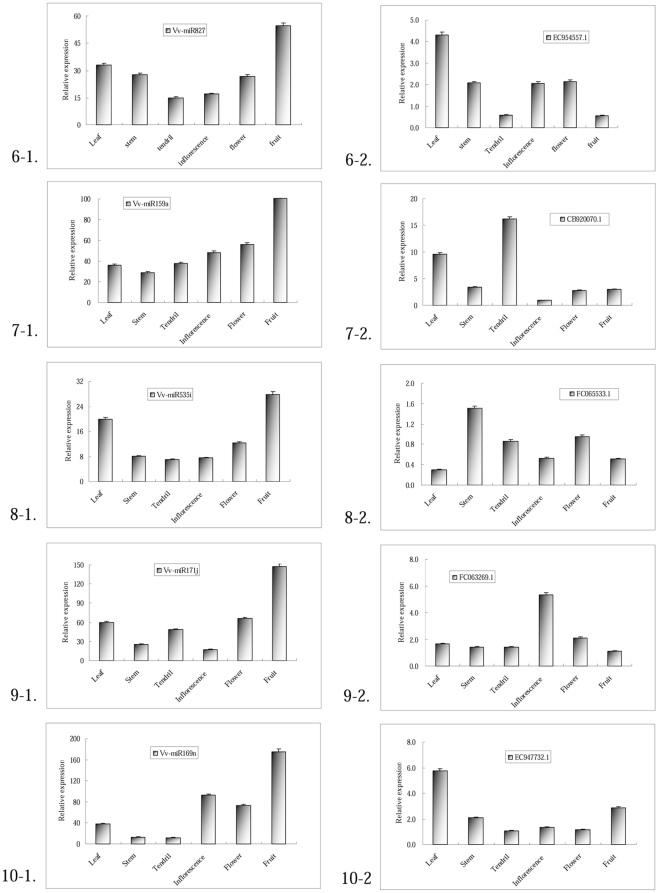
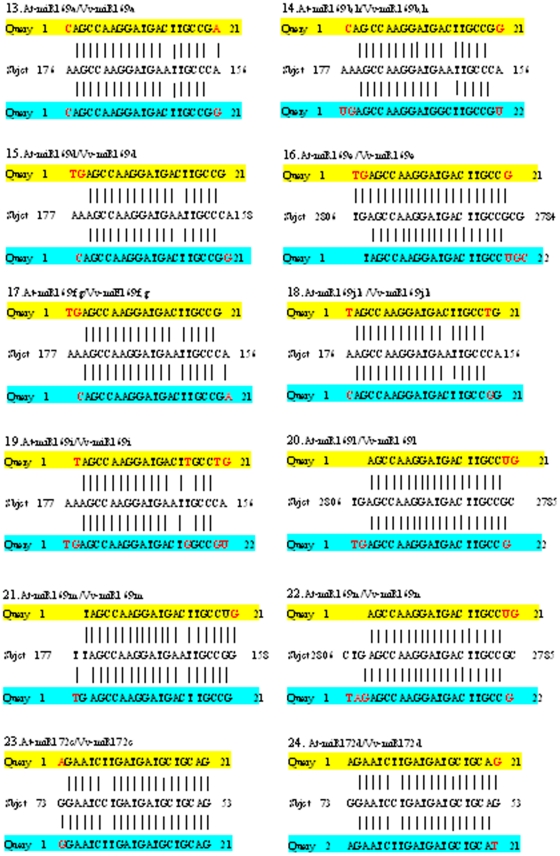
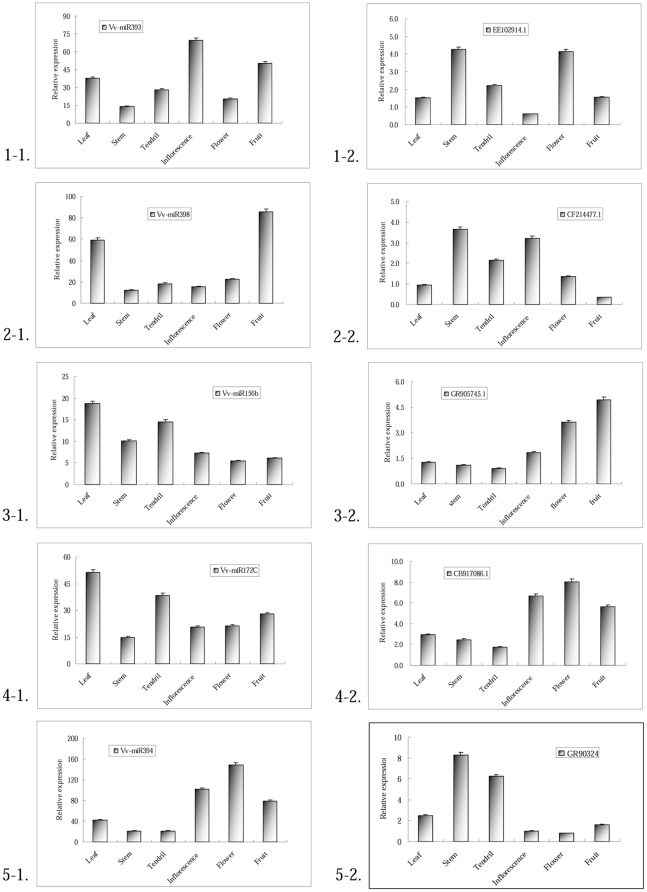
METHODOLOGY/PRINCIPAL FINDINGS: Among 88 unique sequences of Vv-miRNAs from bioinformatics prediction, 83 (96.3%) were successfully validated with MiR-RACE in grapevine cv. 'Summer Black'. All the validated sequences were identical to their corresponding ones obtained from deep sequencing of the small RNA library of 'Summer Black'. Quantitative RT-PCR analysis of the expressions levels of 10 Vv-miRNA/target gene pairs in grapevine tissues showed some negative correlation trends. Finally, comparison of Vv-miRNA sequences with their orthologs in Arabidopsis and study on the influence of divergent bases of the orthologous miRNAs on their targeting patterns in grapevine were also done.
The validation of precise sequences of potential Vv-miRNAs from computational prediction in a different grapevine cultivar can be a new way to identify the orthologous Vv-miRNAs. Nucleotide discrepancy of orthologous Vv-miRNAs from different grapevine cultivars normally does not change their target genes. However, sequence variations of some orthologous miRNAs in grapevine and Arabidopsis can change their targeting patterns. These precise Vv-miRNAs sequences validated in our study could benefit some further study on grapevine functional genomics.
对来自不同葡萄品种的 Vv-miRNAs 的比对分析表明,超过 30%的直系同源 Vv-miRNAs 在其末端只有 1-3 个核苷酸的差异,这表明这种序列差异不是随机事件,而可能主要源于品种的差异。miR-RACE 技术在从生物信息学预测中确定潜在 miRNAs 的精确序列方面具有优势,因此可以在不同的葡萄品种中使用 miR-RACE 来验证通过计算预测的 vv-miRNAs 的精确序列。这为在不同葡萄品种中大规模发现精确 miRNAs 提供了一种新方法。
方法/主要发现:在生物信息学预测的 88 个独特的 Vv-miRNAs 序列中,有 83 个(96.3%)在葡萄品种“Summer Black”中通过 miR-RACE 成功验证。所有验证的序列都与从“Summer Black”的小 RNA 文库深度测序获得的相应序列相同。对 10 个 Vv-miRNA/靶基因对在葡萄组织中的表达水平进行定量 RT-PCR 分析,显示出一些负相关趋势。最后,还比较了 Vv-miRNA 序列与其在拟南芥中的同源物的序列,并研究了同源 miRNA 中差异碱基对其在葡萄中靶向模式的影响。
在不同的葡萄品种中验证潜在 Vv-miRNAs 的精确序列可能是识别直系同源 Vv-miRNAs 的一种新方法。来自不同葡萄品种的直系同源 Vv-miRNAs 的核苷酸差异通常不会改变其靶基因。然而,葡萄和拟南芥中一些直系同源 miRNAs 的序列变异可以改变它们的靶向模式。本研究中验证的这些精确的 Vv-miRNAs 序列可以为葡萄功能基因组学的进一步研究提供帮助。