Yamaguchi Ayako, Wu Miin-Feng, Yang Li, Wu Gang, Poethig R Scott, Wagner Doris
Department of Biology, University of Pennsylvania, Philadelphia, PA 19104-6018, USA.
Dev Cell. 2009 Aug;17(2):268-78. doi: 10.1016/j.devcel.2009.06.007.
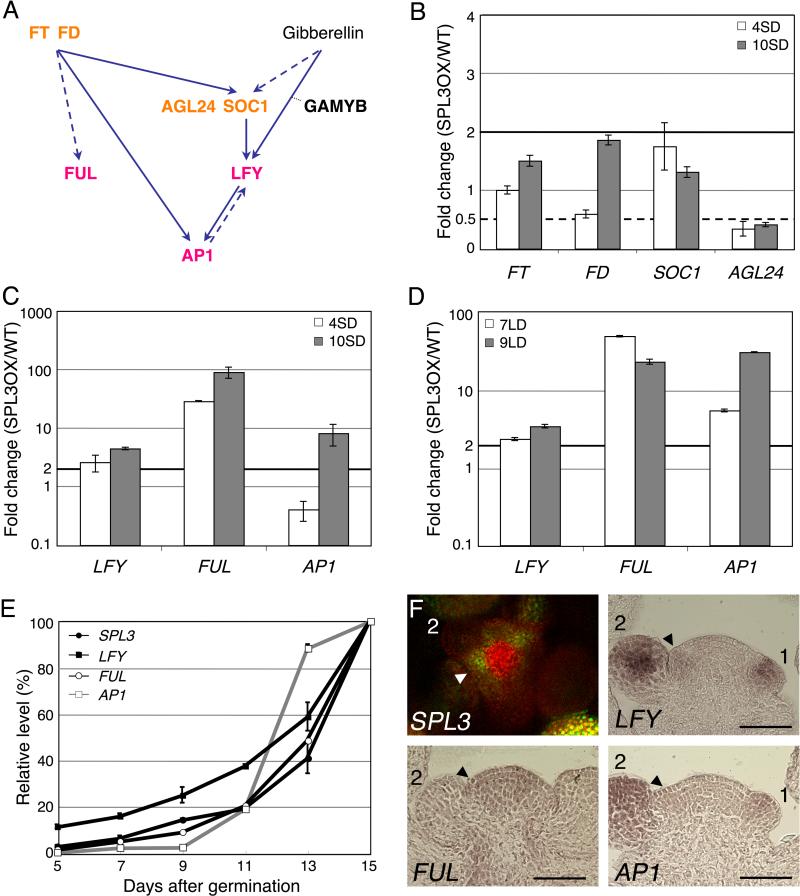
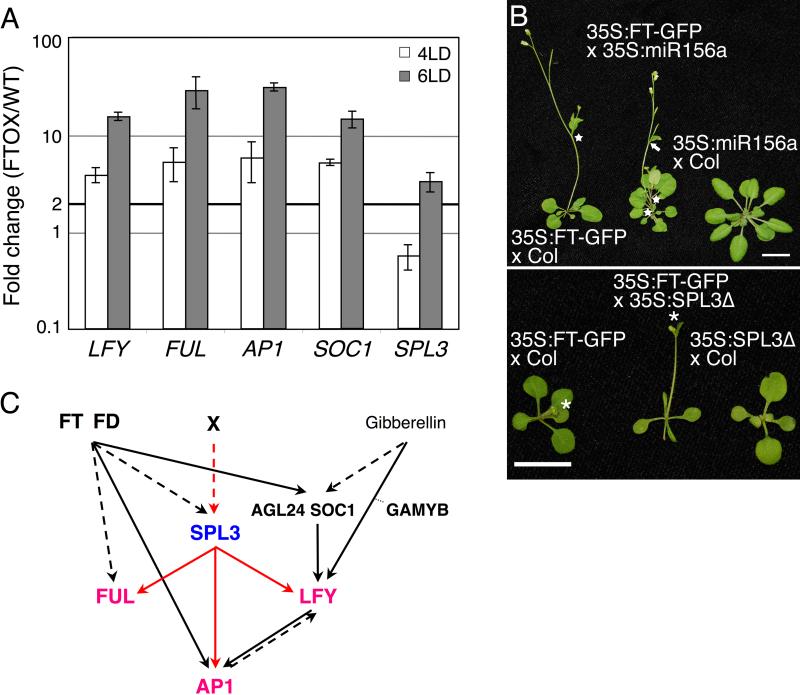
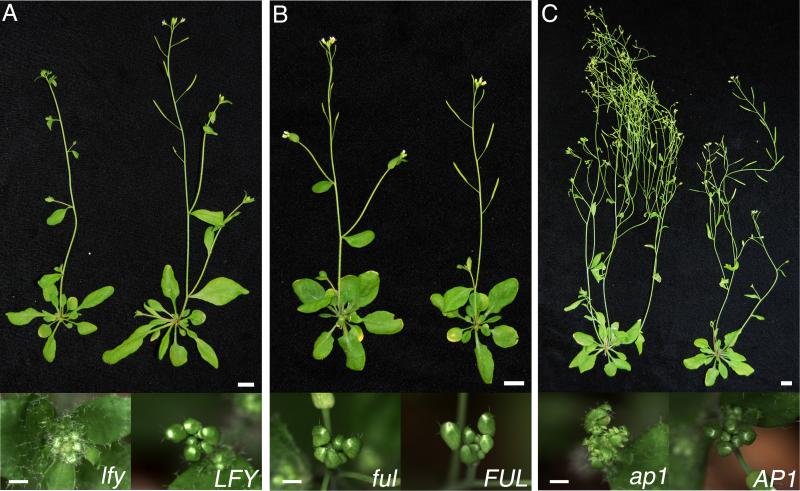
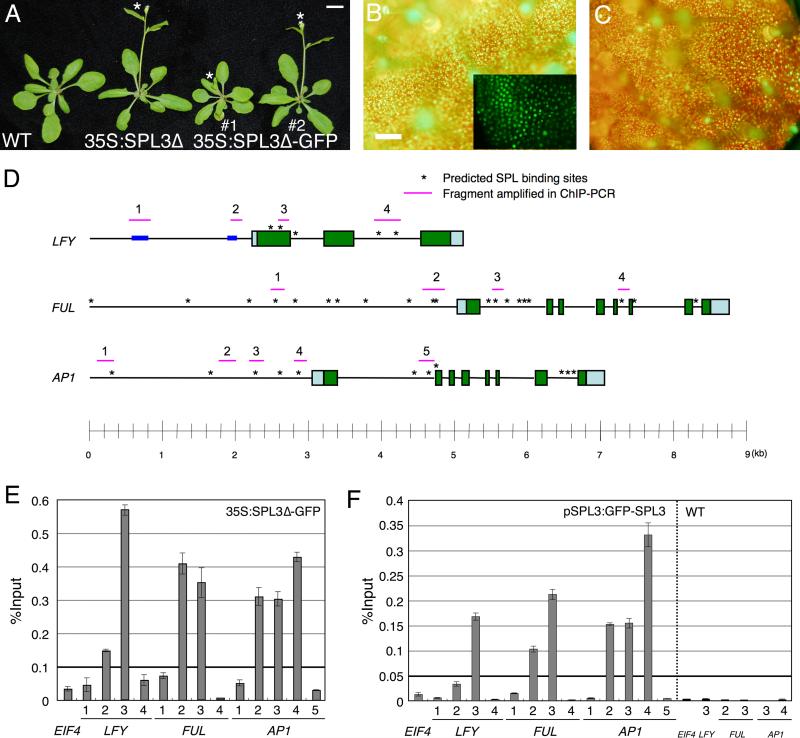
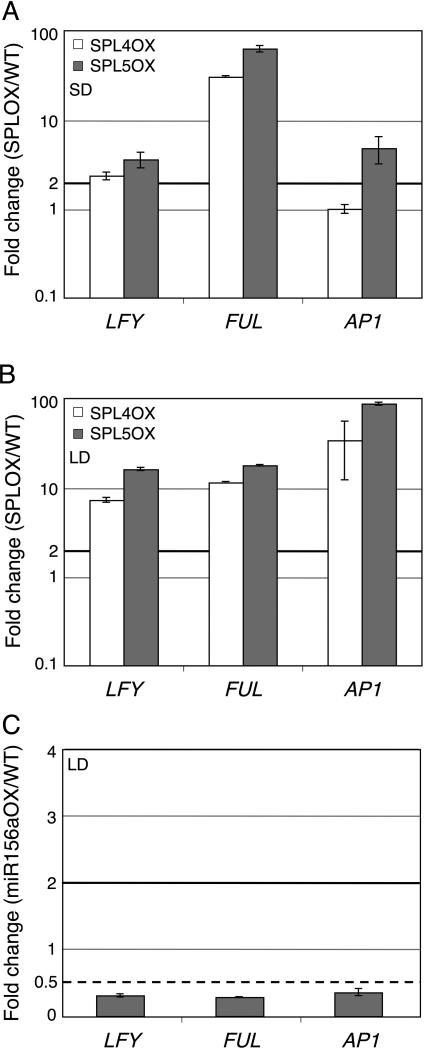
When to form flowers is a developmental decision that profoundly impacts the fitness of flowering plants. In Arabidopsis this decision is ultimately controlled by the induction and subsequent activity of the transcription factors LEAFY (LFY), FRUITFULL (FUL), and APETALA1 (AP1). Despite their central importance, our current understanding of the regulation of LFY, FUL, and AP1 expression is still incomplete. We show here that all three genes are directly activated by the microRNA-targeted transcription factor SQUAMOSA PROMOTER BINDING PROTEIN-LIKE 3 (SPL3). Our findings suggest that SPL3 acts together with other microRNA-regulated SPL transcription factors to control the timing of flower formation. Moreover, the identified SPL activity defines a distinct pathway in control of this vital developmental decision.
何时形成花是一个对开花植物适应性有深远影响的发育决定。在拟南芥中,这一决定最终由转录因子LEAFY(LFY)、FRUITFULL(FUL)和APETALA1(AP1)的诱导及后续活性控制。尽管它们至关重要,但我们目前对LFY、FUL和AP1表达调控的理解仍不完整。我们在此表明,这三个基因均由微小RNA靶向的转录因子SQUAMOSA启动子结合蛋白样3(SPL3)直接激活。我们的研究结果表明,SPL3与其他微小RNA调控的SPL转录因子共同作用,以控制花形成的时间。此外,所确定的SPL活性定义了一条控制这一重要发育决定的独特途径。