Joint Unit of Research in Genomics and Health, Centre for Public Health Research (CSISP)-Cavanilles Institute for Biodiversity and Evolutionary Biology (University of Valencia), Valencia, Spain.
PLoS One. 2011;6(7):e22448. doi: 10.1371/journal.pone.0022448. Epub 2011 Jul 28.
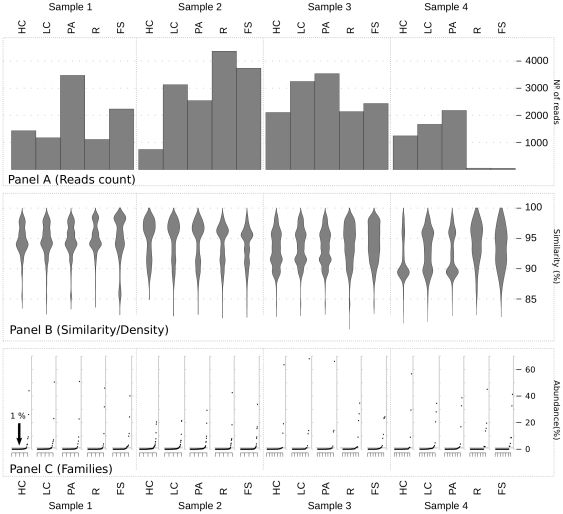
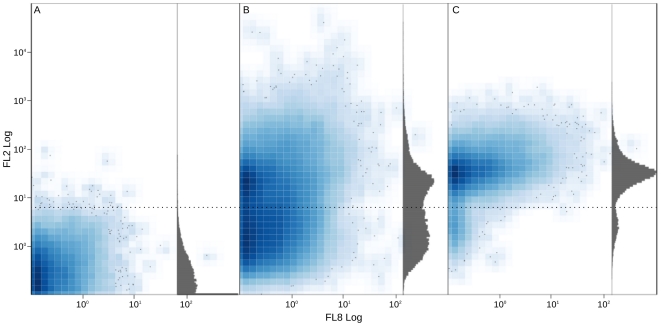
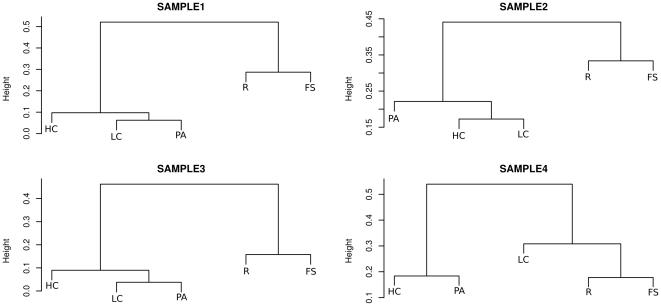
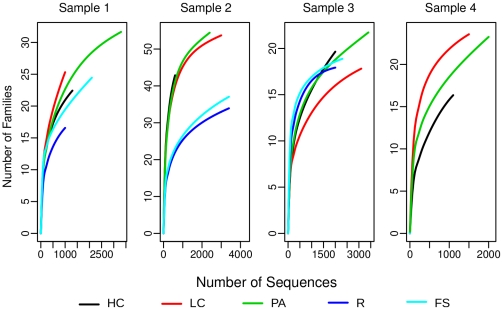
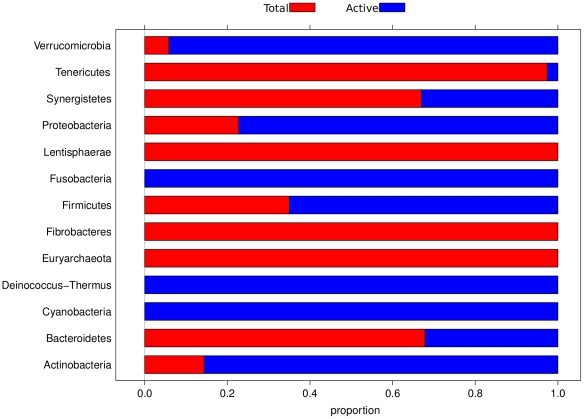
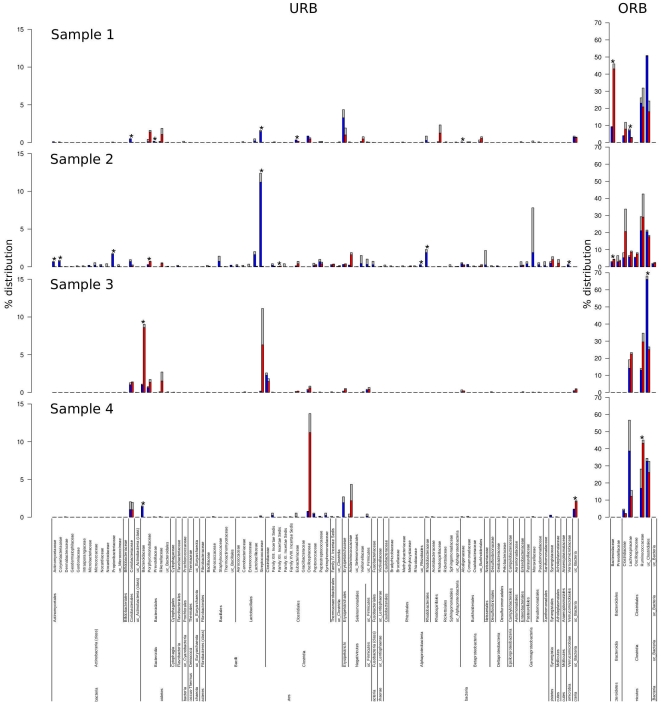
The human gut microbiota is considered one of the most fascinating reservoirs of microbial diversity hosting between 400 to 1000 bacterial species distributed among nine phyla with Firmicutes, Bacteroidetes and Actinobacteria representing around 75% of the diversity. One of the most intriguing issues relates to understanding which microbial groups are active players in the maintenance of the microbiota homeostasis.Here, we describe the diversity of active microbial fractions compared with the whole community from raw human fecal samples. We studied four healthy volunteers by 16S rDNA gene pyrosequencing. The fractions were obtained by cell sorting based on bacterial RNA concentration. Bacterial families were observed to appear or disappear on applying a cell sorting method in which flow cytometry was used to evaluate the active cells by pyronin-Y staining of RNA. This method was able to detect active bacteria, indicating that the active players differed from that observed in raw fecal material. Generally, observations showed that in the active fractions, the number of reads related to Bacteroidetes decreased whereas several families from Clostridiales (Firmicutes) were more highly represented. Moreover, a huge number of families appeared as part of the active fraction when cell sorting was applied, indicating reads that are simply statistically hidden by the total reads.
人类肠道微生物群被认为是微生物多样性最引人注目的储存库之一,其中包含 400 到 1000 种细菌物种,分布在 9 个门中,厚壁菌门、拟杆菌门和放线菌门约占多样性的 75%。其中最有趣的问题之一是了解哪些微生物群是维持微生物群落内稳态的活跃参与者。在这里,我们描述了与原始人粪便样本中的整个群落相比,活性微生物分数的多样性。我们通过 16S rDNA 基因焦磷酸测序研究了四名健康志愿者。通过基于细菌 RNA 浓度的细胞分选获得了分数。观察到细菌家族在应用细胞分选方法时出现或消失,该方法使用吡罗红 Y 染色 RNA 来评估活性细胞,使用流式细胞术。该方法能够检测到活性细菌,表明活性参与者与原始粪便材料中观察到的不同。一般来说,观察结果表明,在活性分数中,与拟杆菌门相关的读数减少,而梭状芽胞杆菌(Firmicutes)的几个家族的代表数量更多。此外,当应用细胞分选时,大量家族作为活性部分出现,表明仅仅通过总读数进行统计隐藏的读数。