
通过培养富集分子谱分析捕捉人类肠道微生物群的多样性。
Capturing the diversity of the human gut microbiota through culture-enriched molecular profiling.
作者信息
Lau Jennifer T, Whelan Fiona J, Herath Isiri, Lee Christine H, Collins Stephen M, Bercik Premysl, Surette Michael G
机构信息
Department of Biochemistry and Biomedical Sciences, McMaster University, Hamilton, ON, L8S 4K1, Canada.
Department of Medicine, Division of Infectious Diseases, McMaster University, Hamilton, ON, L8S 4K1, Canada.
出版信息
Genome Med. 2016 Jul 1;8(1):72. doi: 10.1186/s13073-016-0327-7.
BACKGROUND
The human gut microbiota has been implicated in most aspects of health and disease; however, most of the bacteria in this community are considered unculturable, so studies have relied on molecular-based methods. These methods generally do not permit the isolation of organisms, which is required to fully explore the functional roles of bacteria for definitive association with host phenotypes. Using a combination of culture and 16S rRNA gene sequencing, referred to as culture-enriched molecular profiling, we show that the majority of the bacteria identified by 16S sequencing of the human gut microbiota can be cultured.
METHODS
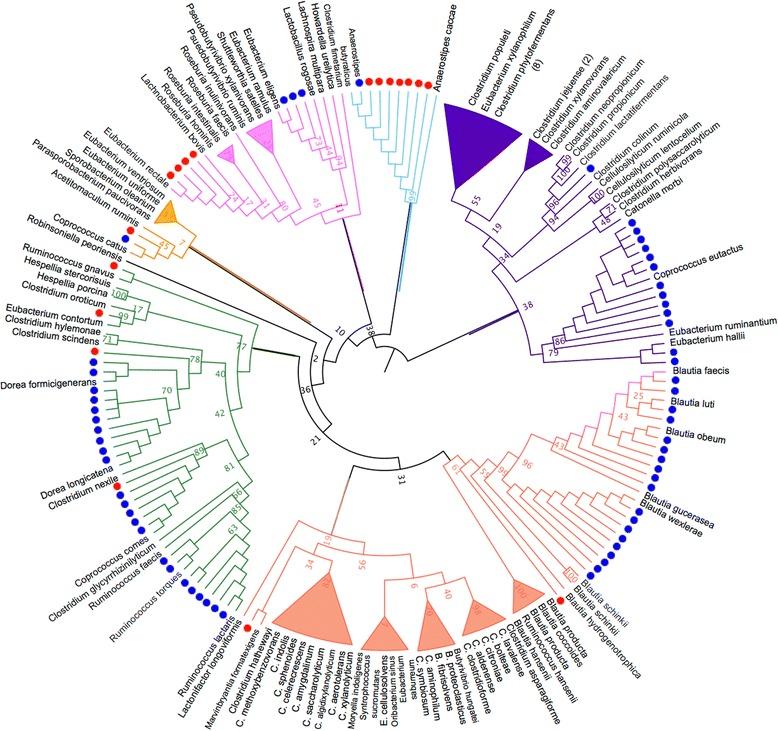
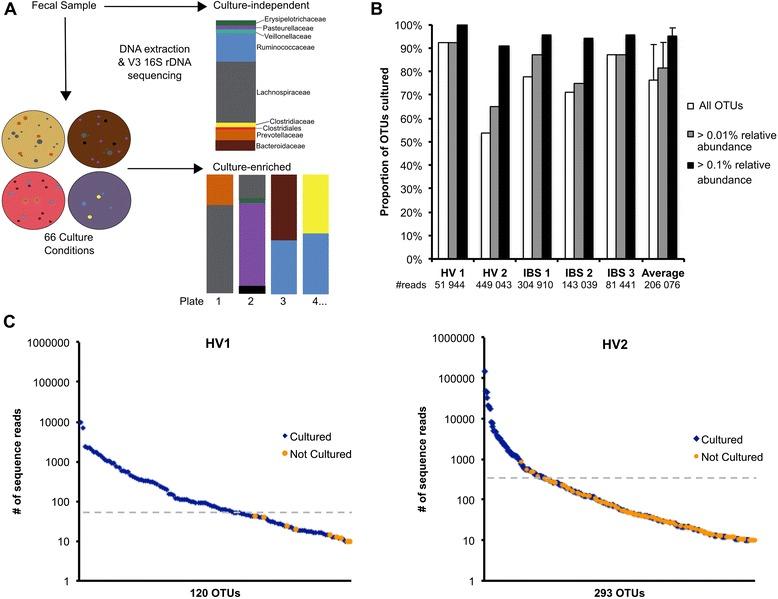
Five fresh, anaerobic fecal samples were cultured using 33 media and incubation of plates anaerobically and aerobically resulted in 66 culture conditions for culture-enriched molecular profiling. The cultivable portion of the fecal microbiota was determined by comparing the operational taxonomic units (OTUs) recovered by 16S sequencing of the culture plates to OTUs from culture-independent sequencing of the fecal sample. Targeted isolation of Lachnospiraceae strains using conditions defined by culture-enriched molecular profiling was carried out on two fresh stool samples.
RESULTS
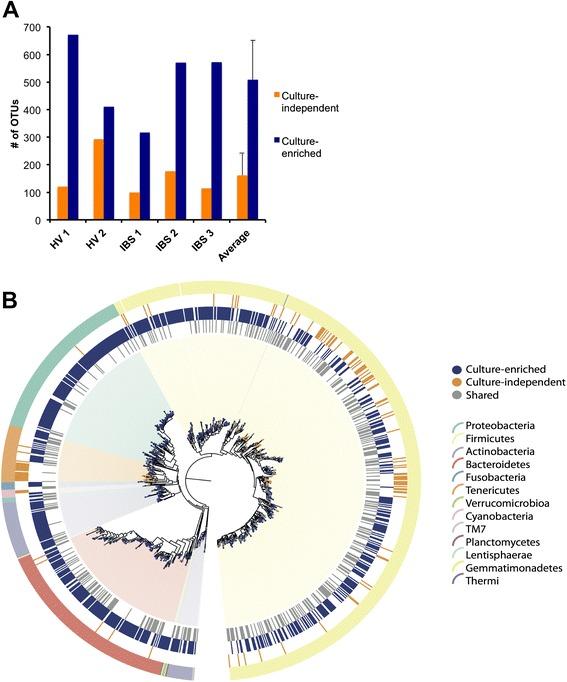
We show that culture-enriched molecular profiling, utilizing 66 culture conditions combined with 16S rRNA gene sequencing, allowed for the culturing of an average of 95 % of the OTUs present at greater than 0.1 % abundance in fecal samples. Uncultured OTUs were low abundance in stool. Importantly, comparing culture-enrichment to culture-independent sequencing revealed that the majority of OTUs were detected only by culture, highlighting the advantage of culture for studying the diversity of the gut microbiota. Applying culture-enriched molecular profiling to target Lachnospiraceae strains resulted in the recovery of 79 isolates, 12 of which are on the Human Microbiome Project's "Most Wanted" list.
CONCLUSIONS
We show that, through culture-enriched molecular profiling, the majority of the bacteria in the human gut microbiota can be cultured and this method revealed greater bacterial diversity compared to culture-independent sequencing. Additionally, this method could be applied for the targeted recovery of a specific bacterial group. This approach allows for the isolation of bacteria of interest from the gut microbiota, providing new opportunities to explore mechanisms of microbiota-host interactions and the diversity of the human microbiota.
背景
人类肠道微生物群与健康和疾病的诸多方面都有关联;然而,该群落中的大多数细菌被认为无法培养,因此研究依赖基于分子的方法。这些方法通常不允许分离出微生物,而分离微生物是充分探索细菌与宿主表型明确关联的功能作用所必需的。通过结合培养和16S rRNA基因测序,即所谓的培养富集分子谱分析,我们发现通过对人类肠道微生物群进行16S测序鉴定出的大多数细菌都可以被培养。
方法
使用33种培养基对5份新鲜的厌氧粪便样本进行培养,平板在厌氧和需氧条件下孵育,从而形成66种用于培养富集分子谱分析的培养条件。通过将培养平板16S测序回收的操作分类单元(OTU)与粪便样本非培养测序的OTU进行比较,确定粪便微生物群的可培养部分。在两份新鲜粪便样本上,利用培养富集分子谱分析定义的条件对毛螺菌科菌株进行靶向分离。
结果
我们发现,利用66种培养条件结合16S rRNA基因测序的培养富集分子谱分析,能够培养出粪便样本中丰度大于0.1%的平均95%的OTU。未培养的OTU在粪便中丰度较低。重要的是,将培养富集与非培养测序进行比较发现,大多数OTU仅通过培养才能检测到,这突出了培养在研究肠道微生物群多样性方面的优势。将培养富集分子谱分析应用于靶向毛螺菌科菌株,得到了79株分离株,其中12株在人类微生物组计划的“最需要”名单上。
结论
我们发现,通过培养富集分子谱分析,人类肠道微生物群中的大多数细菌都可以被培养,并且与非培养测序相比,该方法揭示了更大的细菌多样性。此外,该方法可用于特定细菌类群的靶向回收。这种方法能够从肠道微生物群中分离出感兴趣的细菌,为探索微生物群与宿主相互作用机制以及人类微生物群多样性提供了新机会。
 Zotero 插件