Department of Bioinformatics, Institute of Molecular and Cell Biology at University of Tartu, Tartu, Estonia.
PLoS One. 2011;6(8):e22789. doi: 10.1371/journal.pone.0022789. Epub 2011 Aug 4.
Elongation factor G (EFG) is a core translational protein that catalyzes the elongation and recycling phases of translation. A more complex picture of EFG's evolution and function than previously accepted is emerging from analyzes of heterogeneous EFG family members. Whereas the gene duplication is postulated to be a prominent factor creating functional novelty, the striking divergence between EFG paralogs can be interpreted in terms of innovation in gene function.
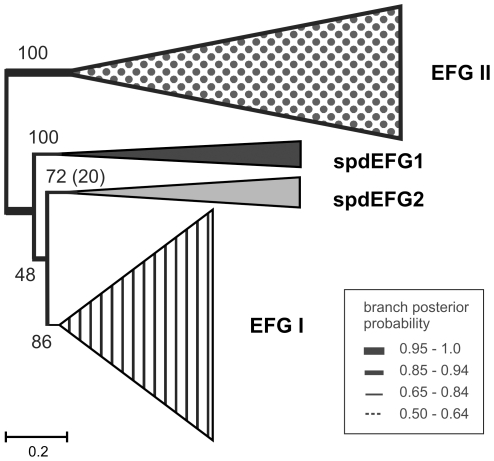
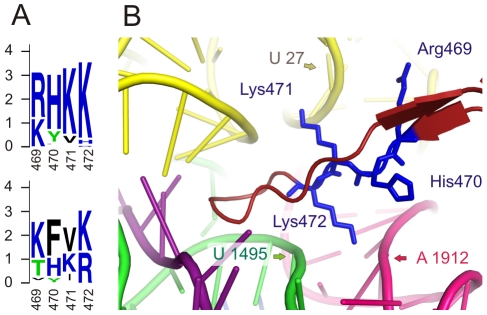
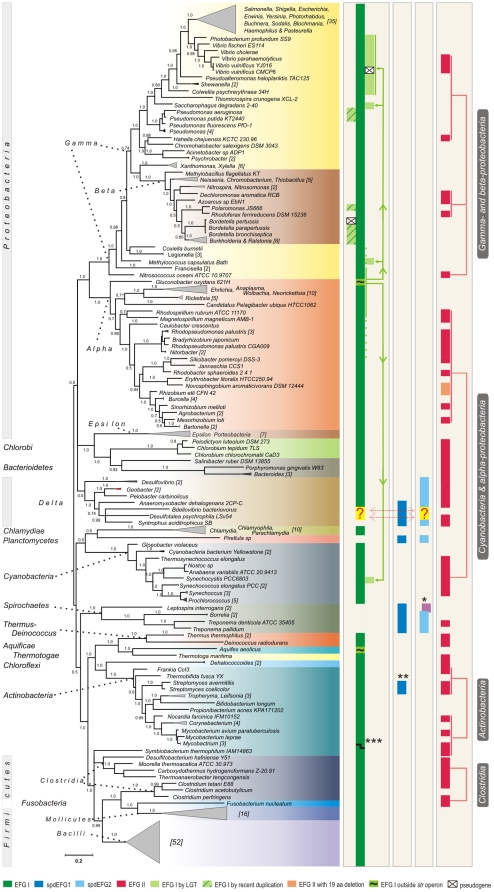
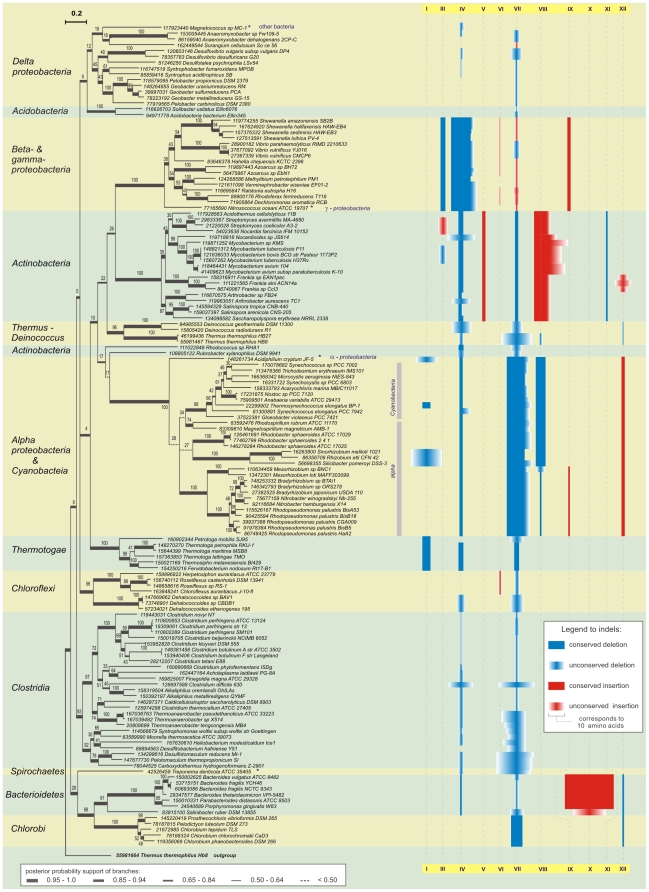
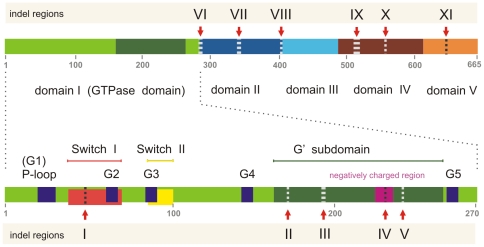
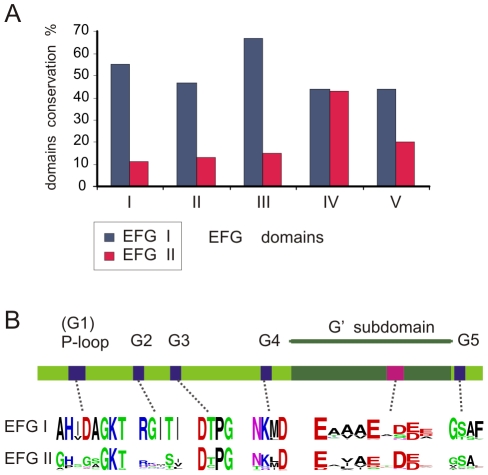
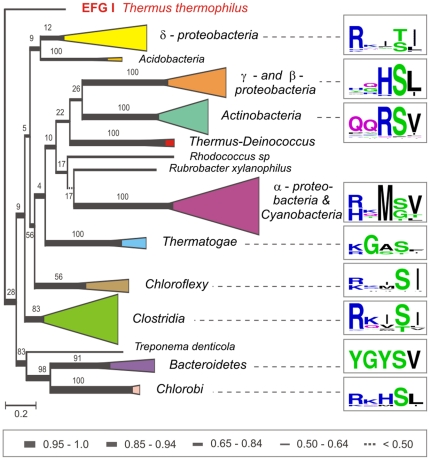
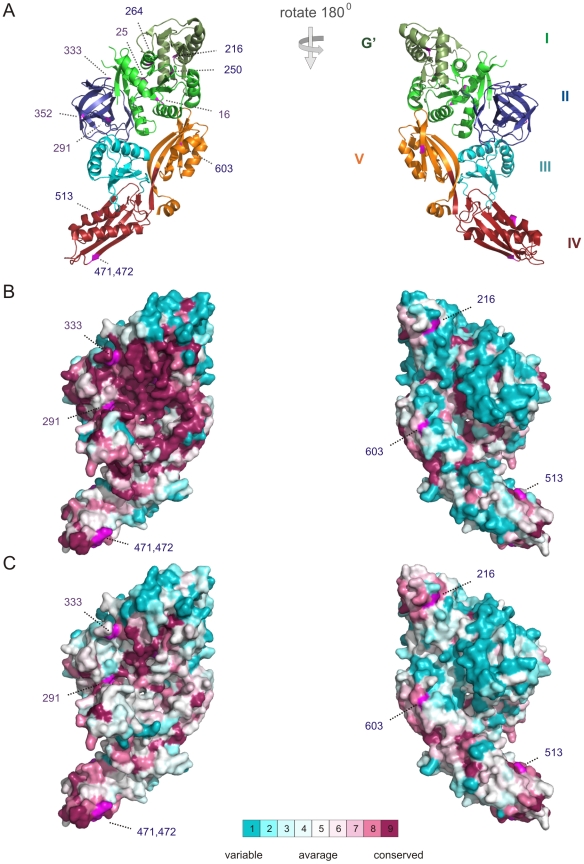
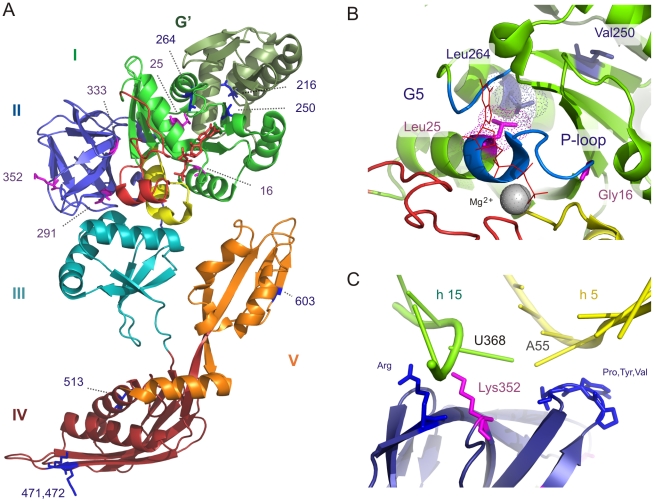
METHODOLOGY/PRINCIPAL FINDINGS: We present a computational study of the EFG protein family to cover the role of gene duplication in the evolution of protein function. Using phylogenetic methods, genome context conservation and insertion/deletion (indel) analysis we demonstrate that the EFG gene copies form four subfamilies: EFG I, spdEFG1, spdEFG2, and EFG II. These ancient gene families differ by their indispensability, degree of divergence and number of indels. We show the distribution of EFG subfamilies and describe evidences for lateral gene transfer and recent duplications. Extended studies of the EFG II subfamily concern its diverged nature. Remarkably, EFG II appears to be a widely distributed and a much-diversified subfamily whose subdivisions correlate with phylum or class borders. The EFG II subfamily specific characteristics are low conservation of the GTPase domain, domains II and III; absence of the trGTPase specific G2 consensus motif "RGITI"; and twelve conserved positions common to the whole subfamily. The EFG II specific functional changes could be related to changes in the properties of nucleotide binding and hydrolysis and strengthened ionic interactions between EFG II and the ribosome, particularly between parts of the decoding site and loop I of domain IV.
CONCLUSIONS/SIGNIFICANCE: Our work, for the first time, comprehensively identifies and describes EFG subfamilies and improves our understanding of the function and evolution of EFG duplicated genes.
伸长因子 G(EFG)是一种核心翻译蛋白,催化翻译的延伸和循环阶段。通过对异质 EFG 家族成员的分析,人们对 EFG 的进化和功能有了比以前更复杂的认识。虽然基因复制被认为是创造功能新颖性的突出因素,但 EFG 同源物之间的惊人差异可以用基因功能的创新来解释。
方法/主要发现:我们对 EFG 蛋白家族进行了计算研究,以涵盖基因复制在蛋白质功能进化中的作用。使用系统发育方法、基因组上下文保守性和插入/缺失(indel)分析,我们证明 EFG 基因副本形成了四个亚家族:EFG I、spdEFG1、spdEFG2 和 EFG II。这些古老的基因家族在不可或缺性、分化程度和 indel 数量上有所不同。我们展示了 EFG 亚家族的分布,并描述了侧向基因转移和近期复制的证据。对 EFG II 亚家族的扩展研究涉及到其分化的性质。值得注意的是,EFG II 似乎是一个广泛分布和多样化的亚家族,其分支与门或纲的边界相关。EFG II 亚家族特有的特征是 GTPase 结构域、结构域 II 和 III 的保守性低;缺乏 trGTPase 特有的“RGITI”G2 共识基序;以及整个亚家族共有的 12 个保守位置。EFG II 特有的功能变化可能与核苷酸结合和水解的性质变化以及 EFG II 与核糖体之间的离子相互作用增强有关,特别是在解码位点和结构域 IV 的环 I 之间的部分。
结论/意义:我们的工作首次全面识别和描述了 EFG 亚家族,并提高了我们对 EFG 复制基因的功能和进化的理解。