Department of General, Visceral and Transplantation Surgery, University Hospital Heidelberg, Heidelberg, Germany.
PLoS One. 2011;6(8):e23151. doi: 10.1371/journal.pone.0023151. Epub 2011 Aug 1.
Erythropoietin (Epo) administration has been reported to have tumor-promoting effects in anemic cancer patients. We investigated the prognostic impact of endogenous Epo in patients with pancreatic ductal adenocarcinoma (PDAC).
The clinico-pathological relevance of hemoglobin (Hb, n = 150), serum Epo (sEpo, n = 87) and tissue expression of Epo/Epo receptor (EpoR, n = 104) was analyzed in patients with PDAC. Epo/EpoR expression, signaling, growth, invasion and chemoresistance were studied in Epo-exposed PDAC cell lines.
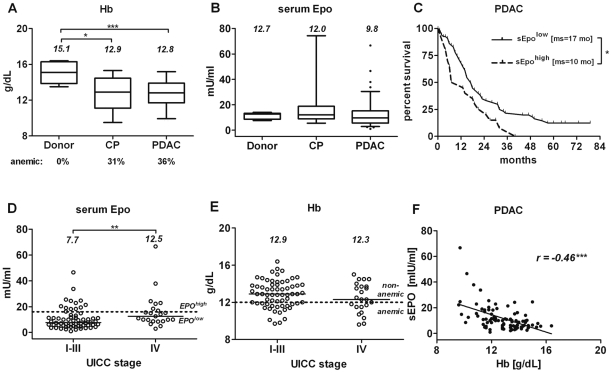
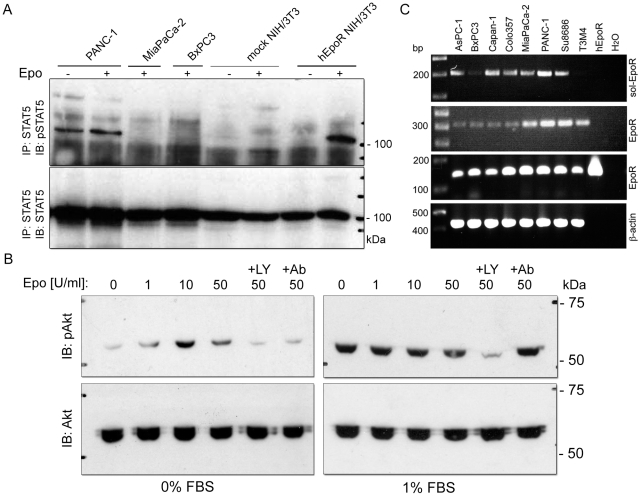
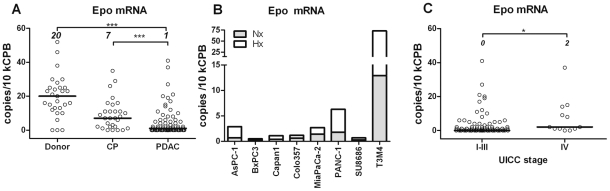
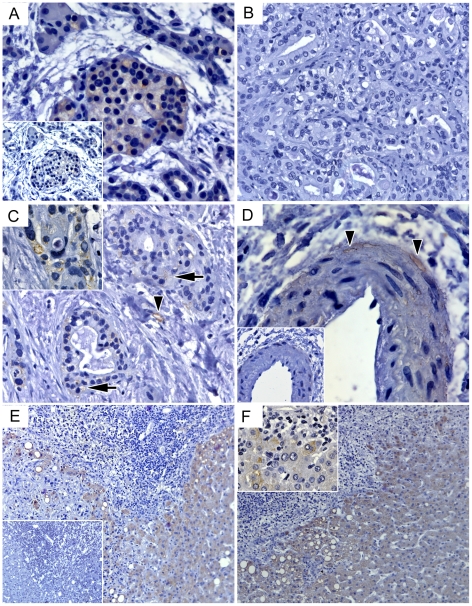
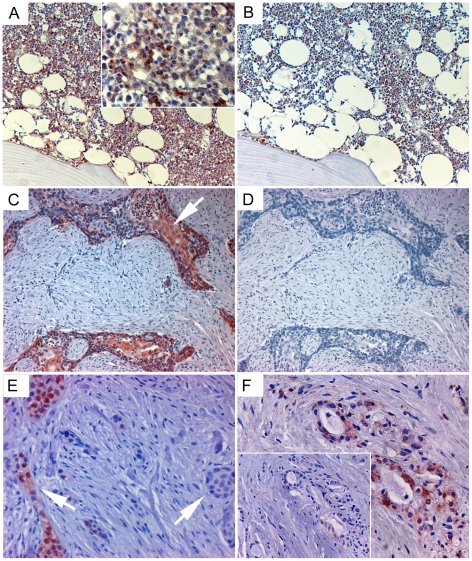
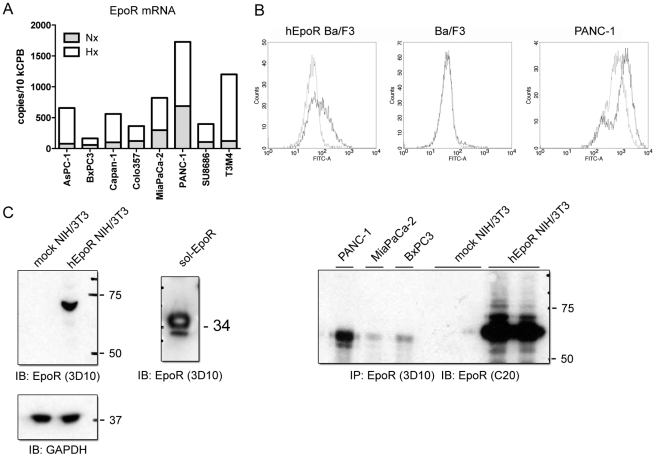
Compared to donors, median preoperative Hb levels were reduced by 15% in both chronic pancreatitis (CP, p<0.05) and PDAC (p<0.001), reaching anemic grade in one third of patients. While inversely correlating to Hb (r = -0.46), 95% of sEPO values lay within the normal range. The individual levels of compensation were adequate in CP (observed to predicted ratio, O/P = 0.99) but not in PDAC (O/P = 0.85). Strikingly, lower sEPO values yielding inadequate Epo responses were prominent in non-metastatic M0-patients, whereas these parameters were restored in metastatic M1-group (8 vs. 13 mU/mL; O/P = 0.82 vs. 0.96; p<0.01)--although Hb levels and the prevalence of anemia were comparable. Higher sEpo values (upper quartile ≥ 16 mU/ml) were not significantly different in M0 (20%) and M1 (30%) groups, but were an independent prognostic factor for shorter survival (HR 2.20, 10 vs. 17 months, p<0.05). The pattern of Epo expression in pancreas and liver suggested ectopic release of Epo by capillaries/vasa vasorum and hepatocytes, regulated by but not emanating from tumor cells. Epo could initiate PI3K/Akt signaling via EpoR in PDAC cells but failed to alter their functions, probably due to co-expression of the soluble EpoR isoform, known to antagonize Epo.
CONCLUSION/SIGNIFICANCE: Higher sEPO levels counteract anemia but worsen outcome in PDAC patients. Further trials are required to clarify how overcoming a sEPO threshold ≥16 mU/ml by endogenous or exogenous means may predispose to or promote metastatic progression.
促红细胞生成素(Epo)的应用已被报道在贫血的癌症患者中具有促进肿瘤的作用。我们研究了内源性 Epo 在胰腺导管腺癌(PDAC)患者中的预后影响。
分析了 150 例 PDAC 患者的血红蛋白(Hb,n=150)、血清 Epo(sEpo,n=87)和组织 Epo/Epo 受体(EpoR,n=104)的临床病理相关性。研究了 Epo 暴露的 PDAC 细胞系中的 Epo/EpoR 表达、信号转导、生长、侵袭和化疗耐药性。
与供体相比,慢性胰腺炎(CP,p<0.05)和 PDAC(p<0.001)患者的术前中位 Hb 水平分别降低了 15%,三分之一的患者达到贫血程度。而与 Hb 呈负相关(r = -0.46),95%的 sEPO 值处于正常范围内。CP 中个体的代偿水平是足够的(观察到的预测比值,O/P = 0.99),但 PDAC 中则不然(O/P = 0.85)。令人惊讶的是,在非转移性 M0 患者中,较低的 sEPO 值导致 Epo 反应不足更为明显,而在转移性 M1 组中这些参数得到了恢复(8 与 13 mU/mL;O/P = 0.82 与 0.96;p<0.01)--尽管 Hb 水平和贫血的发生率是可比的。较高的 sEpo 值(上四分位数≥16 mU/ml)在 M0(20%)和 M1(30%)组中没有显著差异,但却是较短生存的独立预后因素(HR 2.20,10 与 17 个月,p<0.05)。胰腺和肝脏中 Epo 的表达模式表明 Epo 由毛细血管/血管丛和肝细胞异位释放,受肿瘤细胞调节而不是源自肿瘤细胞。Epo 可以通过 PDAC 细胞中的 EpoR 启动 PI3K/Akt 信号转导,但不能改变其功能,这可能是由于可溶性 EpoR 同工型的共表达所致,已知该同工型会拮抗 Epo。
结论/意义:较高的 sEPO 水平可以对抗贫血,但会使 PDAC 患者的预后恶化。需要进一步的试验来阐明通过内源性或外源性手段克服 sEPO 阈值≥16 mU/ml 如何可能导致或促进转移进展。