Department of Psychiatry, Facultad de Medicina, Universidad Complutense, Madrid, Spain.
PLoS One. 2011;6(8):e23264. doi: 10.1371/journal.pone.0023264. Epub 2011 Aug 10.
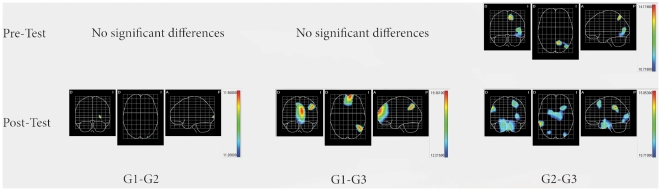
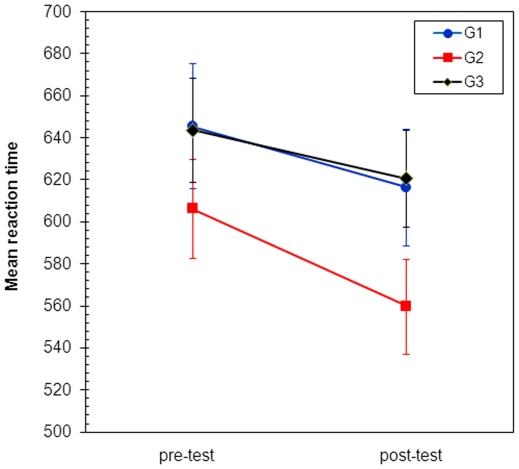
Over three months of intensive training with a tactile stimulation device, 18 blind and 10 blindfolded seeing subjects improved in their ability to identify geometric figures by touch. Seven blind subjects spontaneously reported 'visual qualia', the subjective sensation of seeing flashes of light congruent with tactile stimuli. In the latter subjects tactile stimulation evoked activation of occipital cortex on electroencephalography (EEG). None of the blind subjects who failed to experience visual qualia, despite identical tactile stimulation training, showed EEG recruitment of occipital cortex. None of the blindfolded seeing humans reported visual-like sensations during tactile stimulation. These findings support the notion that the conscious experience of seeing is linked to the activation of occipital brain regions in people with blindness. Moreover, the findings indicate that provision of visual information can be achieved through non-visual sensory modalities which may help to minimize the disability of blind individuals, affording them some degree of object recognition and navigation aid.
经过三个月的密集训练,使用触觉刺激设备,18 名盲人和 10 名蒙住眼睛的正常人的触觉识别能力得到了提高。7 名盲人受试者自发报告了“视觉表象”,即与触觉刺激相一致的闪光的主观感觉。在后一组受试者中,触觉刺激在脑电图 (EEG) 上引发了枕叶皮层的激活。在没有经历视觉表象的盲人受试者中,尽管接受了相同的触觉刺激训练,枕叶皮层的 EEG 募集都没有显示出来。在蒙住眼睛的正常人进行触觉刺激时,没有人报告类似视觉的感觉。这些发现支持了这样一种观点,即视觉的有意识体验与失明者枕叶大脑区域的激活有关。此外,这些发现表明,可以通过非视觉感觉方式来提供视觉信息,这可能有助于最大限度地减少盲人的残疾程度,使他们能够在一定程度上识别物体并获得导航辅助。