Department of Microbiology and Immunology and the Center for the Study of Biological Complexity, Virginia Commonwealth University, Richmond, Virginia, United States of America.
PLoS One. 2011;6(8):e23518. doi: 10.1371/journal.pone.0023518. Epub 2011 Aug 10.
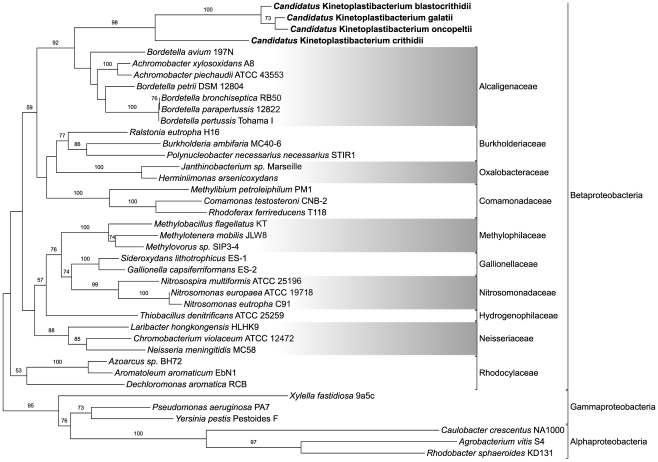
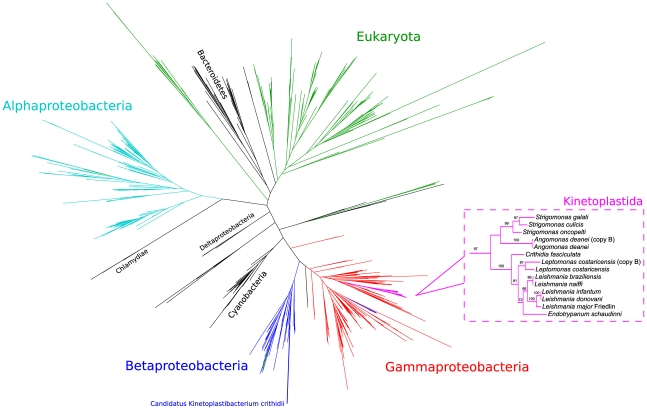
It has been known for decades that some insect-infecting trypanosomatids can survive in culture without heme supplementation while others cannot, and that this capability is associated with the presence of a betaproteobacterial endosymbiont in the flagellate's cytoplasm. However, the specific mechanisms involved in this process remained obscure. In this work, we sequence and phylogenetically analyze the heme pathway genes from the symbionts and from their hosts, as well as from a number of heme synthesis-deficient Kinetoplastida. Our results show that the enzymes responsible for synthesis of heme are encoded on the symbiont genomes and produced in close cooperation with the flagellate host. Our evidence suggests that this synergistic relationship is the end result of a history of extensive gene loss and multiple lateral gene transfer events in different branches of the phylogeny of the Trypanosomatidae.
几十年来,人们已经知道,一些感染昆虫的原生动物可以在没有血红素补充的情况下在培养中存活,而另一些则不能,而这种能力与鞭毛原生动物细胞质中存在β变形杆菌内共生体有关。然而,这一过程中涉及的具体机制仍不清楚。在这项工作中,我们对共生体及其宿主以及一些血红素合成缺陷的动基体门生物的血红素途径基因进行了测序和系统发育分析。我们的结果表明,负责合成血红素的酶是由共生体基因组编码的,并与鞭毛原生动物宿主密切合作产生。我们的证据表明,这种协同关系是基因大量缺失和动基体门生物系统发育的不同分支中多次横向基因转移事件的最终结果。