CEA, DSV, IRCM, SREIT, Laboratoire de Cancérologie Expérimentale, BP6, Fontenay-aux-Roses, France.
PLoS One. 2011;6(8):e23581. doi: 10.1371/journal.pone.0023581. Epub 2011 Aug 11.
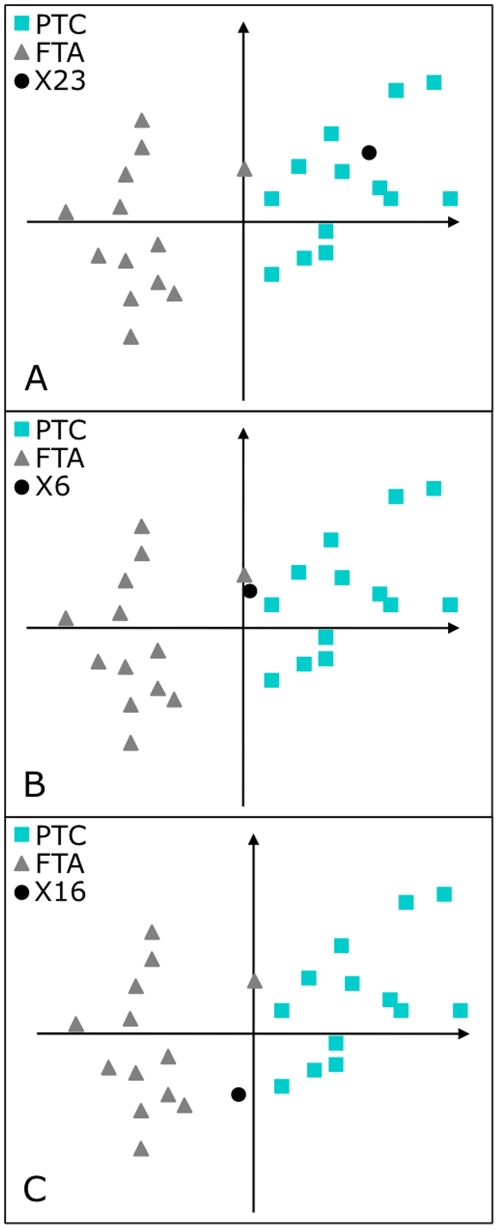
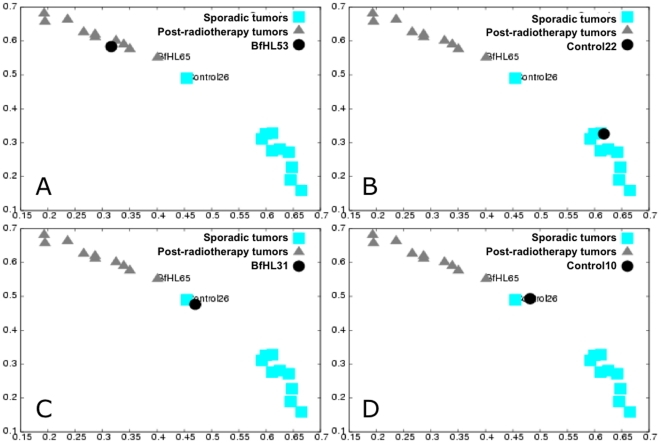
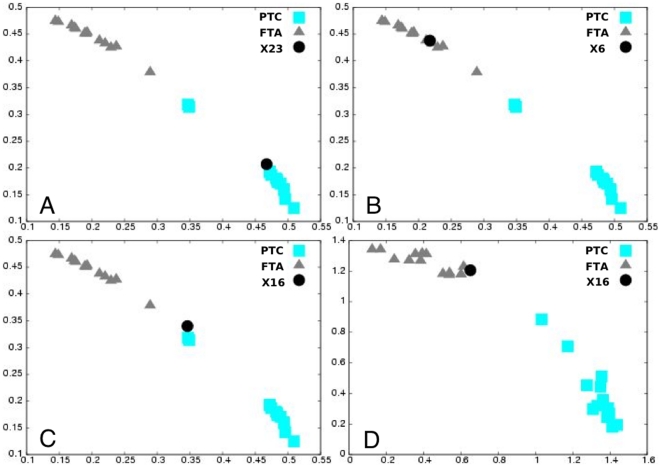
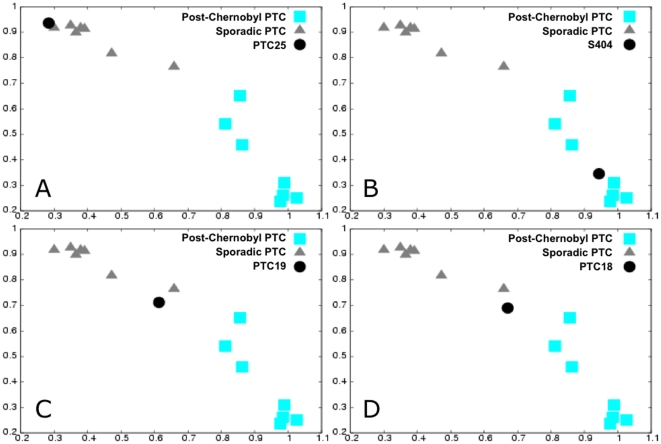
Methods of classification using transcriptome analysis for case-by-case tumor diagnosis could be limited by tumor heterogeneity and masked information in the gene expression profiles, especially as the number of tumors is small. We propose a new strategy, EMts_2PCA, based on: 1) The identification of a gene expression signature with a great potential for discriminating subgroups of tumors (EMts stage), which includes: a) a learning step, based on an expectation-maximization (EM) algorithm, to select sets of candidate genes whose expressions discriminate two subgroups, b) a training step to select from the sets of candidate genes those with the highest potential to classify training tumors, c) the compilation of genes selected during the training step, and standardization of their levels of expression to finalize the signature. 2) The predictive classification of independent prospective tumors, according to the two subgroups of interest, by the definition of a validation space based on a two-step principal component analysis (2PCA). The present method was evaluated by classifying three series of tumors and its robustness, in terms of tumor clustering and prediction, was further compared with that of three classification methods (Gene expression bar code, Top-scoring pair(s) and a PCA-based method). Results showed that EMts_2PCA was very efficient in tumor classification and prediction, with scores always better that those obtained by the most common methods of tumor clustering. Specifically, EMts_2PCA permitted identification of highly discriminating molecular signatures to differentiate post-Chernobyl thyroid or post-radiotherapy breast tumors from their sporadic counterparts that were previously unsuccessfully classified or classified with errors.
基于转录组分析的病例诊断分类方法可能会受到肿瘤异质性和基因表达谱中隐藏信息的限制,尤其是在肿瘤数量较少的情况下。我们提出了一种新的策略,即 EMts_2PCA,基于:1)识别具有区分肿瘤亚组潜力的基因表达特征(EMts 阶段),其中包括:a)基于期望最大化(EM)算法的学习步骤,选择能够区分两个亚组的候选基因集,b)训练步骤,从候选基因集中选择最有可能对训练肿瘤进行分类的基因,c)编译在训练步骤中选择的基因,并对其表达水平进行标准化,以完成特征。2)根据两步主成分分析(2PCA)定义验证空间,对感兴趣的两个亚组的独立前瞻性肿瘤进行预测分类。本方法通过对三个系列肿瘤进行分类来评估,其在肿瘤聚类和预测方面的稳健性与三种分类方法(基因表达条码、最佳对(s)和基于 PCA 的方法)进行了进一步比较。结果表明,EMts_2PCA 在肿瘤分类和预测方面非常有效,其得分始终优于肿瘤聚类最常用方法的得分。具体来说,EMts_2PCA 允许识别高度区分的分子特征,以区分切尔诺贝利后甲状腺或放疗后乳房肿瘤与其先前无法分类或分类错误的散发性肿瘤。