Department of Nephrology, Shanghai Tenth People's Hospital of Tongji University, Shanghai, China.
PLoS One. 2011;6(8):e23268. doi: 10.1371/journal.pone.0023268. Epub 2011 Aug 9.
Dysregulation of phosphate homeostasis as occurs in chronic kidney disease is associated with cardiovascular complications. It has been suggested that both hyperphosphatemia and hypophosphatemia can cause cardiovascular disease. The molecular mechanisms by which high or low serum phosphate levels adversely affect cardiovascular function are poorly understood. The purpose of this study was to explore the mechanisms of endothelial dysfunction in the presence of non-physiologic phosphate levels.
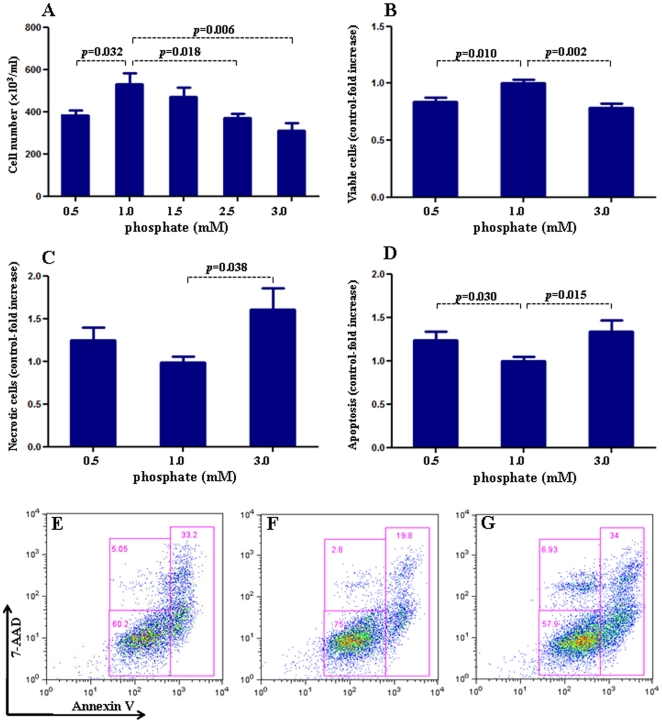
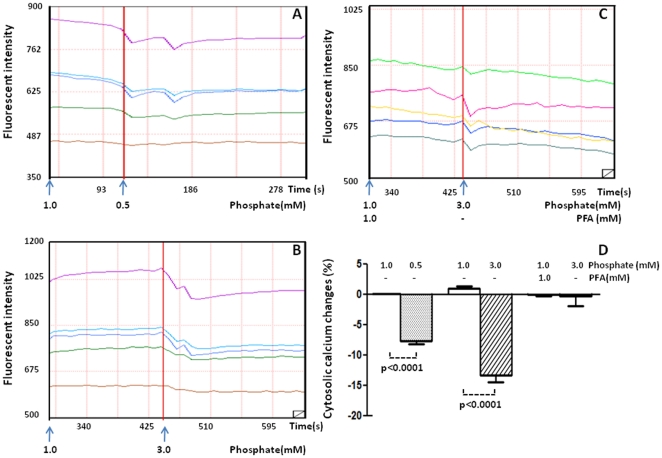
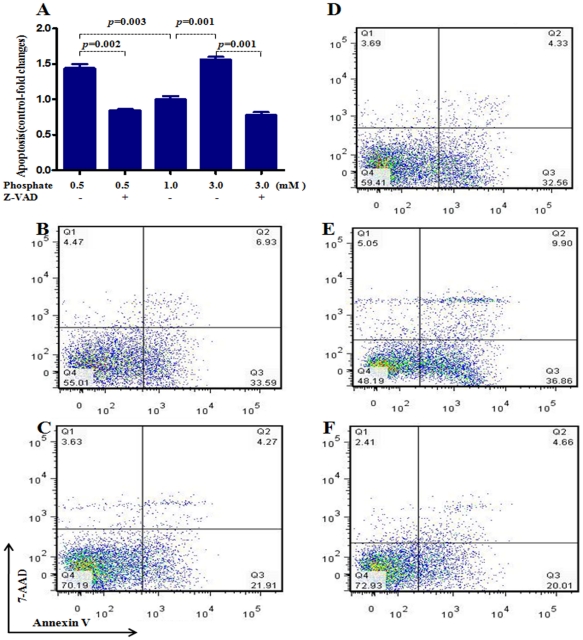
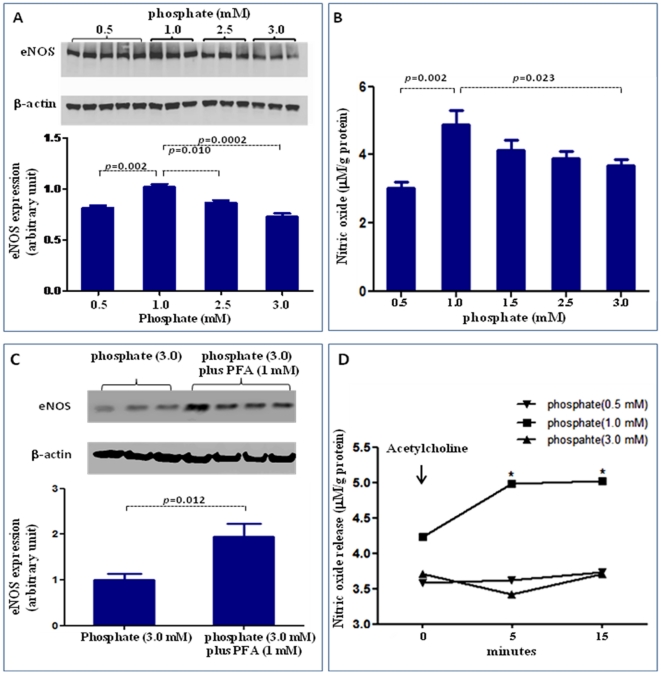
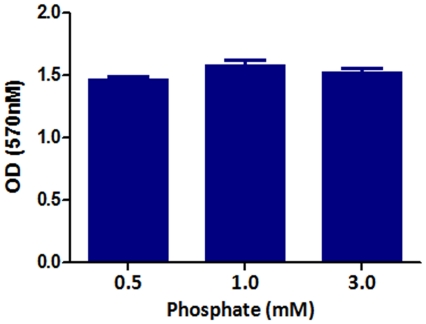
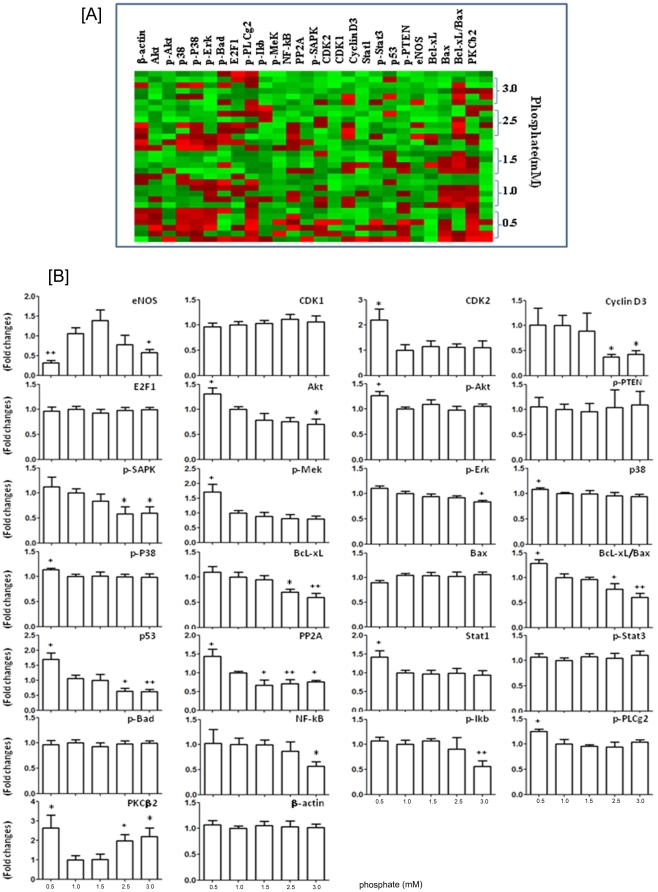
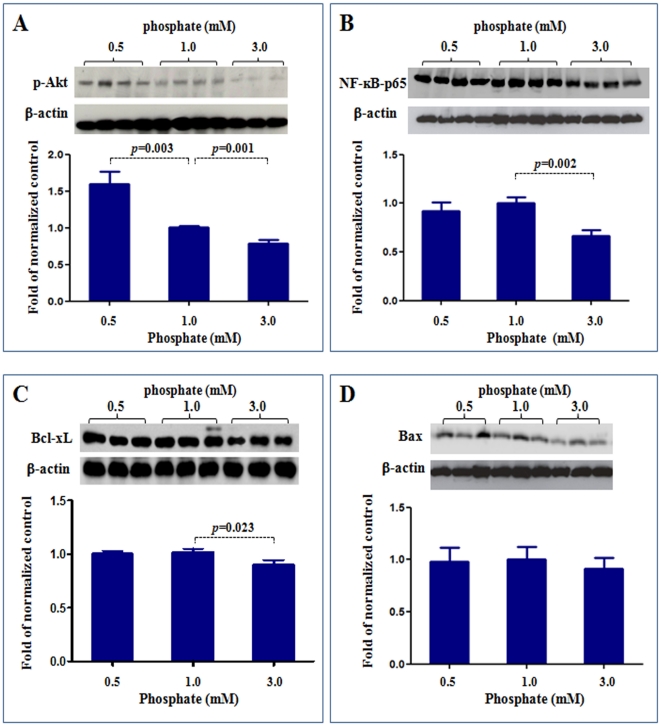
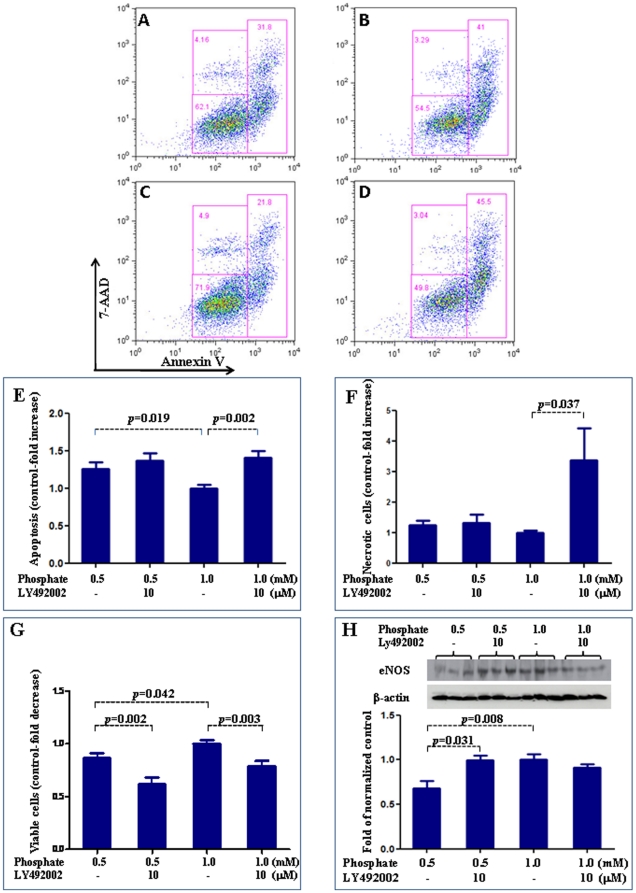
METHODOLOGY/PRINCIPAL FINDINGS: We studied the effects of simulated hyper- and hypophosphatemia in human umbilical vein endothelial cells in vitro. We found both simulated hyperphosphatemia and hypophosphatemia decrease eNOS expression and NO production. This was associated with reduced intracellular calcium, increased protein kinase C β2 (PKCβ2), reduced cell viability, and increased apoptosis. While simulated hyperphosphatemia was associated with decreased Akt/p-Akt, Bcl-xl/Bax ratios, NFkB-p65 and p-Erk abundance, simulated hypophosphatemia was associated with increased Akt/p-Akt and Bcl-xl/Bax ratios and p-Mek, p38, and p-p38 abundance.
CONCLUSIONS/SIGNIFICANCE: This is the first demonstration of endothelial dysfunction with hypophosphatemia. Our data suggests that both hyperphosphatemia and hypophosphatemia decrease eNOS activity via reduced intracellular calcium and increased PKCβ2. Hyperphosphatemia also appears to reduce eNOS transcription via reduced signaling through PI3K/Akt/NF-kB and MAPK/NF-kB pathways. On the other hand, hypophosphatemia appears to activate these pathways. Our data provides the basis for further studies to elucidate the relationship between altered phosphate homeostasis and cardiovascular disease. As a corollary, our data suggests that the level of phosphate in the culture media, if not in the physiologic range, may inadvertently affect experimental results.
慢性肾脏病中出现的磷酸盐稳态失调与心血管并发症有关。有人认为高磷血症和低磷血症都会导致心血管疾病。高或低血清磷酸盐水平对心血管功能产生不利影响的分子机制尚未完全了解。本研究旨在探讨非生理磷酸盐水平下内皮功能障碍的机制。
方法/主要发现:我们在体外研究了模拟高磷血症和低磷血症对人脐静脉内皮细胞的影响。我们发现,模拟高磷血症和低磷血症均降低 eNOS 表达和 NO 产生。这与细胞内钙减少、蛋白激酶 Cβ2(PKCβ2)增加、细胞活力降低和凋亡增加有关。虽然模拟高磷血症与 Akt/p-Akt、Bcl-xl/Bax 比值、NFkB-p65 和 p-Erk 丰度降低有关,但模拟低磷血症与 Akt/p-Akt 和 Bcl-xl/Bax 比值增加以及 p-Mek、p38 和 p-p38 丰度增加有关。
结论/意义:这是首次证明低磷血症可导致内皮功能障碍。我们的数据表明,高磷血症和低磷血症均通过降低细胞内钙和增加 PKCβ2 来降低 eNOS 活性。高磷血症似乎还通过减少 PI3K/Akt/NF-kB 和 MAPK/NF-kB 途径的信号转导来降低 eNOS 转录。另一方面,低磷血症似乎激活了这些途径。我们的数据为进一步研究阐明磷酸盐稳态改变与心血管疾病之间的关系提供了依据。作为推论,我们的数据表明,如果培养基中的磷酸盐水平不在生理范围内,可能会无意中影响实验结果。