Centre de recherche de l'Institut Universitaire de Cardiologie et de Pneumologie de Québec, Québec, Canada.
PLoS One. 2011;6(8):e23326. doi: 10.1371/journal.pone.0023326. Epub 2011 Aug 12.
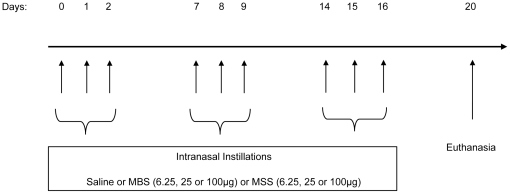
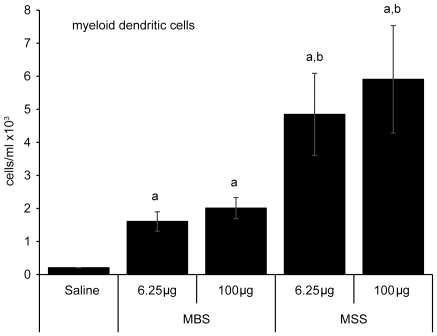
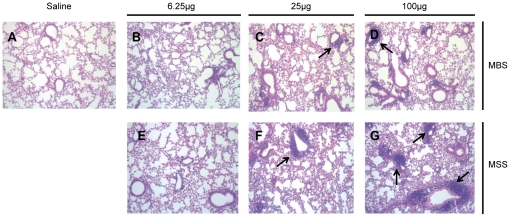
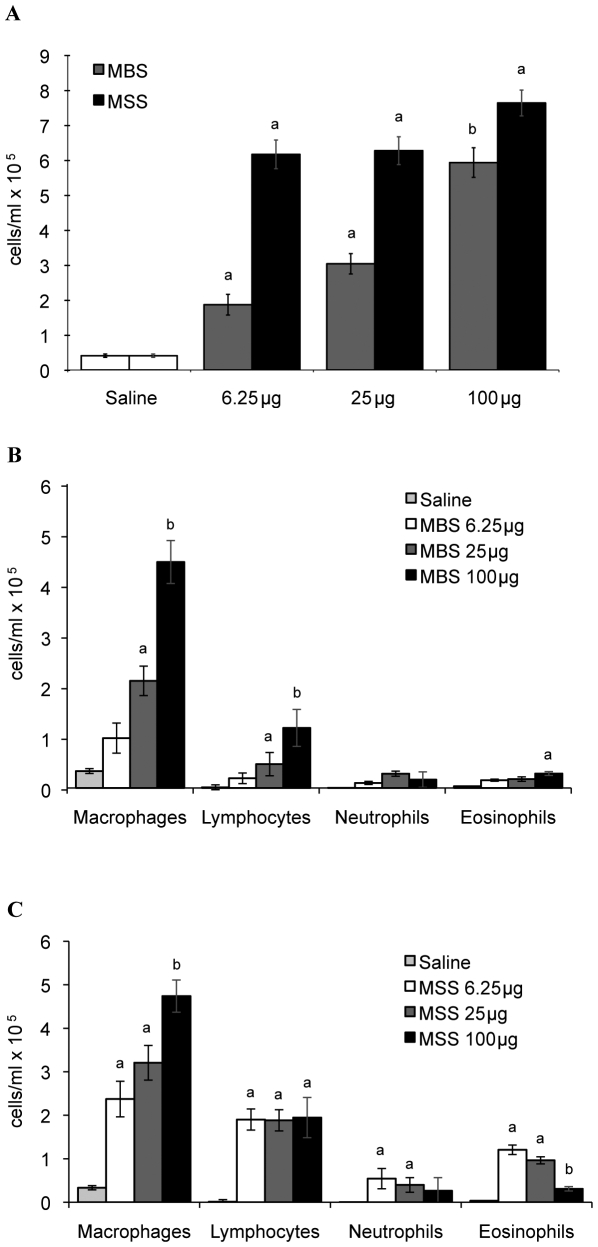
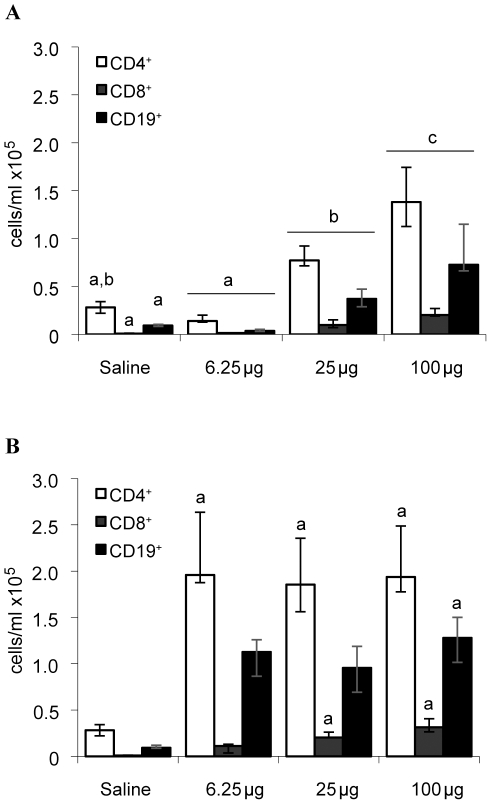
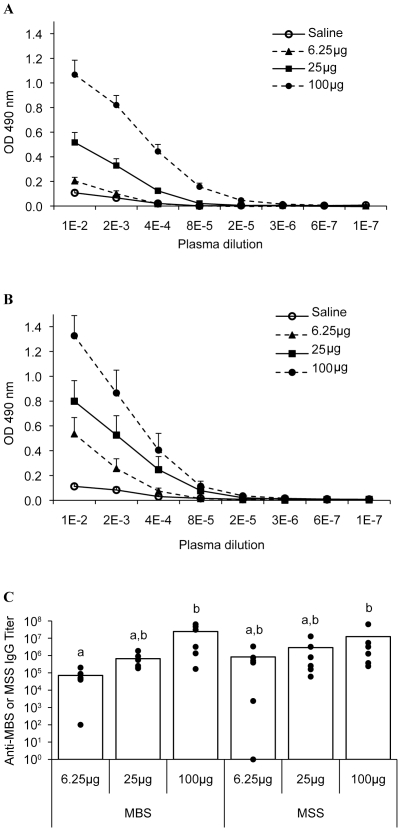
The etiology of bioaerosol-related pulmonary diseases remains poorly understood. Recently, archaea emerged as prominent airborne components of agricultural environments, but the consequences of airway exposure to archaea remain unknown. Since subcomponents of archaea can be immunogenic, we used a murine model to study the pulmonary immune responses to two archaeal species found in agricultural facilities: Methanobrevibacter smithii (MBS) and Methanosphaera stadtmanae (MSS). Mice were administered intranasally with 6.25, 25 or 100 µg of MBS or MSS, once daily, 3 days a week, for 3 weeks. MSS induced more severe histopathological alterations than MBS with perivascular accumulation of granulocytes, pronounced thickening of the alveolar septa, alveolar macrophages accumulation and increased perivascular mononucleated cell accumulation. Analyses of bronchoalveolar lavage fluids revealed up to 3 times greater leukocyte accumulation with MSS compared to MBS. Instillation of 100 µg of MBS or MSS caused predominant accumulation of monocyte/macrophages (4.5×10(5) and 4.8×10(5) cells/ml respectively) followed by CD4(+) T cells (1.38×10(5) and 1.94×10(5) cells/ml respectively), B cells (0.73×10(5) and 1.28×10(5) cells/ml respectively), and CD8(+) T cells (0.20×10(5) and 0.31×10(5) cells/ml respectively) in the airways. Both archaeal species induced similar titers of antigen-specific IgGs in plasma. MSS but not MBS caused an accumulation of eosinophils and neutrophils in the lungs, which surprisingly, correlated inversely with the size of the inoculum. Stronger immunogenicity of MSS was confirmed by a 3 fold higher accumulation of myeloid dendritic cells in the airways, compared to MBS. Thus, the dose and species of archaea determine the magnitude and nature of the pulmonary immune response. This is the first report of an immunomodulatory role of archaeal species found in bioaerosols.
生物气溶胶相关肺部疾病的病因仍知之甚少。最近,古菌作为农业环境中突出的空气传播成分出现,但气道暴露于古菌的后果尚不清楚。由于古菌的亚成分具有免疫原性,我们使用小鼠模型研究了两种在农业设施中发现的古菌的肺部免疫反应:甲烷短杆菌(MBS)和甲烷热球菌(MSS)。小鼠每天一次经鼻腔给予 6.25、25 或 100 µg 的 MBS 或 MSS,每周 3 天,共 3 周。MSS 引起的组织病理学改变比 MBS 更严重,表现为血管周围粒细胞积聚、肺泡间隔明显增厚、肺泡巨噬细胞积聚和血管周围单核细胞积聚增加。支气管肺泡灌洗液分析显示,与 MBS 相比,MSS 引起的白细胞积聚增加了多达 3 倍。给予 100 µg 的 MBS 或 MSS 导致单核细胞/巨噬细胞(分别为 4.5×10(5)和 4.8×10(5)细胞/ml)的主要积聚,随后是 CD4(+) T 细胞(分别为 1.38×10(5)和 1.94×10(5)细胞/ml)、B 细胞(分别为 0.73×10(5)和 1.28×10(5)细胞/ml)和 CD8(+) T 细胞(分别为 0.20×10(5)和 0.31×10(5)细胞/ml)在气道中。两种古菌在血浆中均诱导了相似滴度的抗原特异性 IgG。MSS 但不是 MBS 引起了肺部嗜酸性粒细胞和中性粒细胞的积聚,令人惊讶的是,这与接种物的大小呈反比。与 MBS 相比,MSS 气道中髓样树突状细胞的积聚增加了 3 倍,证实了其更强的免疫原性。因此,古菌的剂量和种类决定了肺部免疫反应的程度和性质。这是首次报道生物气溶胶中发现的古菌具有免疫调节作用。