Bernatchez Emilie, Gold Matthew J, Langlois Anick, Blais-Lecours Pascale, Boucher Magali, Duchaine Caroline, Marsolais David, McNagny Kelly M, Blanchet Marie-Renée
Institut Universitaire de Cardiologie et de Pneumologie de Québec, Université Laval, Quebec City, Quebec, Canada.
The Biomedical Research Center, University of British Columbia, Vancouver, British Columbia, Canada.
Physiol Rep. 2017 Apr;5(7). doi: 10.14814/phy2.13163.
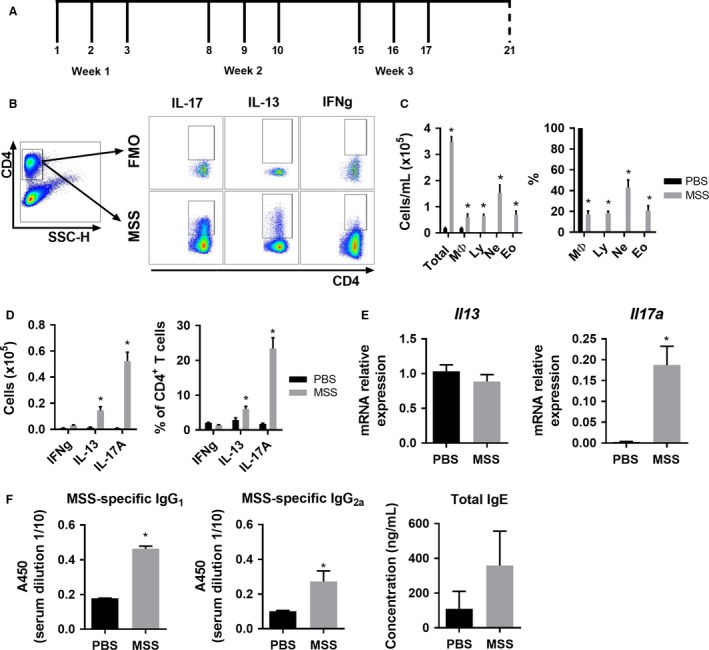
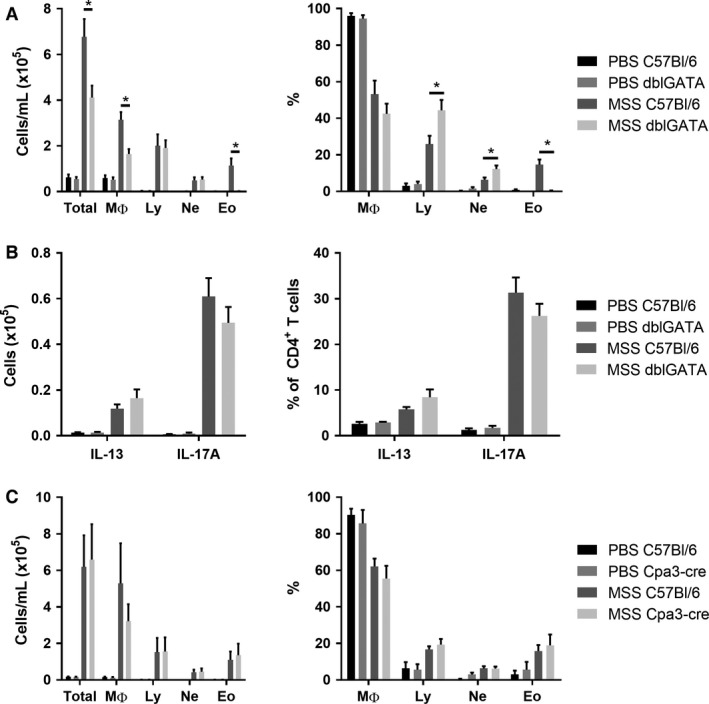
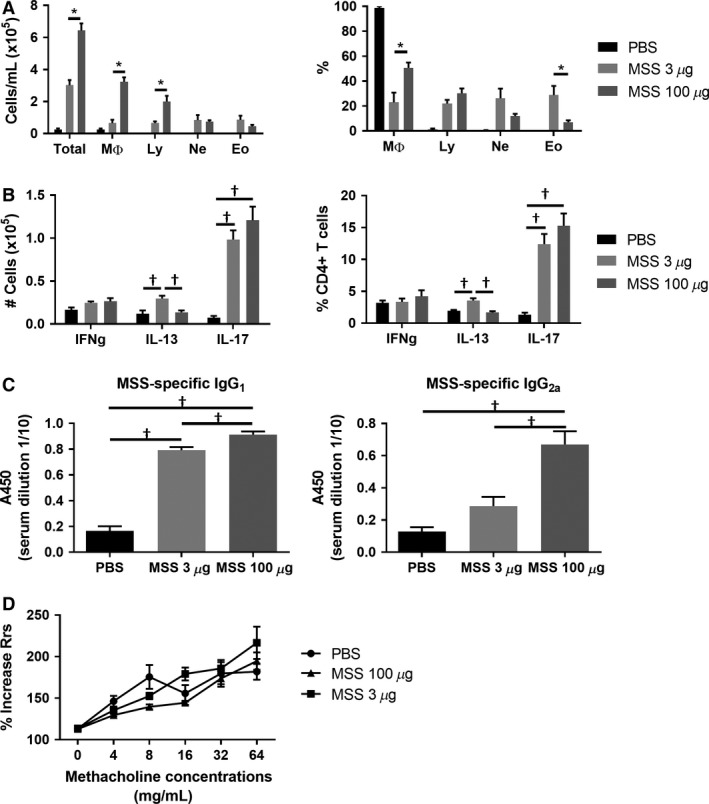
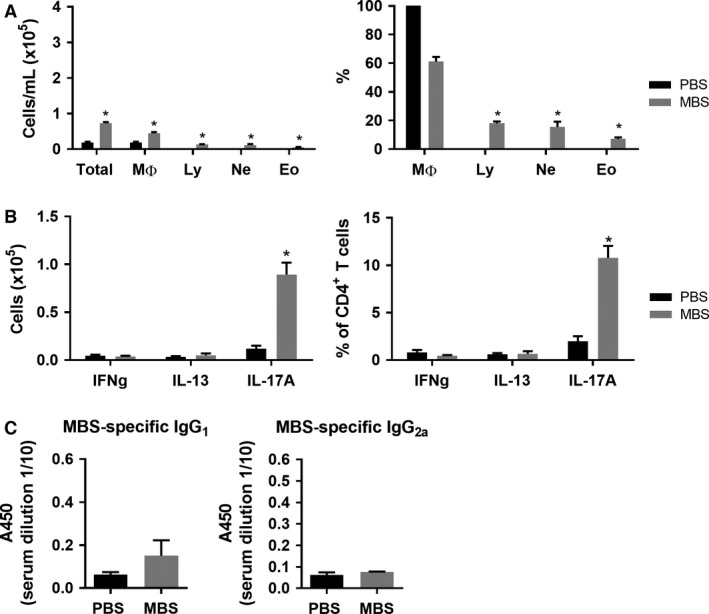
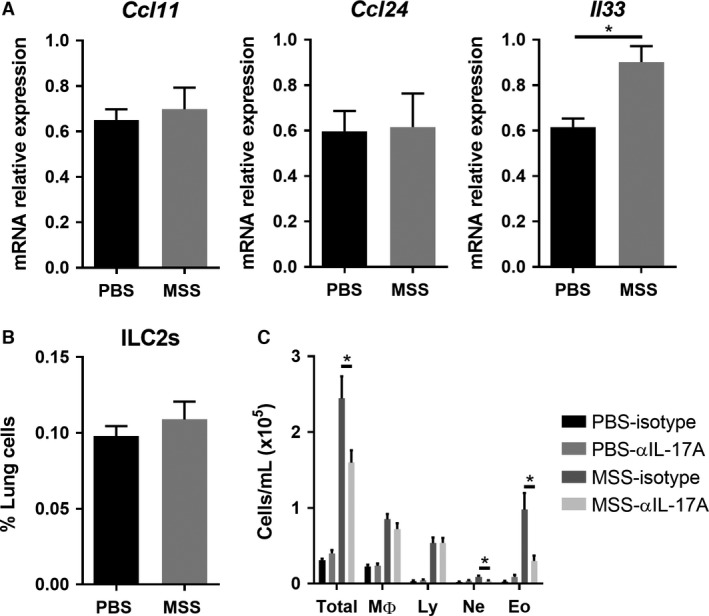
Despite improved awareness of work-related diseases and preventive measures, many workers are still at high risk of developing occupational hypersensitivity airway diseases. This stems from a lack of knowledge of bioaerosol composition and their potential effects on human health. Recently, archaea species were identified in bioaerosols, raising the possibility that they play a major role in exposure-related pathology. Specifically, (MSS) and (MBS) are found in high concentrations in agricultural environments and respiratory exposure to crude extract demonstrates immunomodulatory activity in mice. Nevertheless, our knowledge of the specific impact of methanogens exposure on airway immunity and their potential to induce airway hypersensitivity responses in workers remains scant. Analysis of the lung mucosal response to methanogen crude extracts in mice demonstrated that MSS and MBS predominantly induced T17 airway inflammation, typical of a type IV hypersensitivity response. Furthermore, the response to MSS was associated with antigen-specific IgG and IgG production. However, despite the presence of eosinophils after MSS exposure, only a weak T2 response and no airway hyperresponsiveness were observed. Finally, using eosinophil and mast cell-deficient mice, we confirmed that these cells are dispensable for the T17 response to MSS, although eosinophils likely contribute to the exacerbation of inflammatory processes induced by MSS crude extract exposure. We conclude that, as MSS induces a clear type IV hypersensitivity lung response, it has the potential to be harmful to workers frequently exposed to this methanogen, and that preventive measures should be taken to avoid chronic hypersensitivity disease development in workers.
尽管人们对与工作相关的疾病和预防措施的认识有所提高,但许多工人仍面临患职业性过敏性气道疾病的高风险。这源于对生物气溶胶成分及其对人类健康潜在影响的了解不足。最近,在生物气溶胶中发现了古菌物种,这增加了它们在与暴露相关的病理学中起主要作用的可能性。具体而言,在农业环境中发现(MSS)和(MBS)的浓度很高,并且呼吸道暴露于粗提物在小鼠中显示出免疫调节活性。然而,我们对产甲烷菌暴露对气道免疫的具体影响及其在工人中诱导气道过敏反应的潜力的了解仍然很少。对小鼠中产甲烷菌粗提物的肺黏膜反应分析表明,MSS和MBS主要诱导T17气道炎症,这是IV型过敏反应的典型特征。此外,对MSS的反应与抗原特异性IgG和IgG产生有关。然而,尽管MSS暴露后存在嗜酸性粒细胞,但仅观察到微弱的T2反应且未观察到气道高反应性。最后,使用嗜酸性粒细胞和肥大细胞缺陷小鼠,我们证实这些细胞对于对MSS的T17反应是可有可无的,尽管嗜酸性粒细胞可能有助于加剧由MSS粗提物暴露诱导的炎症过程。我们得出结论,由于MSS诱导了明确的IV型过敏性肺反应,它有可能对经常接触这种产甲烷菌的工人有害,并且应该采取预防措施以避免工人发生慢性过敏疾病。