Department of Cancer Biology, Vanderbilt University Medical Center, Nashville, TN 37232, USA.
Oncogene. 2012 Apr 5;31(14):1794-803. doi: 10.1038/onc.2011.371. Epub 2011 Aug 22.
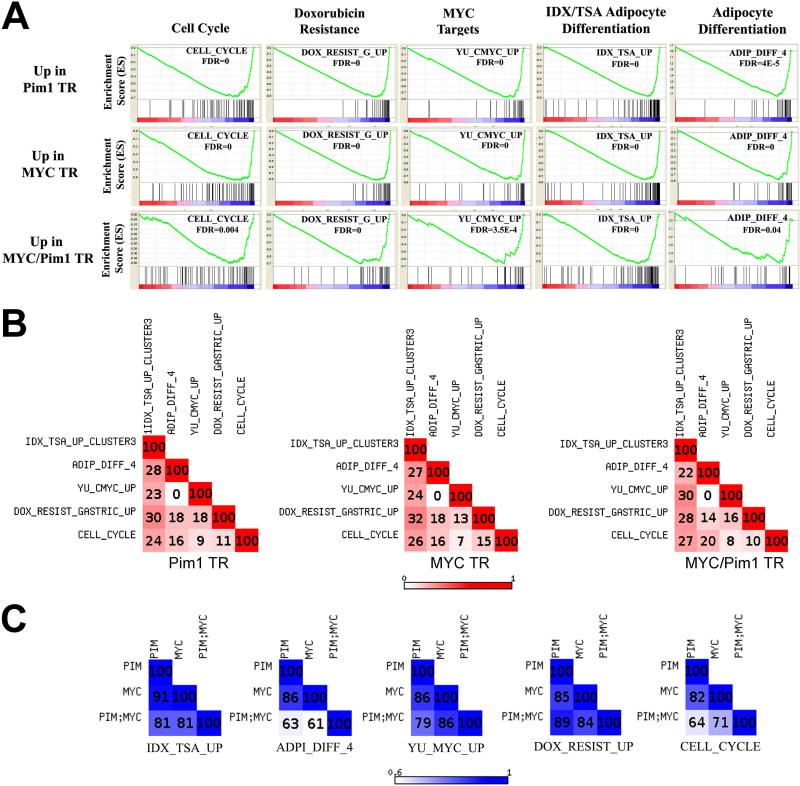
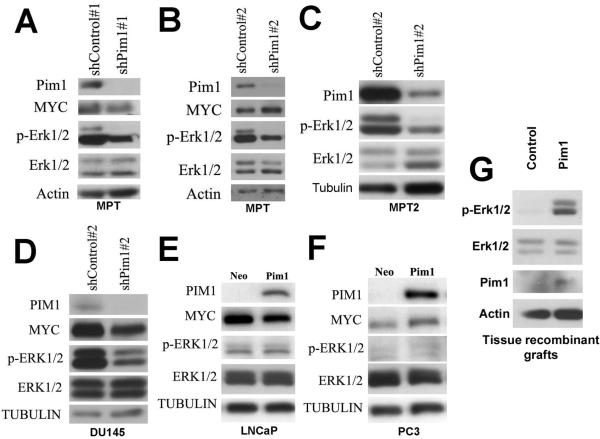
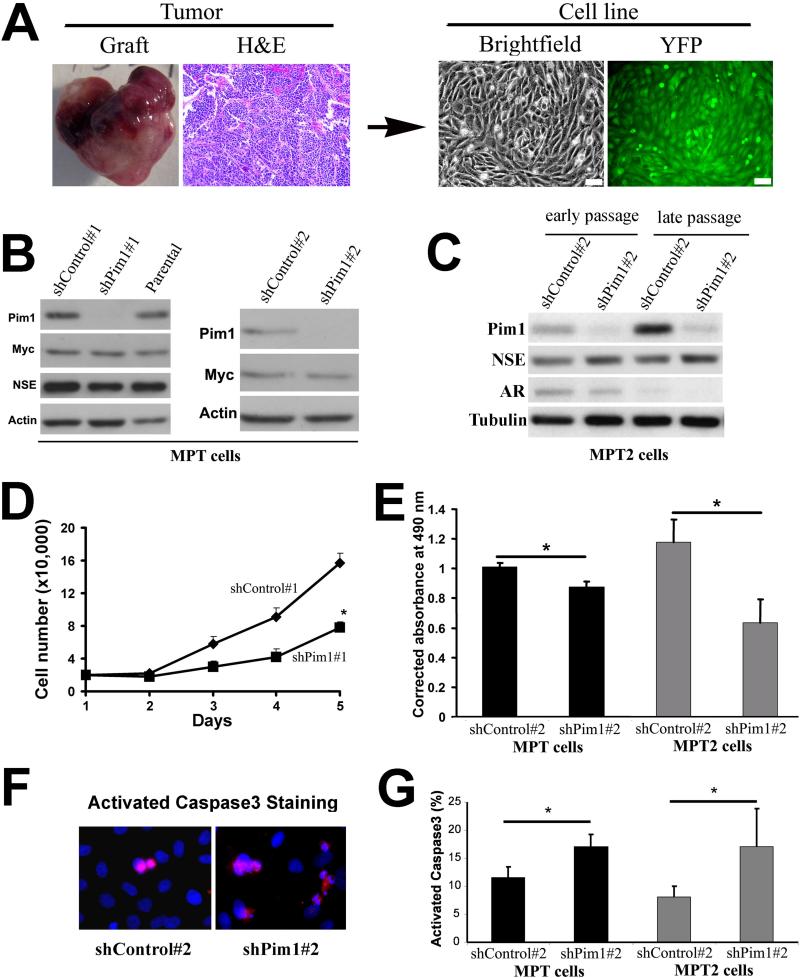
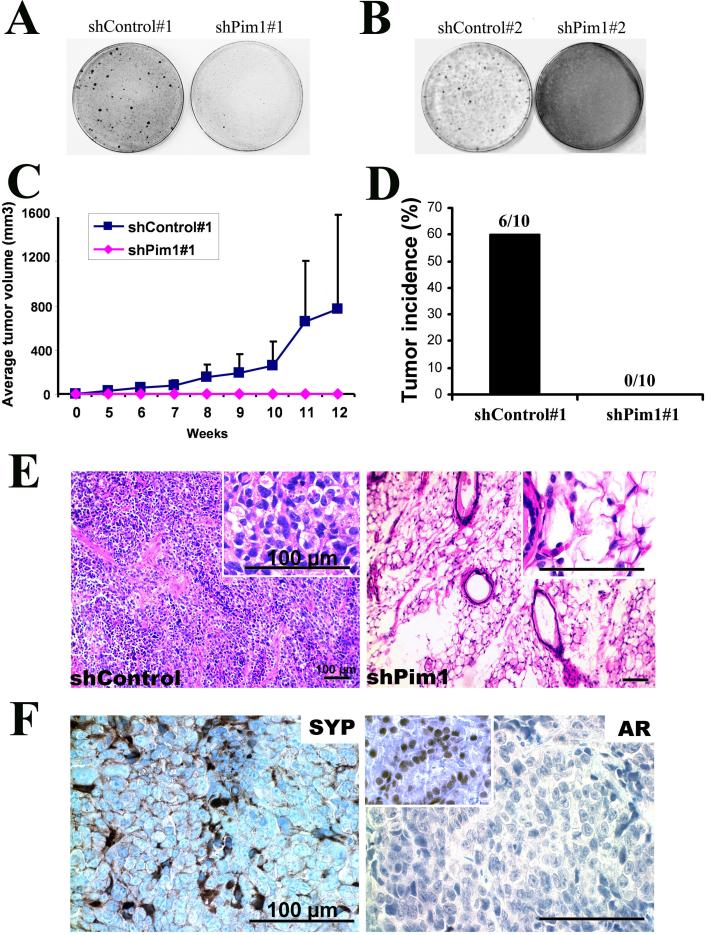
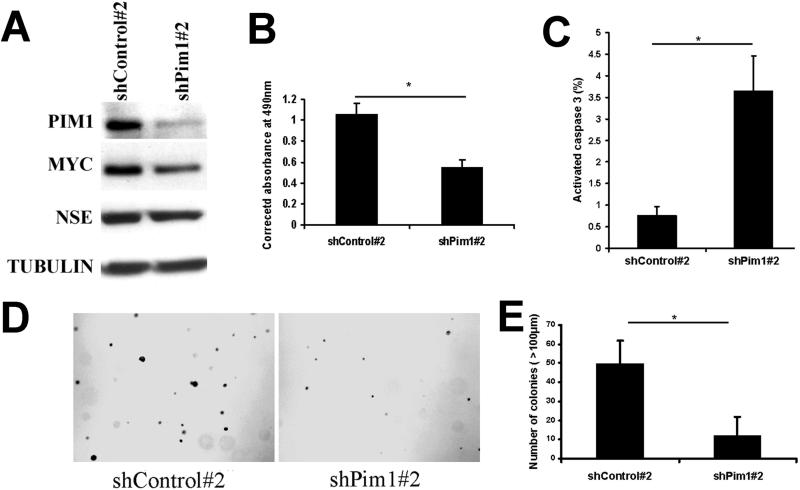
PIM1 kinase and MYC are commonly co-expressed in human prostate cancer and synergize to induce rapidly progressing prostate cancer in mouse models. Deficiency of the Pim kinase genes is well tolerated in vivo, suggesting that PIM1 inhibition might offer an attractive therapeutic modality for prostate cancer, particularly for MYC-expressing tumors. Here we examine the molecular consequences of Pim1 and MYC overexpression in the prostate as well as the effects of depleting Pim1 in prostate carcinoma cells with high levels of MYC. Overexpression of Pim1 in the mouse prostate induces several pro-tumorigenic genetic programs including cell cycle genes and Myc-regulated genes before the induction of any discernible pathology. Pim1 depletion by RNA interference in mouse and human prostate cancer cells decreased cellular proliferation, survival, Erk signaling and tumorigenicity even when MYC levels were not significantly altered. These results indicate that PIM1 may be necessary to maintain tumorigenicity, and further support efforts aimed at developing PIM1 inhibitors for prostate cancer therapy.
PIM1 激酶和 MYC 在人类前列腺癌中通常共同表达,并协同作用在小鼠模型中诱导快速进展的前列腺癌。Pim 激酶基因的缺失在体内具有良好的耐受性,这表明 PIM1 抑制可能为前列腺癌提供一种有吸引力的治疗方式,特别是对于表达 MYC 的肿瘤。在这里,我们研究了 Pim1 和 MYC 在前列腺中的过度表达的分子后果,以及在 MYC 水平较高的前列腺癌细胞中耗尽 Pim1 的影响。在诱导任何可识别的病理学之前,Pim1 在小鼠前列腺中的过表达诱导了几个促肿瘤发生的遗传程序,包括细胞周期基因和 Myc 调节的基因。在小鼠和人类前列腺癌细胞中通过 RNA 干扰耗尽 Pim1 ,即使 MYC 水平没有明显改变,也会降低细胞增殖、存活、Erk 信号和致瘤性。这些结果表明 PIM1 可能是维持肿瘤发生所必需的,并进一步支持旨在开发用于前列腺癌治疗的 PIM1 抑制剂的努力。