Theodoraki Maria A, Caplan Avrom J
Department of Biology, The City College of New York, New York, NY, USA.
Biochim Biophys Acta. 2012 Mar;1823(3):683-8. doi: 10.1016/j.bbamcr.2011.08.006. Epub 2011 Aug 16.
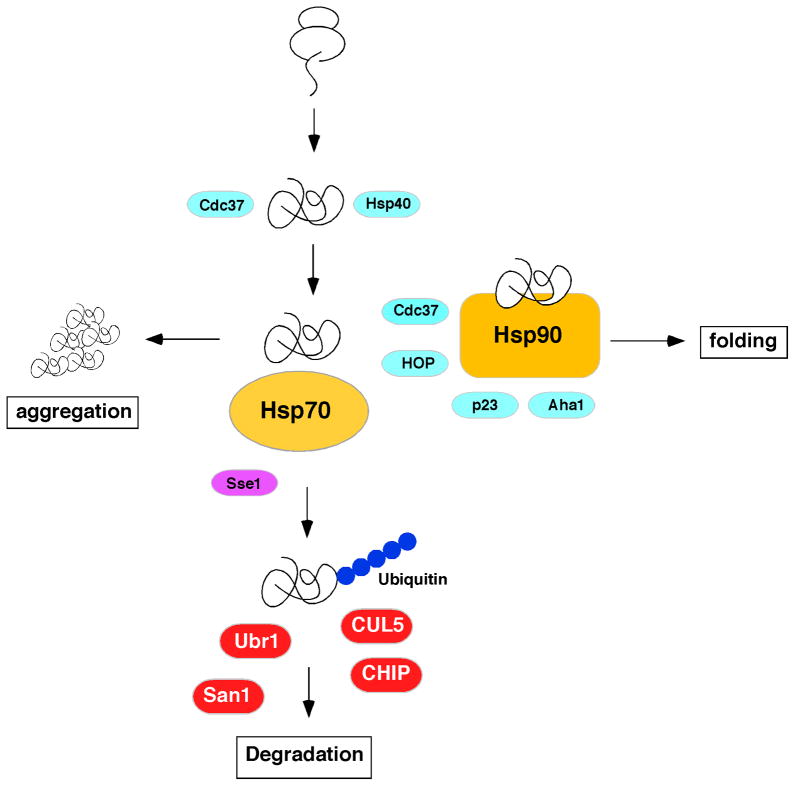
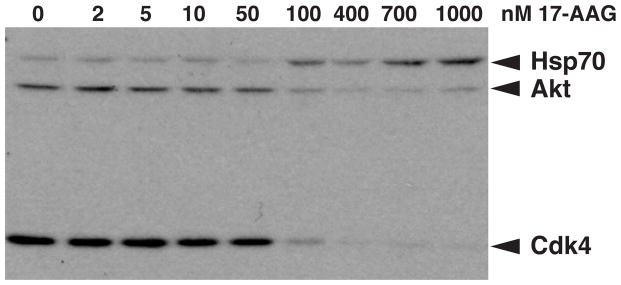
Quality control processes regulate the proteome by determining whether a protein is to be folded or degraded. Hsp90 is a hub in the network of molecular chaperones that maintain this process because it promotes both folding and degradation, in addition to regulating expression of other quality control components. The significance of Hsp90's role in quality control is enhanced by the function of its clients, which include protein kinases and transcription factors, in cellular signaling. The inhibition of Hsp90 with small molecules results in the rapid degradation of such clients via the ubiquitin/proteasome pathway, and also in the induction of the Hsp70 molecular chaperone. These two events result in markedly different outcomes depending on cell type. For tumor cells there is a profound loss of signaling in growth promoting pathways. By contrast, increased amounts of Hsp70 in neuronal cells ameliorate the toxicity that is associated with the formation of aggregates observed in neurodegenerative conditions. In this review we discuss the mechanisms underlying these differential effects of Hsp90 inhibition on the quality control of distinct client proteins. This article is part of a Special Issue entitled: Heat Shock Protein 90 (HSP90).
质量控制过程通过决定蛋白质是要折叠还是降解来调节蛋白质组。热休克蛋白90(Hsp90)是分子伴侣网络中的一个枢纽,维持这一过程,因为它除了调节其他质量控制成分的表达外,还促进折叠和降解。Hsp90在细胞信号传导中的客户蛋白(包括蛋白激酶和转录因子)的功能增强了其在质量控制中作用的重要性。用小分子抑制Hsp90会导致这些客户蛋白通过泛素/蛋白酶体途径快速降解,还会诱导Hsp70分子伴侣。这两个事件根据细胞类型会导致明显不同的结果。对于肿瘤细胞,生长促进途径中的信号传导会严重丧失。相比之下,神经元细胞中Hsp70含量的增加可减轻与神经退行性疾病中观察到的聚集体形成相关的毒性。在这篇综述中,我们讨论了Hsp90抑制对不同客户蛋白质量控制产生这些不同影响的潜在机制。本文是名为:热休克蛋白90(HSP90)的特刊的一部分。