Astbury Centre for Structural Molecular Biology and Institute of Molecular and Cellular Biology, University of Leeds, Leeds, United Kingdom.
Nat Chem Biol. 2011 Aug 28;7(10):730-9. doi: 10.1038/nchembio.635.
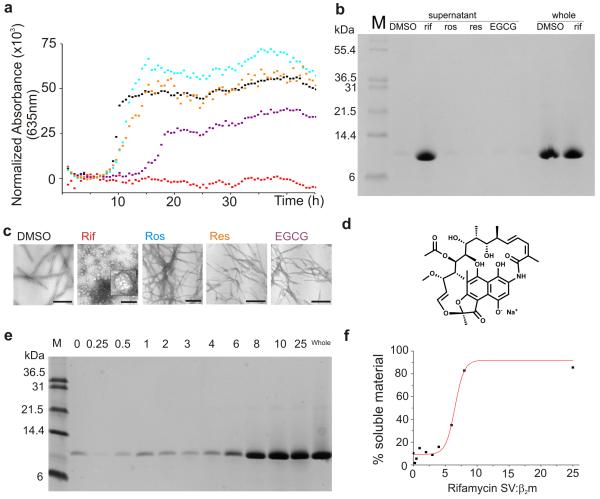
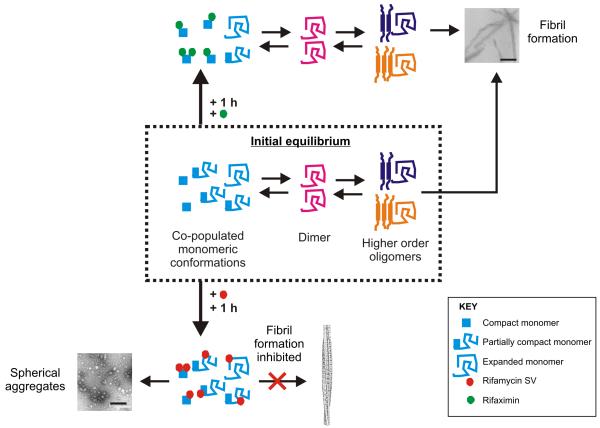
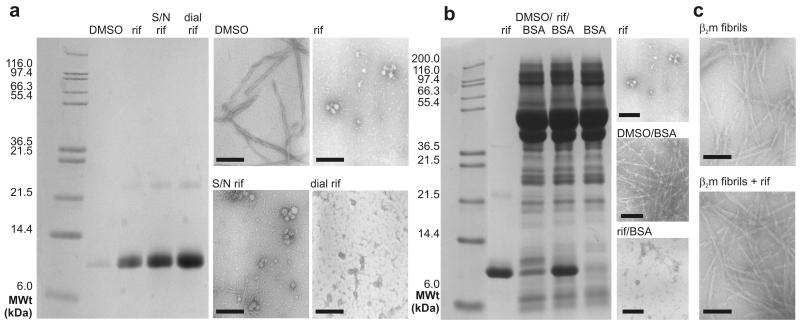
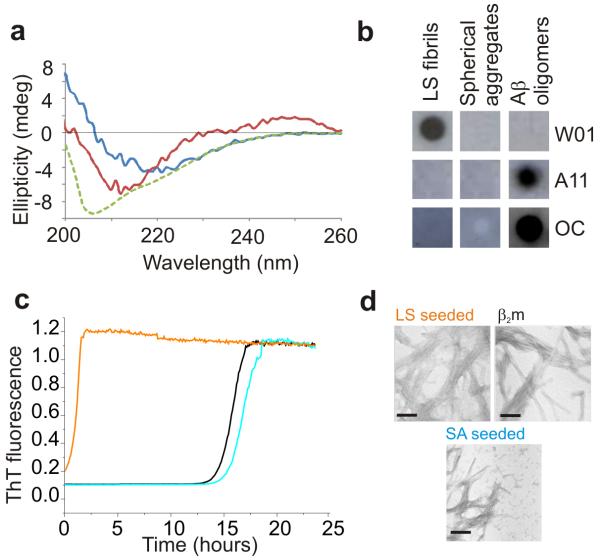
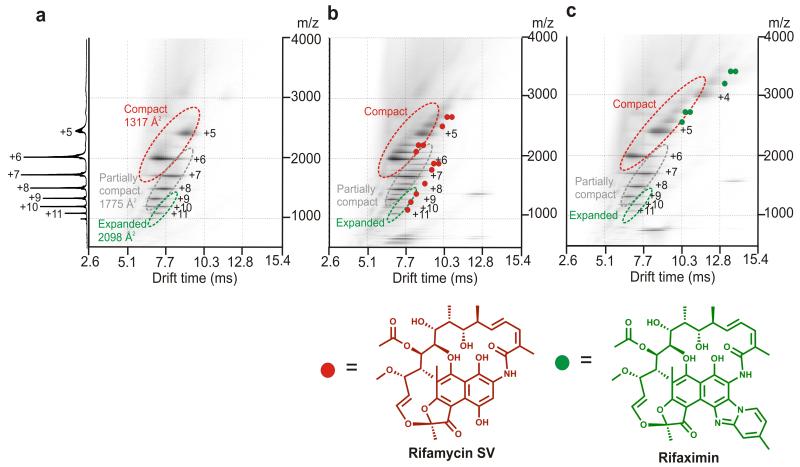
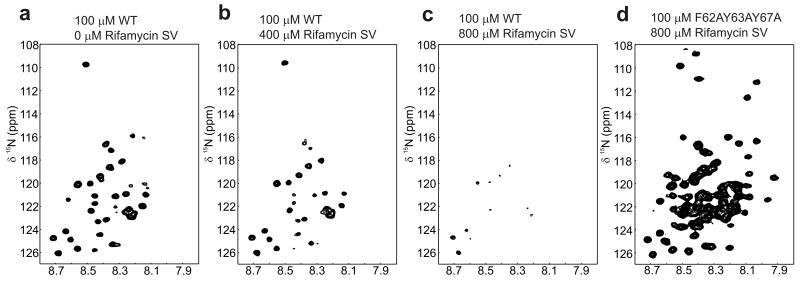
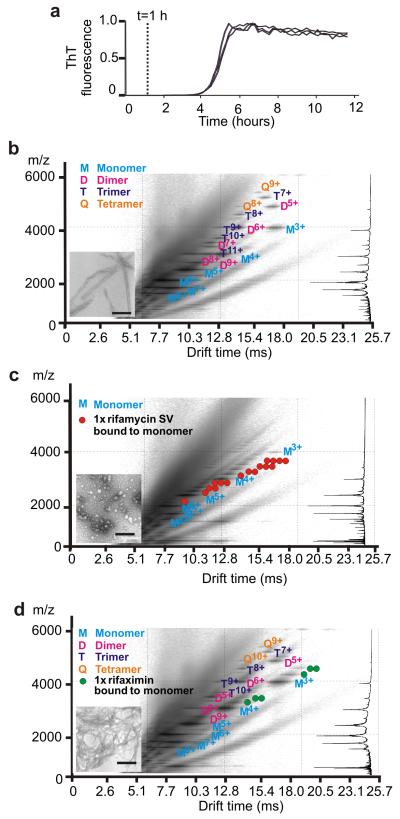
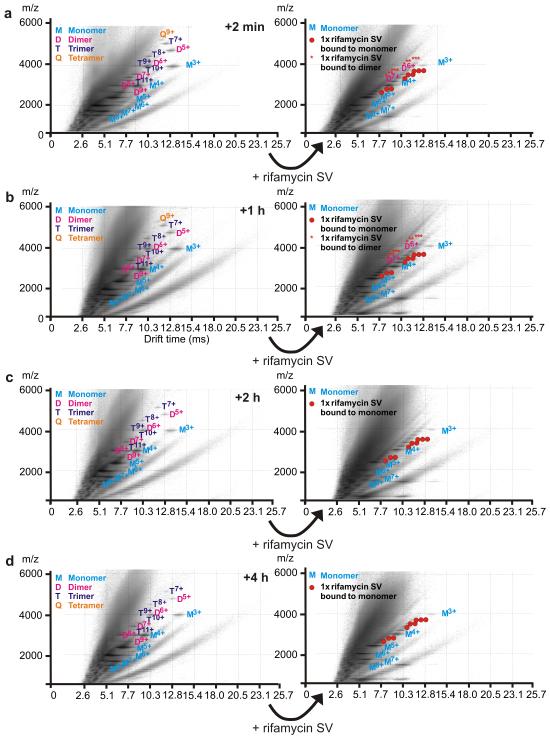
Although small molecules that modulate amyloid formation in vitro have been identified, significant challenges remain in determining precisely how these species act. Here we describe the identification of rifamycin SV as a potent inhibitor of β(2) microglobulin (β(2)m) fibrillogenesis when added during the lag time of assembly or early during fibril elongation. Biochemical experiments demonstrate that the small molecule does not act by a colloidal mechanism. Exploiting the ability of electrospray ionization-ion mobility spectrometry-mass spectrometry (ESI-IMS-MS) to resolve intermediates of amyloid assembly, we show instead that rifamycin SV inhibits β(2)m fibrillation by binding distinct monomeric conformers, disfavoring oligomer formation and diverting the course of assembly to the formation of spherical aggregates. The results demonstrate the power of ESI-IMS-MS to identify specific protein conformers as targets for intervention in fibrillogenesis using small molecules and reveal a mechanism of action in which ligand binding diverts unfolded protein monomers toward alternative assembly pathways.
虽然已经鉴定出了能够调节体外淀粉样形成的小分子,但在确定这些物质的具体作用方式方面仍存在重大挑战。在这里,我们描述了利福霉素 SV 的鉴定,当它在组装的滞后期或纤维伸长的早期添加时,它是一种有效的β(2)微球蛋白 (β(2)m) 原纤维形成抑制剂。生化实验表明,小分子不是通过胶体机制起作用的。利用电喷雾电离-离子淌度谱-质谱(ESI-IMS-MS)来解析淀粉样蛋白组装的中间体,我们反而表明,利福霉素 SV 通过结合不同的单体构象来抑制β(2)m 纤维化,不利于寡聚体的形成,并改变组装过程形成球形聚集体。这些结果证明了 ESI-IMS-MS 的强大功能,可以识别特定的蛋白质构象作为使用小分子干预纤维形成的靶点,并揭示了一种作用机制,其中配体结合将未折叠的蛋白质单体转向替代的组装途径。