Wellcome Trust Centre for Human Genetics, University of Oxford, Oxford, UK.
Mol Psychiatry. 2012 Nov;17(11):1077-85. doi: 10.1038/mp.2011.105. Epub 2011 Aug 30.
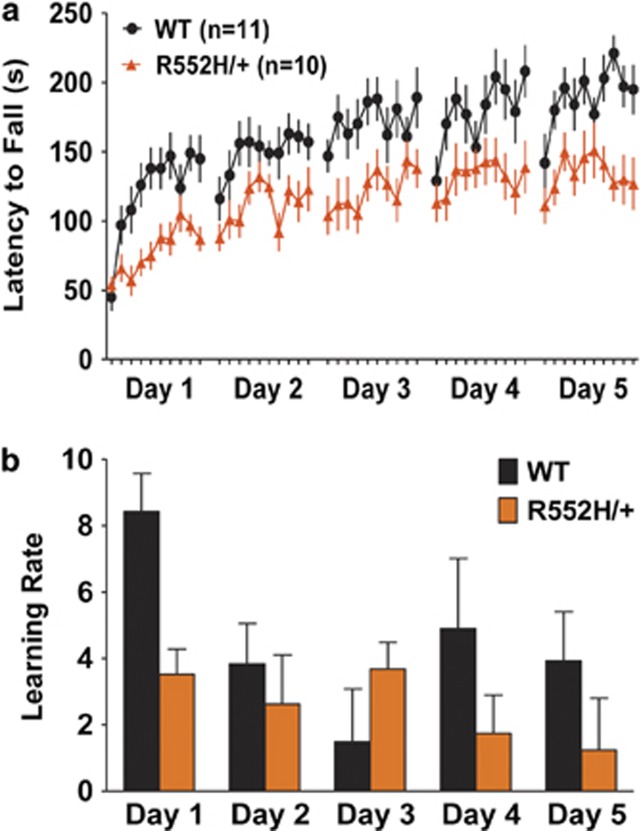
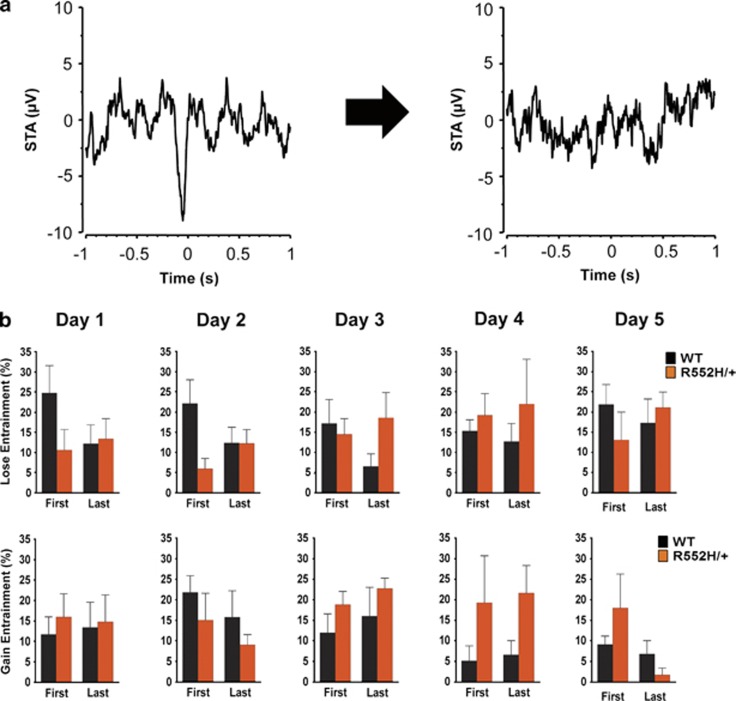
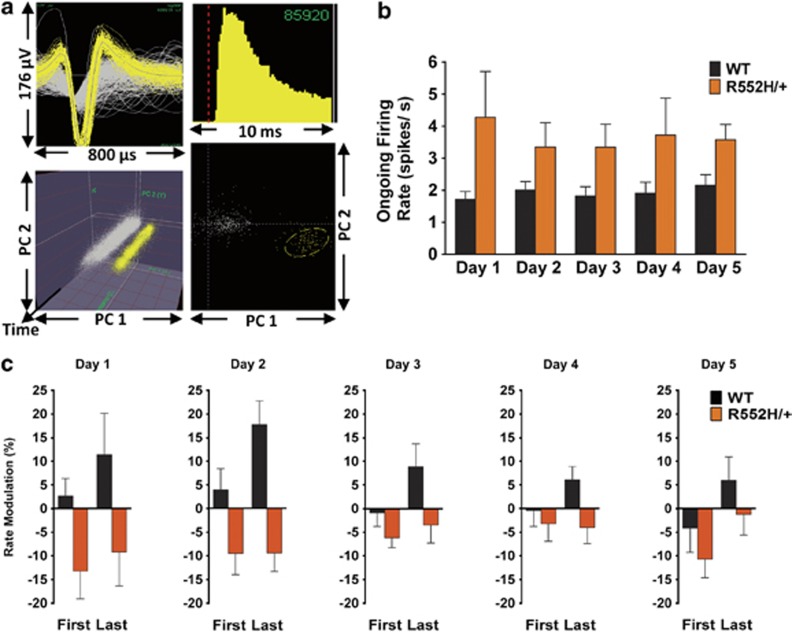
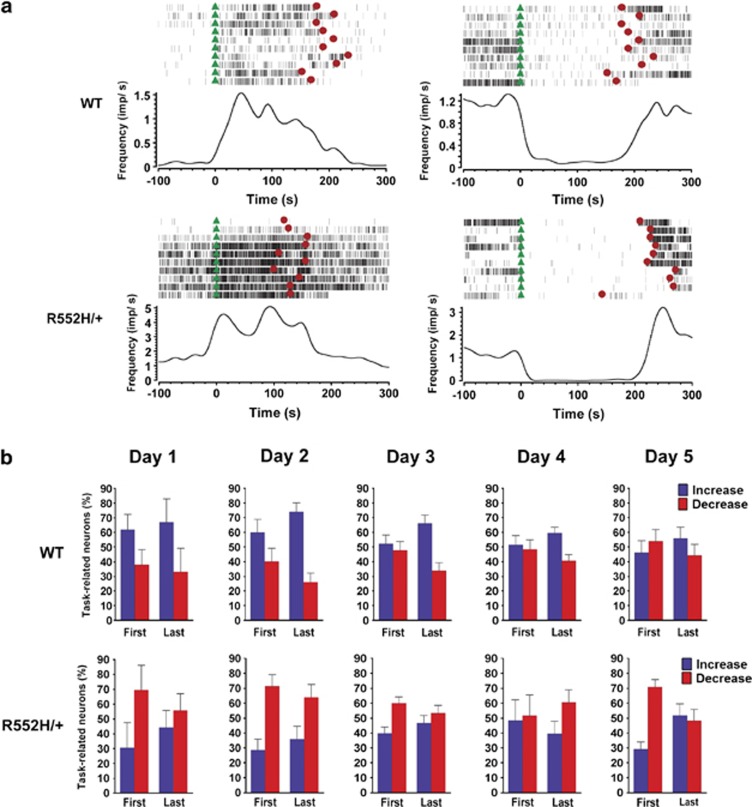
Mutations in the human FOXP2 gene cause impaired speech development and linguistic deficits, which have been best characterised in a large pedigree called the KE family. The encoded protein is highly conserved in many vertebrates and is expressed in homologous brain regions required for sensorimotor integration and motor-skill learning, in particular corticostriatal circuits. Independent studies in multiple species suggest that the striatum is a key site of FOXP2 action. Here, we used in vivo recordings in awake-behaving mice to investigate the effects of the KE-family mutation on the function of striatal circuits during motor-skill learning. We uncovered abnormally high ongoing striatal activity in mice carrying an identical mutation to that of the KE family. Furthermore, there were dramatic alterations in striatal plasticity during the acquisition of a motor skill, with most neurons in mutants showing negative modulation of firing rate, starkly contrasting with the predominantly positive modulation seen in control animals. We also observed striking changes in the temporal coordination of striatal firing during motor-skill learning in mutants. Our results indicate that FOXP2 is critical for the function of striatal circuits in vivo, which are important not only for speech but also for other striatal-dependent skills.
人类 FOXP2 基因突变会导致言语发育障碍和语言缺陷,这在一个名为 KE 家族的大型家系中得到了很好的描述。该基因编码的蛋白质在许多脊椎动物中高度保守,并且在同源的脑区表达,这些脑区对于感觉运动整合和运动技能学习至关重要,特别是皮质纹状体回路。多个物种的独立研究表明,纹状体是 FOXP2 作用的关键部位。在这里,我们使用清醒行为小鼠中的体内记录来研究 KE 家族突变对运动技能学习过程中纹状体回路功能的影响。我们发现携带与 KE 家族相同突变的小鼠纹状体中存在异常高的持续活动。此外,在运动技能获得过程中,纹状体的可塑性发生了剧烈变化,大多数突变体神经元的放电率呈现负调节,与对照动物中主要的正调节形成鲜明对比。我们还观察到在突变体的运动技能学习过程中,纹状体放电的时间协调发生了显著变化。我们的研究结果表明,FOXP2 对于纹状体回路的功能至关重要,这些回路不仅对言语很重要,而且对其他依赖纹状体的技能也很重要。