Department of Anesthesiology, Washington University School of Medicine, St. Louis, Missouri 63110, USA.
Anesthesiology. 2011 Dec;115(6):1338-48. doi: 10.1097/ALN.0b013e3182315d93.
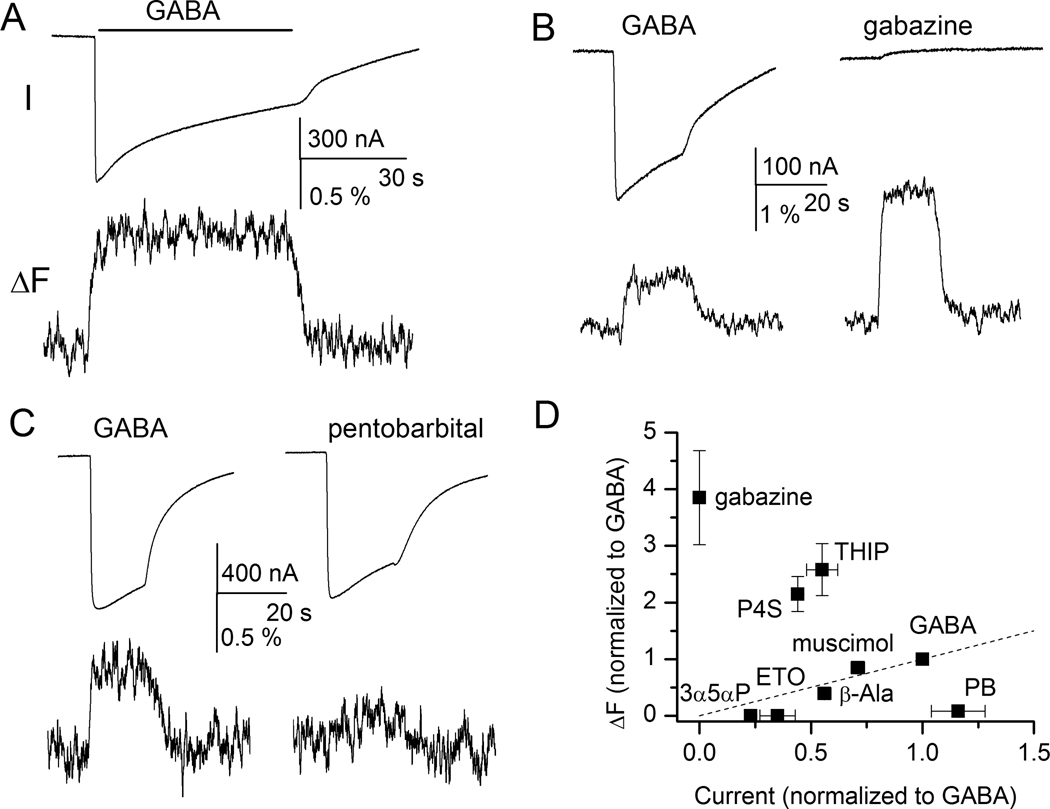
The γ-aminobutyric acid type A receptor is the major transmitter-gated inhibitory channel in the central nervous system. The receptor is a target for anesthetics, anticonvulsants, anxiolytics, and sedatives whose actions facilitate the flow of chloride ions through the channel and enhance the inhibitory tone in the brain. Both the kinetic and structural aspects of the actions of modulators of the γ-aminobutyric acid type A receptor are of great importance to understanding the molecular mechanisms of general anesthesia. In this review, the structural rearrangements that take place in the γ-aminobutyric acid type A receptor during channel activation and modulation are described, focusing on data obtained using voltage-clamp fluorometry. Voltage-clamp fluorometry entails the binding of an environmentally sensitive fluorophore molecule to a site of interest in the receptor, and measurement of changes in the fluorescence signal resulting from activation- or modulation-elicited structural changes. Detailed investigations can provide a map of structural changes that underlie or accompany the functional effects of modulators.
γ-氨基丁酸 A 型受体是中枢神经系统中主要的递质门控抑制性通道。该受体是麻醉剂、抗惊厥药、抗焦虑药和镇静剂的作用靶点,这些药物的作用是促进氯离子通过通道流动,并增强大脑中的抑制性张力。调节剂对 γ-氨基丁酸 A 型受体作用的动力学和结构方面对于理解全身麻醉的分子机制都非常重要。在这篇综述中,描述了 γ-氨基丁酸 A 型受体在通道激活和调节过程中发生的结构重排,重点介绍了使用电压钳荧光法获得的数据。电压钳荧光法需要将环境敏感荧光团分子与受体上的感兴趣部位结合,并测量由于激活或调节引起的结构变化而导致的荧光信号变化。详细的研究可以提供一个结构变化的图谱,这些变化是调节剂的功能效应的基础或伴随。