Department of Pathology, School of Dental Medicine, School of Medicine, University of Pennsylvania, Philadelphia, Pennsylvania 19104-6030, USA.
Neuropathol Appl Neurobiol. 2012 Apr;38(2):175-200. doi: 10.1111/j.1365-2990.2011.01215.x.
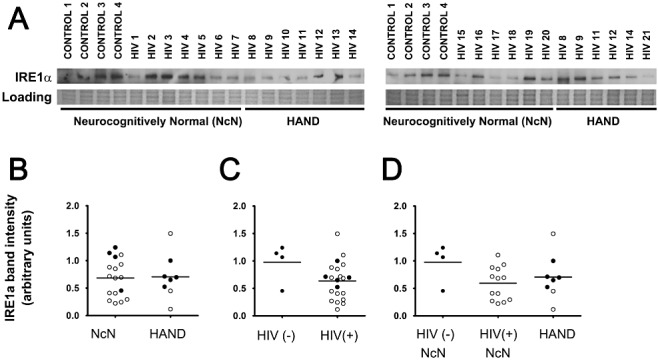
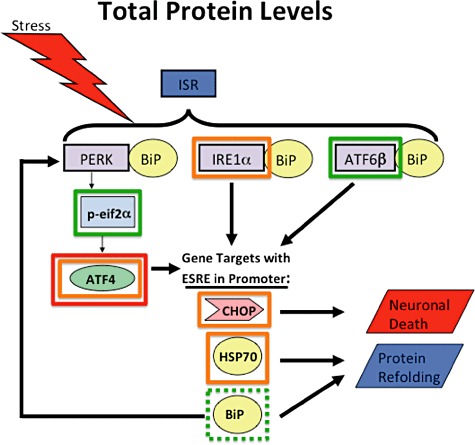
Combined anti-retroviral therapy (cART) has led to a reduction in the incidence of HIV-associated dementia (HAD), a severe motor/cognitive disorder afflicting HIV(+) patients. However, the prevalence of subtler forms of neurocognitive dysfunction, which together with HAD are termed HIV-associated neurocognitive disorders (HAND), continues to escalate in the post-cART era. The microgliosis, astrogliosis, dendritic damage, and synaptic and neuronal loss observed in autopsy cases suggest an underlying neuroinflammatory process, due to the neurotoxic factors released by HIV-infected/activated macrophages/microglia in the brain, might underlie the pathogenesis of HAND in the post-cART era. These factors are known to induce the integrated stress response (ISR) in several neurodegenerative diseases; we have previously shown that BiP, an indicator of general ISR activation, is upregulated in cortical autopsy tissue from HIV-infected patients. The ISR is composed of three pathways, each with its own initiator protein: PERK, IRE1α and ATF6.
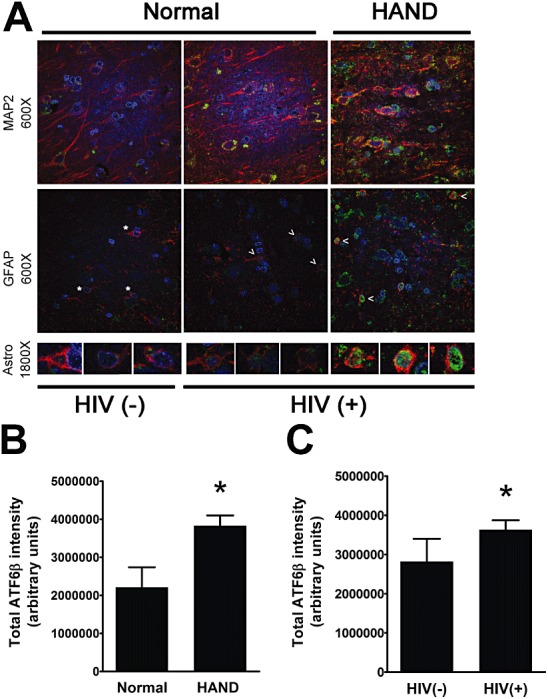
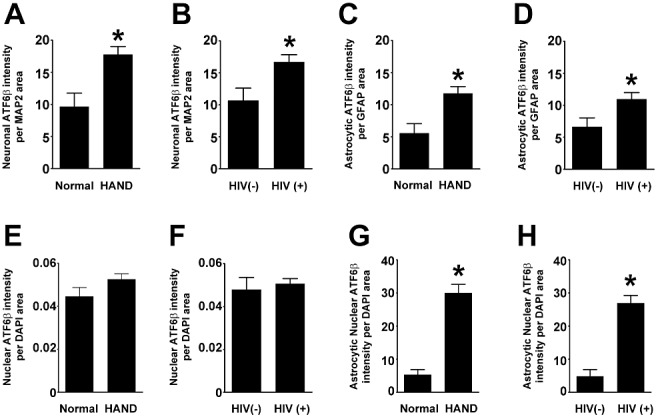
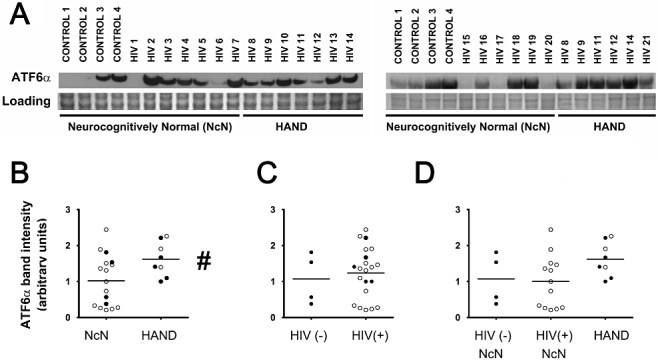
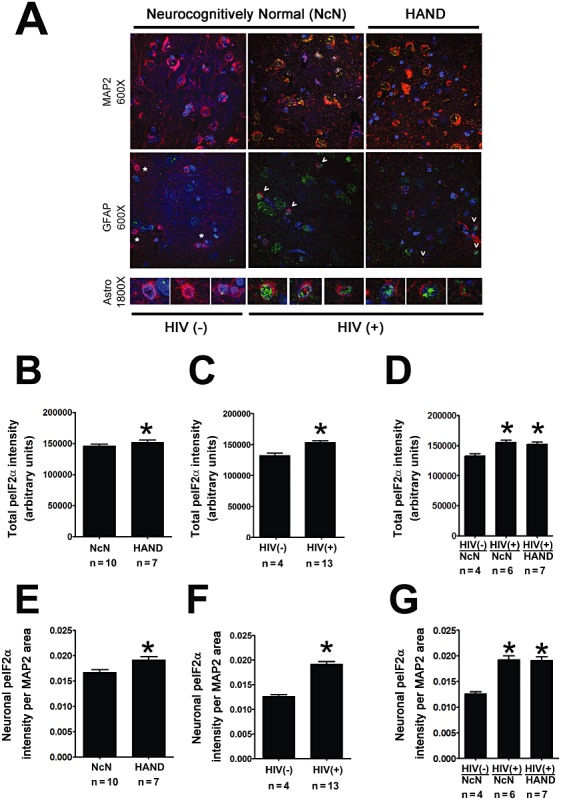
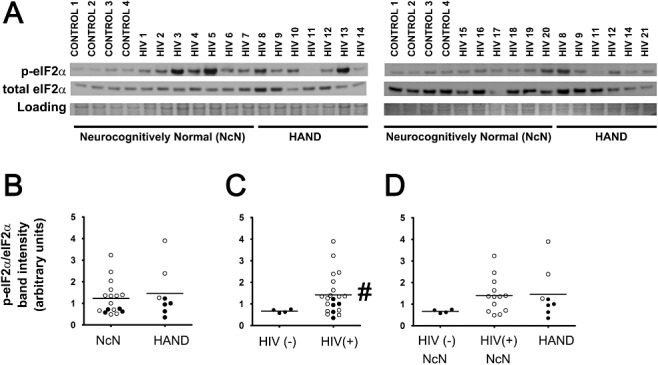
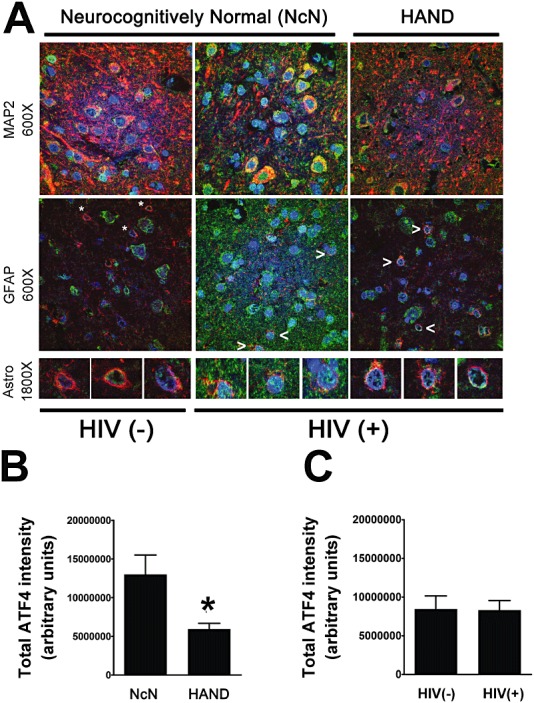
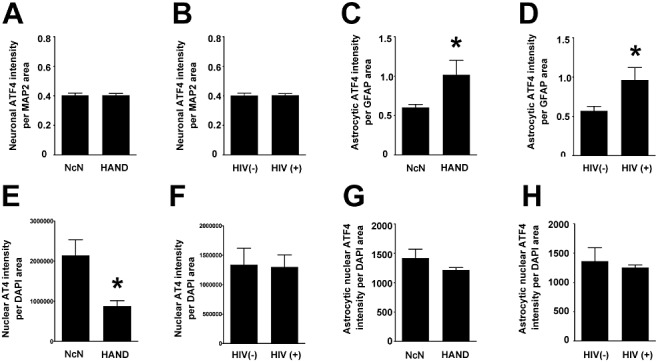
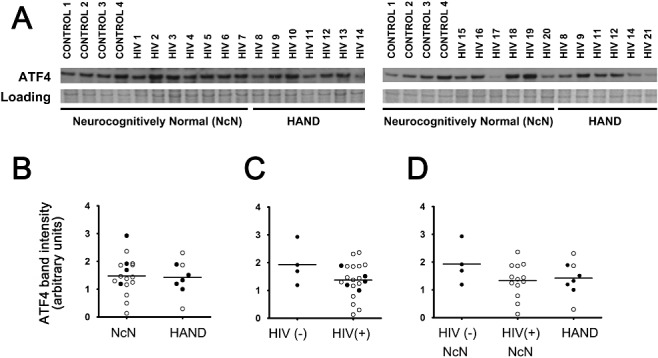
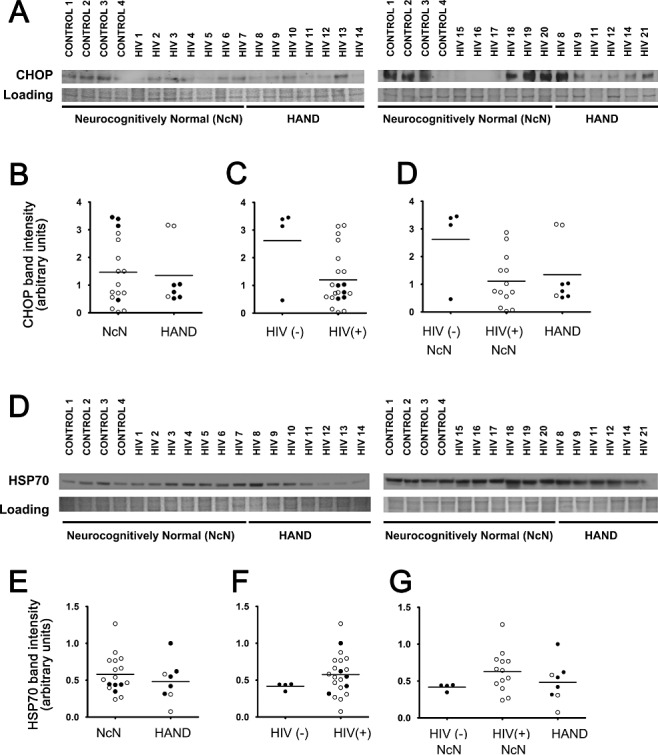
To further elucidate the specific ISR pathways activated in the central nervous system of HAND patients, we examined the protein levels of several ISR proteins, including ATF6, peIF2α and ATF4, in cortical tissue from HIV-infected patients.
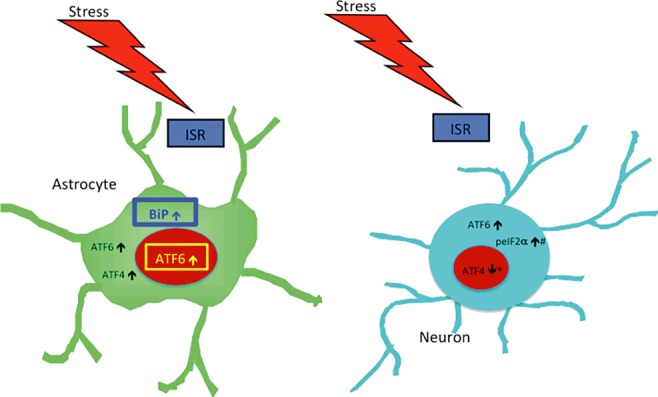
The ISR does not respond in an all-or-none fashion in HAND, but rather demonstrates a nuanced activation pattern. Specifically, our studies implicate the ATF6 pathway of the ISR as a more likely candidate than the PERK pathway for increases in BiP levels in astrocytes.
These findings begin to characterize the nature of the ISR response in HAND and provide potential targets for therapeutic intervention in this disease.
联合抗逆转录病毒疗法(cART)降低了 HIV 相关痴呆(HAD)的发病率,HAD 是一种严重的运动/认知障碍,影响 HIV(+)患者。然而,在 cART 后时代,与 HAD 一起被称为 HIV 相关神经认知障碍(HAND)的更微妙形式的神经认知功能障碍的患病率继续上升。尸检病例中观察到的小胶质细胞增生、星形胶质细胞增生、树突损伤以及突触和神经元丢失表明存在潜在的神经炎症过程,由于 HIV 感染/激活的巨噬细胞/小胶质细胞在大脑中释放的神经毒性因子,可能是 HAND 在 cART 后时代发病机制的基础。这些因子已知会在几种神经退行性疾病中诱导综合应激反应(ISR);我们之前已经表明,BiP,一般 ISR 激活的指标,在感染 HIV 的患者的皮质尸检组织中上调。ISR 由三条途径组成,每条途径都有自己的起始蛋白:PERK、IRE1α 和 ATF6。
为了进一步阐明 HAND 患者中枢神经系统中激活的特定 ISR 途径,我们检查了来自 HIV 感染患者的皮质组织中几种 ISR 蛋白的蛋白水平,包括 ATF6、peIF2α 和 ATF4。
ISR 在 HAND 中不会以全有或全无的方式做出反应,而是表现出细微的激活模式。具体来说,我们的研究表明,ISR 的 ATF6 途径比 PERK 途径更有可能成为星形胶质细胞中 BiP 水平升高的候选途径。
这些发现开始描述 HAND 中 ISR 反应的性质,并为该疾病的治疗干预提供潜在目标。