School of Chemistry and Molecular Biosciences, University of Queensland, Australia.
Curr Neuropharmacol. 2011 Mar;9(1):122-8. doi: 10.2174/157015911795017164.
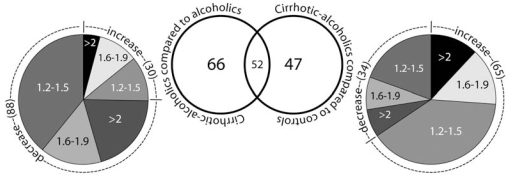
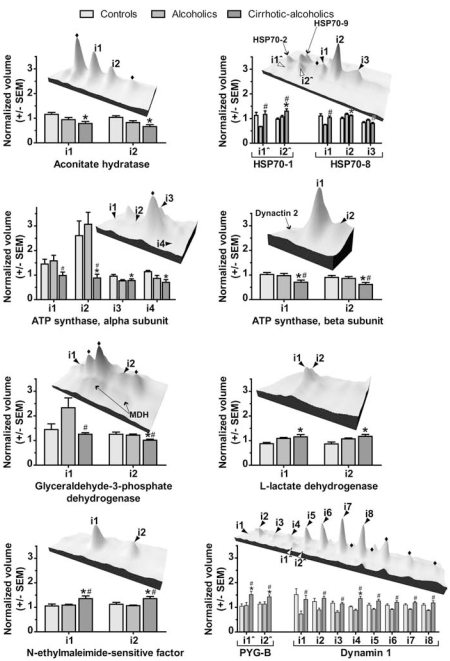
Hepatic complications are a common side-effect of alcoholism. Without the detoxification capabilities of the liver, alcohol misuse induces changes in gene and protein expression throughout the body. A global proteomics approach was used to identify these protein changes in the brain. We utilised human autopsy tissue from the superior frontal gyrus (SFG) of six cirrhotic alcoholics, six alcoholics without comorbid disease, and six non-alcoholic non-cirrhotic controls. Synaptic proteins were isolated and used in two-dimensional differential in-gel electrophoresis coupled with mass spectrometry. Many expression differences were confined to one or other alcoholic sub-group. Cirrhotic alcoholics showed 99 differences in protein expression levels from controls, of which half also differed from non-comorbid alcoholics. This may reflect differences in disease severity between the sub-groups of alcoholics, or differences in patterns of harmful drinking. Alternatively, the protein profiles may result from differences between cirrhotic and non-comorbid alcoholics in subjects' responses to alcohol misuse. Ten proteins were identified in at least two spots on the 2D gel; they were involved in basal energy metabolism, synaptic vesicle recycling, and chaperoning. These post-translationally modified isoforms were differentially regulated in cirrhotic alcoholics, indicating a level of epigenetic control not previously observed in this disorder.
肝脏并发症是酗酒的常见副作用。由于肝脏失去了解毒功能,酗酒会导致全身基因和蛋白质表达发生变化。本研究采用整体蛋白质组学方法来确定大脑中的这些蛋白质变化。我们利用来自六个肝硬化酗酒者、六个无合并症酗酒者和六个非酗酒非肝硬化对照者的上额额回(SFG)的人体尸检组织。分离出突触蛋白,并用于二维差异凝胶电泳结合质谱分析。许多表达差异仅限于一个或另一个酗酒亚组。与对照组相比,肝硬化酗酒者的蛋白质表达水平有 99 种差异,其中一半也与无合并症酗酒者不同。这可能反映了酗酒者亚组之间疾病严重程度的差异,或者有害饮酒模式的差异。或者,蛋白质图谱可能是由于肝硬化和无合并症酗酒者在对酒精滥用的反应方面存在差异所致。在 2D 凝胶上至少有两个点鉴定出 10 种蛋白质;它们参与基础能量代谢、突触小泡再循环和伴侣蛋白。这些经翻译后修饰的同工型在肝硬化酗酒者中受到差异调节,表明在这种疾病中以前未观察到的表观遗传控制水平。