Department of Psychiatry, University of Utah, Salt Lake City, UT 84112, USA.
Molecular Medicine Program, University of Utah, Salt Lake City, UT 84112, USA.
Int J Mol Sci. 2024 Jun 21;25(13):6838. doi: 10.3390/ijms25136838.
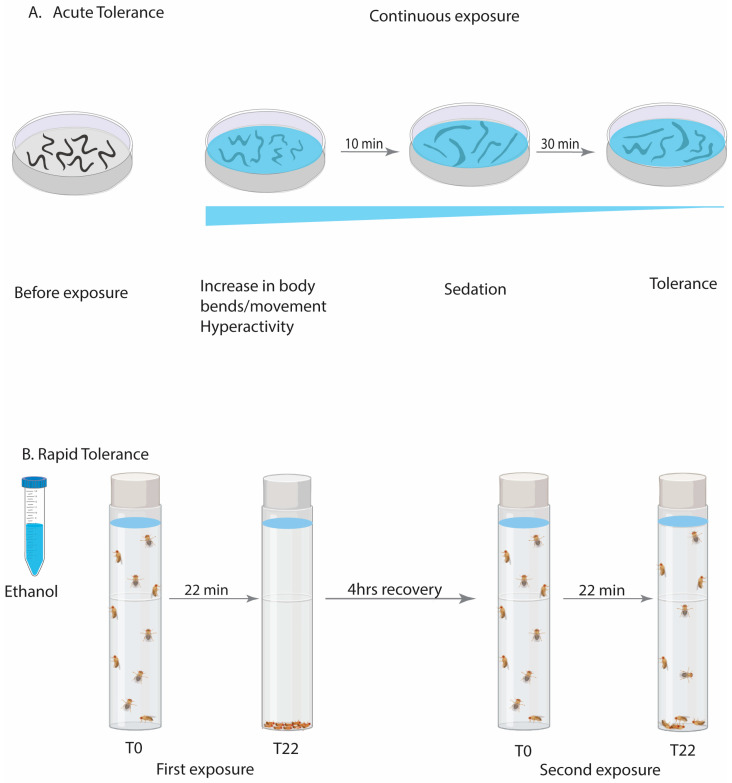
Alcohol tolerance is a neuroadaptive response that leads to a reduction in the effects of alcohol caused by previous exposure. Tolerance plays a critical role in the development of alcohol use disorder (AUD) because it leads to the escalation of drinking and dependence. Understanding the molecular mechanisms underlying alcohol tolerance is therefore important for the development of effective therapeutics and for understanding addiction in general. This review explores the molecular basis of alcohol tolerance in invertebrate models, and , focusing on synaptic transmission. Both organisms exhibit biphasic responses to ethanol and develop tolerance similar to that of mammals. Furthermore, the availability of several genetic tools makes them a great candidate to study the molecular basis of ethanol response. Studies in invertebrate models show that tolerance involves conserved changes in the neurotransmitter systems, ion channels, and synaptic proteins. These neuroadaptive changes lead to a change in neuronal excitability, most likely to compensate for the enhanced inhibition by ethanol.
酒精耐受是一种神经适应性反应,导致先前暴露于酒精引起的效应降低。耐受在酒精使用障碍(AUD)的发展中起着关键作用,因为它导致饮酒和依赖的升级。因此,了解酒精耐受的分子机制对于开发有效的治疗方法和理解一般成瘾至关重要。 本文综述了在无脊椎动物模型中酒精耐受的分子基础, ,重点是突触传递。这两种生物对乙醇表现出双相反应,并产生类似于哺乳动物的耐受。此外,几种遗传工具的可用性使它们成为研究乙醇反应分子基础的理想候选物。 在无脊椎动物模型中的研究表明,耐受涉及神经递质系统、离子通道和突触蛋白的保守变化。这些神经适应性变化导致神经元兴奋性的变化,很可能是为了补偿乙醇增强的抑制作用。