Department of Ophthalmology and Visual Sciences, Kellogg Eye Center, University of Michigan, Ann Arbor, Michigan, United States of America.
PLoS One. 2011;6(8):e22991. doi: 10.1371/journal.pone.0022991. Epub 2011 Aug 19.
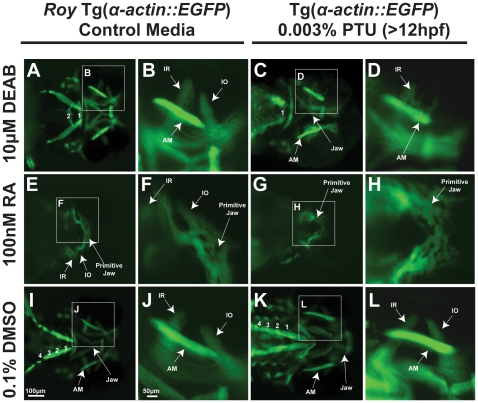
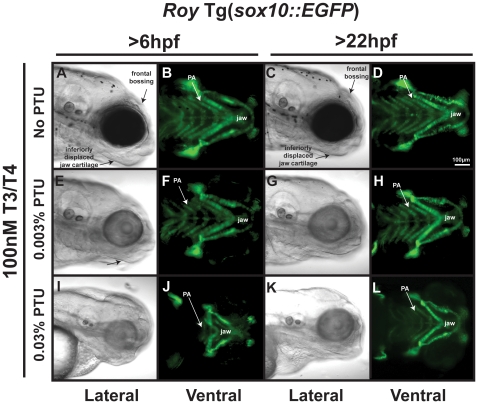
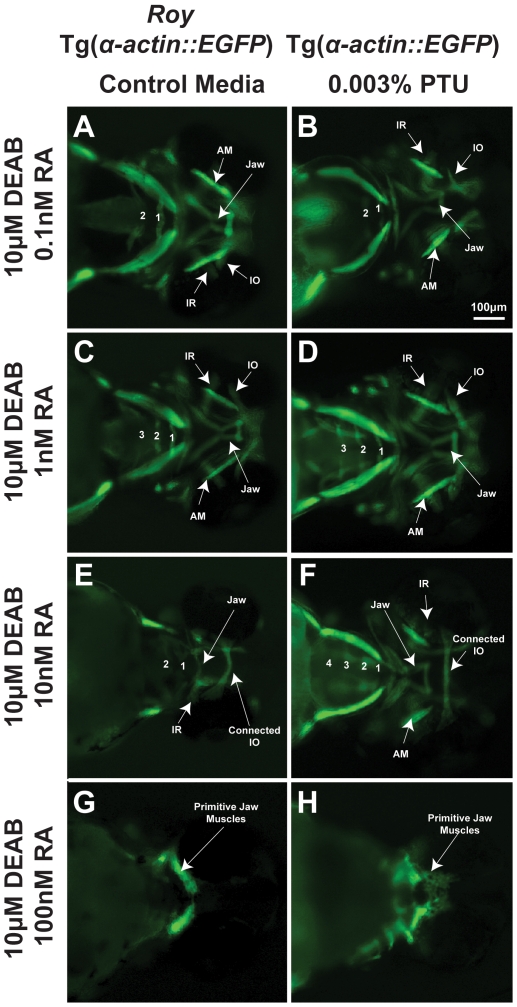
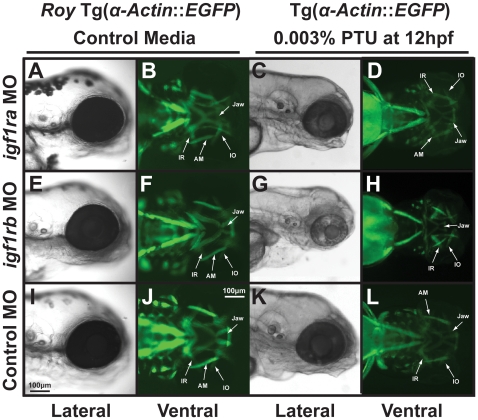
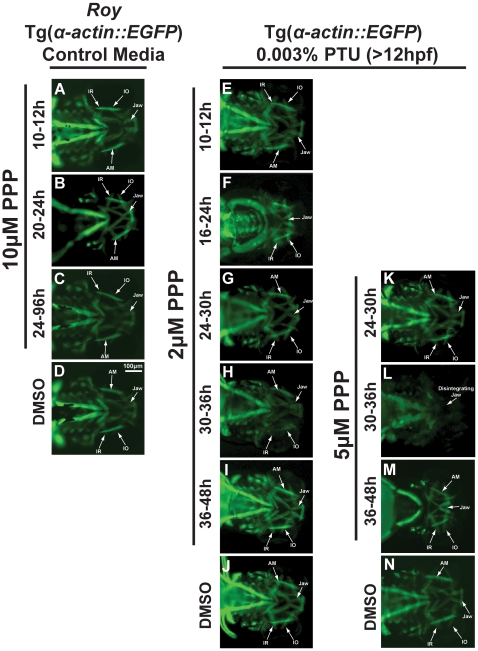
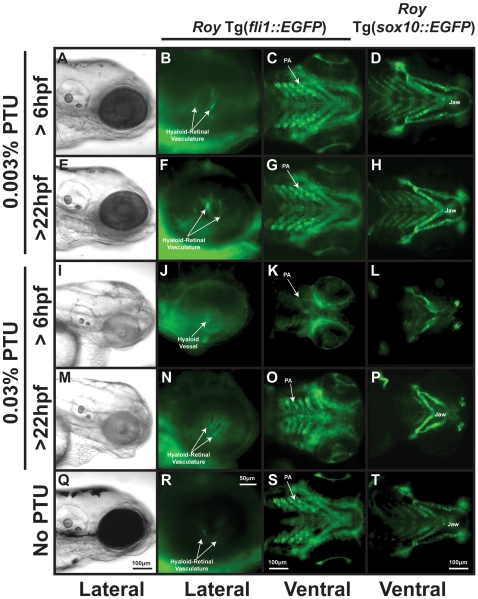
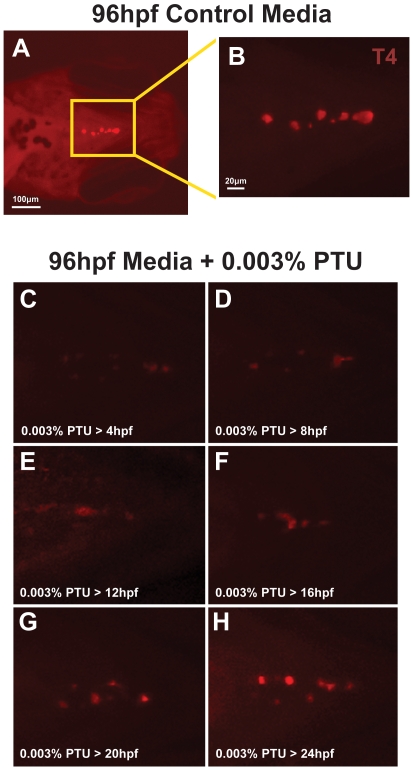
1-Phenyl 2-thiourea (PTU) is a tyrosinase inhibitor commonly used to block pigmentation and aid visualization of zebrafish development. At the standard concentration of 0.003% (200 µM), PTU inhibits melanogenesis and reportedly has minimal other effects on zebrafish embryogenesis. We found that 0.003% PTU altered retinoic acid and insulin-like growth factor (IGF) regulation of neural crest and mesodermal components of craniofacial development. Reduction of retinoic acid synthesis by the pan-aldehyde dehydrogenase inhibitor diethylbenzaldehyde, only when combined with 0.003% PTU, resulted in extraocular muscle disorganization. PTU also decreased retinoic acid-induced teratogenic effects on pharyngeal arch and jaw cartilage despite morphologically normal appearing PTU-treated controls. Furthermore, 0.003% PTU in combination with inhibition of IGF signaling through either morpholino knockdown or pharmacologic inhibition of tyrosine kinase receptor phosphorylation, disrupted jaw development and extraocular muscle organization. PTU in and of itself inhibited neural crest development at higher concentrations (0.03%) and had the greatest inhibitory effect when added prior to 22 hours post fertilization (hpf). Addition of 0.003% PTU between 4 and 20 hpf decreased thyroxine (T4) in thyroid follicles in the nasopharynx of 96 hpf embryos. Treatment with exogenous triiodothyronine (T3) and T4 improved, but did not completely rescue, PTU-induced neural crest defects. Thus, PTU should be used with caution when studying zebrafish embryogenesis as it alters the threshold of different signaling pathways important during craniofacial development. The effects of PTU on neural crest development are partially caused by thyroid hormone signaling.
1-苯基 2-硫脲(PTU)是一种酪氨酸酶抑制剂,常用于阻断色素沉着并有助于斑马鱼发育的可视化。在标准浓度 0.003%(200µM)下,PTU抑制黑色素生成,据报道对斑马鱼胚胎发生的其他影响很小。我们发现 0.003%的 PTU 改变了视黄酸和胰岛素样生长因子(IGF)对颅面发育神经嵴和中胚层成分的调节。当与 0.003%的 PTU 联合使用时,泛醛脱氢酶抑制剂二乙苯甲醛仅能降低视黄酸的合成,导致眼外肌组织紊乱。PTU 还降低了视黄酸对咽弓和颌软骨的致畸作用,尽管形态学上正常的 PTU 处理对照。此外,0.003%的 PTU 与 IGF 信号通路的抑制相结合,通过 morpholino 敲低或酪氨酸激酶受体磷酸化的药理学抑制,破坏了颌骨发育和眼外肌组织。较高浓度(0.03%)的 PTU 本身抑制神经嵴发育,在受精后 22 小时(hpf)之前添加时具有最大的抑制作用。在 4 至 20 hpf 之间添加 0.003%的 PTU 会降低 96 hpf 胚胎鼻咽部甲状腺滤泡中的甲状腺素(T4)。用外源性三碘甲状腺原氨酸(T3)和 T4 处理可改善,但不能完全挽救 PTU 诱导的神经嵴缺陷。因此,在研究斑马鱼胚胎发生时应谨慎使用 PTU,因为它改变了在颅面发育过程中重要的不同信号通路的阈值。PTU 对神经嵴发育的影响部分是由甲状腺激素信号引起的。