Department of Biological Sciences, Purdue University, West Lafayette, Indiana, United States of America.
PLoS One. 2012;7(6):e40132. doi: 10.1371/journal.pone.0040132. Epub 2012 Jun 27.
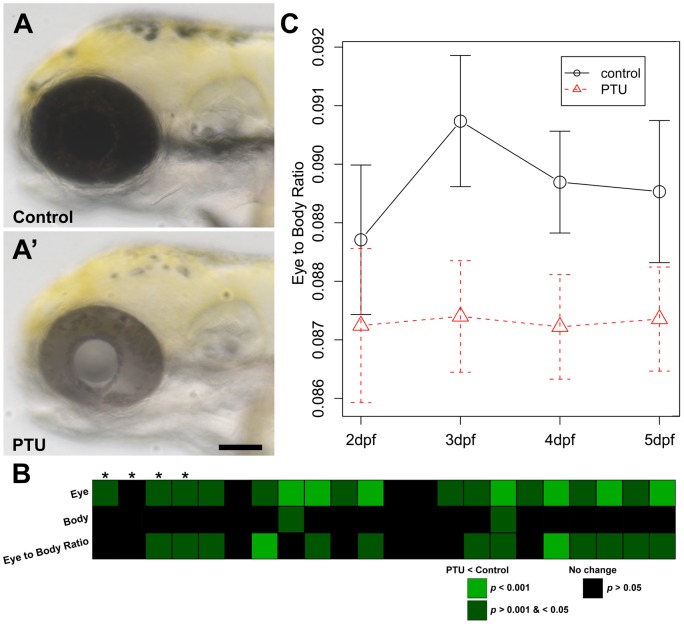
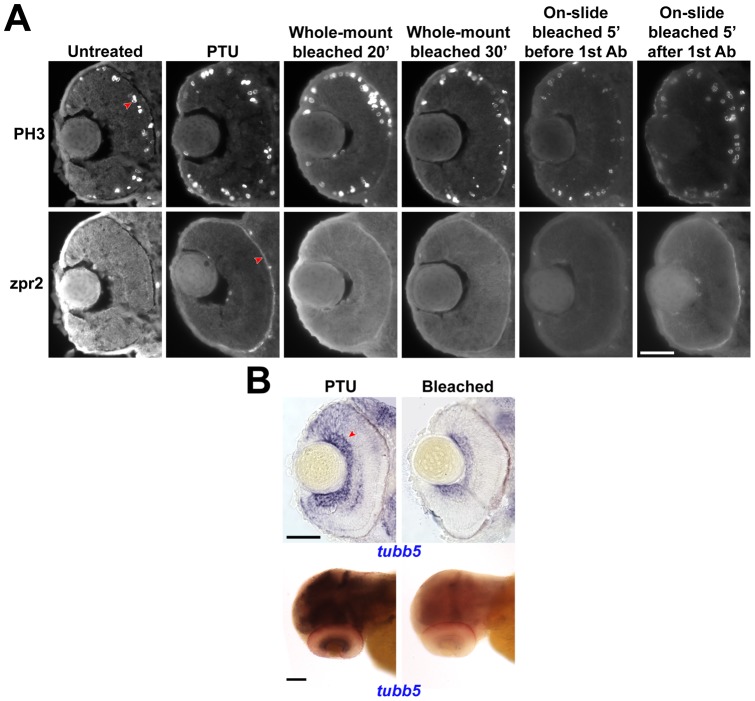
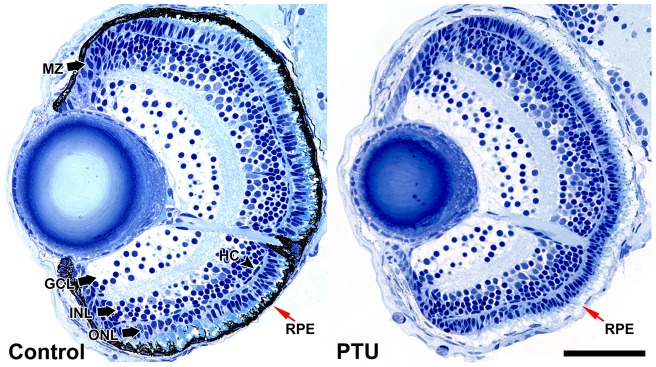
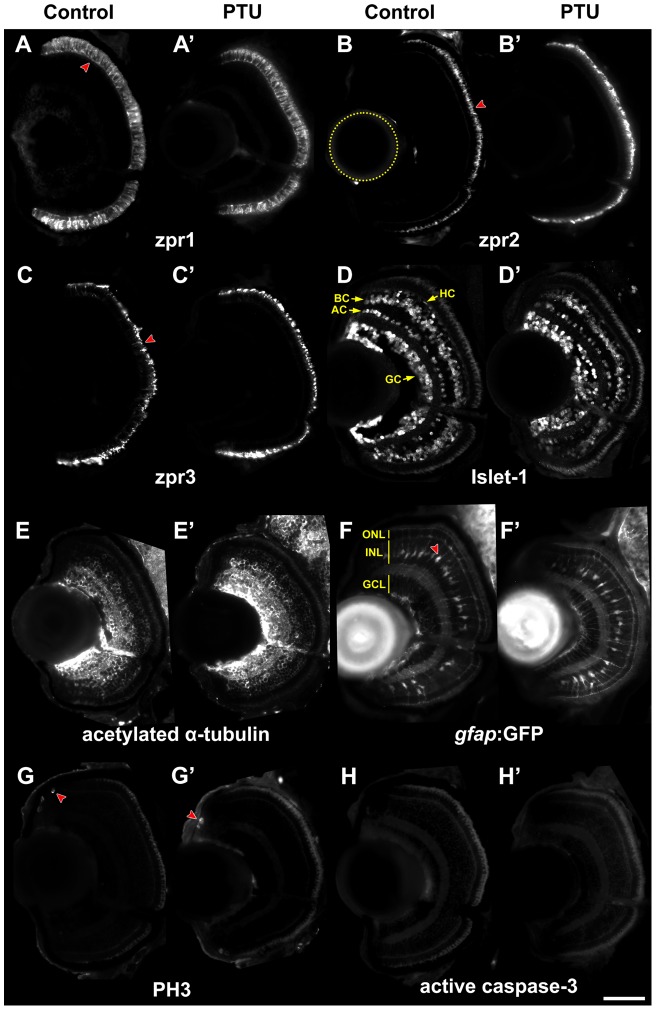
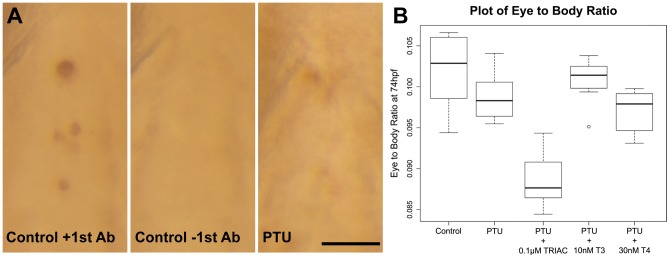
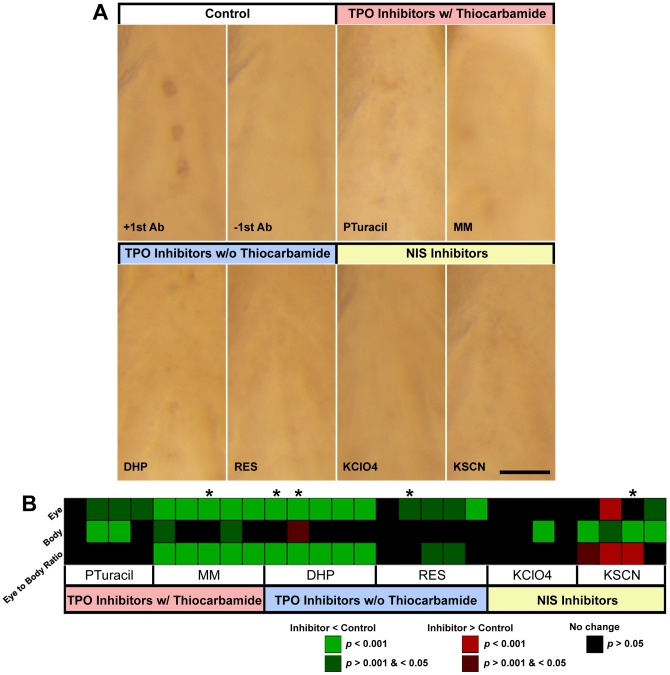
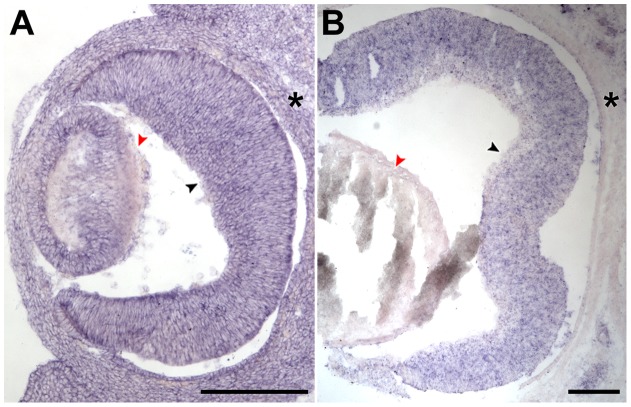
Phenylthiourea (PTU) is commonly used for inhibiting melanization of zebrafish embryos. In this study, the standard treatment with 0.2 mM PTU was demonstrated to specifically reduce eye size in larval fish starting at three days post-fertilization. This effect is likely the result of a reduction in retinal and lens size of PTU-treated eyes and is not related to melanization inhibition. This is because the eye size of tyr, a genetic mutant of tyrosinase whose activity is inhibited in PTU treatment, was not reduced. As PTU contains a thiocarbamide group which is presented in many goitrogens, suppressing thyroid hormone production is a possible mechanism by which PTU treatment may reduce eye size. Despite the fact that thyroxine level was found to be reduced in PTU-treated larvae, thyroid hormone supplements did not rescue the eye size reduction. Instead, treating embryos with six goitrogens, including inhibitors of thyroid peroxidase (TPO) and sodium-iodide symporter (NIS), suggested an alternative possibility. Specifically, three TPO inhibitors, including those that do not possess thiocarbamide, specifically reduced eye size; whereas none of the NIS inhibitors could elicit this effect. These observations indicate that TPO inhibition rather than a general suppression of thyroid hormone synthesis is likely the underlying cause of PTU-induced eye size reduction. Furthermore, the tissue-specific effect of PTU treatment might be mediated by an eye-specific TPO expression. Compared with treatment with other tyrosinase inhibitors or bleaching to remove melanization, PTU treatment remains the most effective approach. Thus, one should use caution when interpreting results that are obtained from PTU-treated embryos.
苯硫脲(PTU)常用于抑制斑马鱼胚胎的黑色素化。本研究表明,0.2mM 的 PTU 标准处理从受精后三天开始,特异性地减少了幼鱼的眼睛大小。这种作用可能是由于 PTU 处理眼睛的视网膜和晶状体大小减小所致,与黑色素化抑制无关。这是因为 tyr 的眼睛大小没有减小,tyr 是酪氨酸酶的遗传突变体,其在 PTU 处理中活性受到抑制。由于 PTU 含有硫脲基团,存在于许多致甲状腺肿剂中,因此抑制甲状腺激素的产生可能是 PTU 处理减少眼睛大小的一种机制。尽管发现 PTU 处理的幼虫中甲状腺素水平降低,但甲状腺激素补充剂并未挽救眼睛大小的减小。相反,用包括甲状腺过氧化物酶(TPO)和钠碘转运体(NIS)抑制剂在内的六种致甲状腺肿剂处理胚胎表明了另一种可能性。具体而言,三种 TPO 抑制剂,包括不具有硫脲基团的抑制剂,特异性地减小了眼睛大小;而没有一种 NIS 抑制剂可以产生这种效果。这些观察结果表明,TPO 抑制而不是甲状腺激素合成的普遍抑制可能是 PTU 诱导眼睛大小减小的根本原因。此外,PTU 处理的组织特异性效应可能由眼睛特异性 TPO 表达介导。与用其他酪氨酸酶抑制剂或漂白去除黑色素化相比,PTU 处理仍然是最有效的方法。因此,在解释从 PTU 处理的胚胎中获得的结果时应谨慎。