Department of Physiology, Second Military Medical University, Shanghai, China.
PLoS One. 2011;6(8):e23788. doi: 10.1371/journal.pone.0023788. Epub 2011 Aug 23.
Human uterus undergoes distinct molecular and functional changes during pregnancy and parturition. Hydrogen sulfide (H(2)S) has recently been shown to play a key role in the control of smooth muscle tension. The role of endogenous H(2)S produced locally in the control of uterine contractility during labour is unknown.
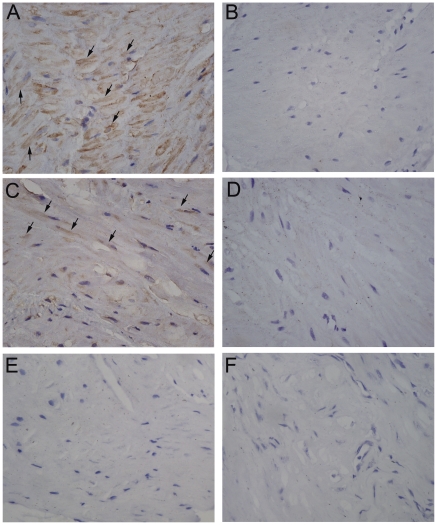
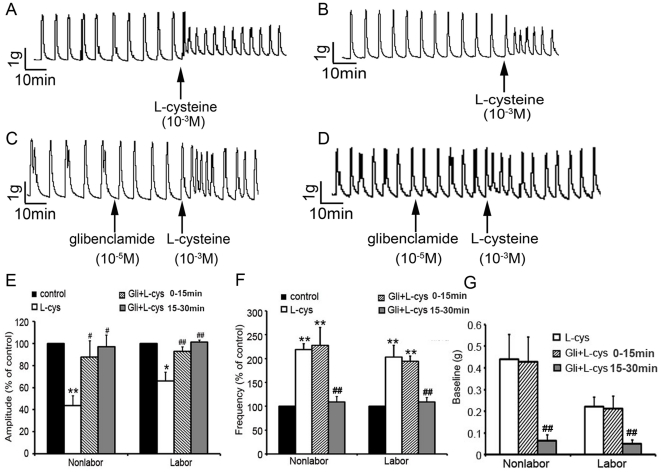
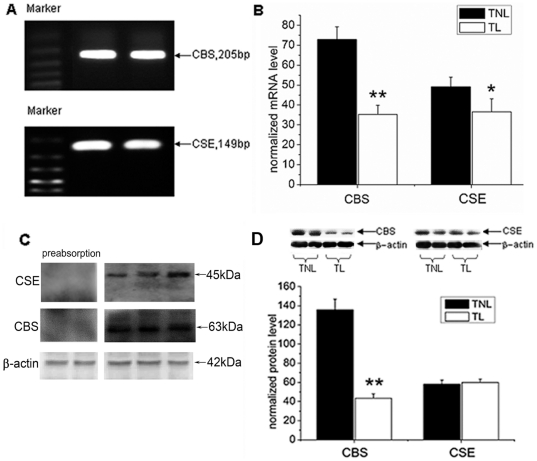
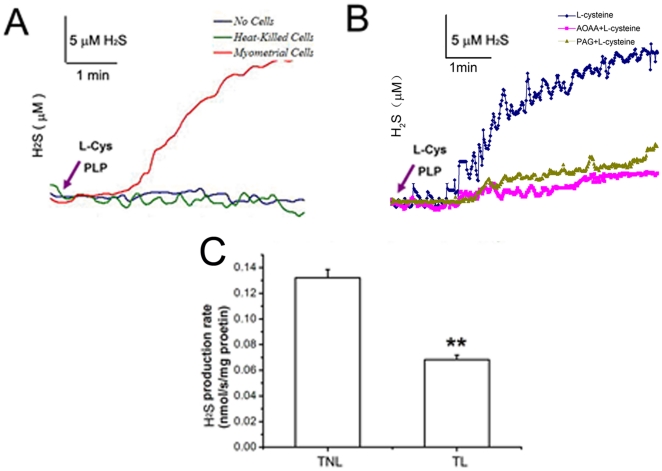
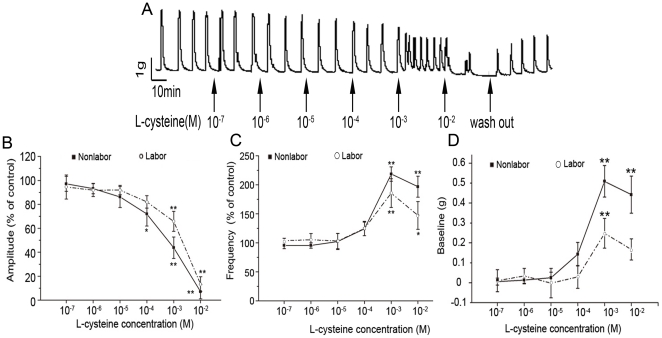
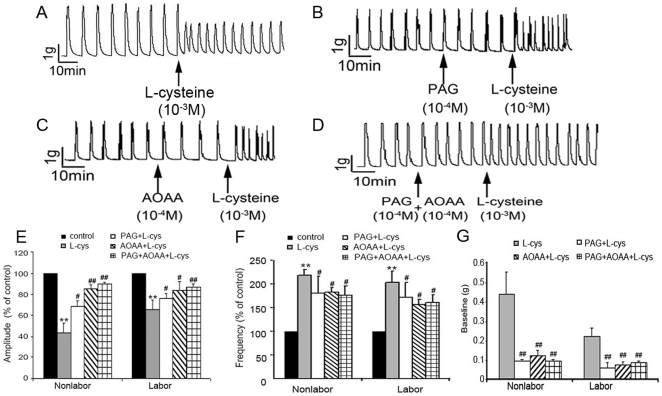
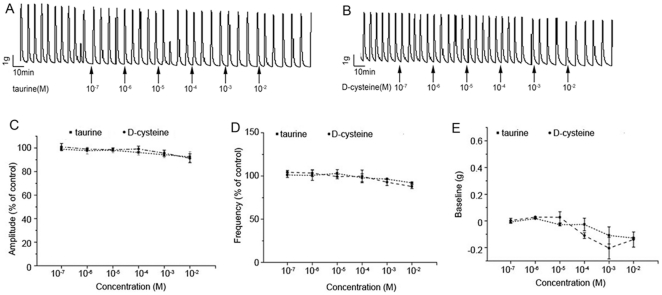
METHODOLOGY/PRINCIPAL FINDINGS: Human myometrium biopsies were obtained from pregnant women undergoing cesarean section at term. Immunohistochemistry analysis showed that cystathionine-γ-lyase (CSE) and cystathionine-β-synthetase (CBS), the principle enzymes responsible for H(2)S generation, were mainly localized to smooth muscle cells of human pregnant myometrium. The mRNA and protein expression of CBS as well as H(2)S production rate were down-regulated in labouring tissues compared to nonlabouring tissues. Cumulative administration of L-cysteine (10(-7)-10(-2) mol/L), a precursor of H(2)S, caused a dose-dependent decrease in the amplitude of spontaneous contractions in nonlabouring and labouring myometrium strips. L-cysteine at high concentration (10(-3) mol/L) increased the frequency of spontaneous contractions and induced tonic contraction. These effects of L-cysteine were blocked by the inhibitors of CBS and CSE. Pre-treatment of myometrium strips with glibenclamide, an inhibitor of ATP-sensitive potassium (K(ATP)) channels, abolished the inhibitory effect of L-cysteine on spontaneous contraction amplitude. The effects of L-cysteine on the amplitude of spontaneous contractions and baseline muscle tone were less potent in labouring tissues than that in nonlabouring strips.
CONCLUSION/SIGNIFICANCE: H(2)S generated by CSE and CBS locally exerts dual effects on the contractility of pregnant myometrium. Expression of H(2)S synthetic enzymes is down-regulated during labour, suggesting that H(2)S is one of the factors involved in the transition of pregnant uterus from quiescence to contractile state after onset of parturition.
人类子宫在妊娠和分娩过程中经历明显的分子和功能变化。硫化氢(H₂S)最近被证明在控制平滑肌张力方面发挥关键作用。在分娩过程中局部产生的内源性 H₂S 对子宫收缩力的控制作用尚不清楚。
方法/主要发现:从足月行剖宫产的孕妇中获取人子宫肌组织活检。免疫组织化学分析显示,胱硫醚-γ-裂解酶(CSE)和胱硫醚-β-合酶(CBS),这两种主要负责 H₂S 生成的酶,主要定位于人妊娠子宫平滑肌细胞。与非分娩组织相比,CBS 的 mRNA 和蛋白表达以及 H₂S 生成率在分娩组织中下调。L-半胱氨酸(10⁻⁷-10⁻²mol/L),H₂S 的前体,累积给药导致非分娩和分娩子宫肌条自发性收缩幅度呈浓度依赖性下降。高浓度(10⁻³mol/L)的 L-半胱氨酸增加自发性收缩的频率并诱导紧张性收缩。CBS 和 CSE 的抑制剂可阻断 L-半胱氨酸的这些作用。用 ATP 敏感性钾(KATP)通道抑制剂格列本脲预处理子宫肌条,可消除 L-半胱氨酸对自发性收缩幅度的抑制作用。L-半胱氨酸对自发性收缩幅度和基础肌紧张的作用在分娩组织中的作用不如非分娩组织强。
结论/意义:CSE 和 CBS 局部产生的 H₂S 对妊娠子宫的收缩性产生双重影响。H₂S 合成酶的表达在分娩时下调,表明 H₂S 是分娩开始后妊娠子宫从静止状态向收缩状态转变的相关因素之一。