Division of Frontier Medical Science, Department of Medicine and Molecular Science, Programs for Biomedical Research, Graduate School of Biomedical Sciences, Hiroshima University, Hiroshima, Japan.
PLoS One. 2011;6(8):e23856. doi: 10.1371/journal.pone.0023856. Epub 2011 Aug 23.
Recent studies indicate that hepatitis C virus (HCV) can modulate the expression of various genes including those involved in interferon signaling, and up-regulation of interferon-stimulated genes by HCV was reported to be strongly associated with treatment outcome. To expand our understanding of the molecular mechanism underlying treatment resistance, we analyzed the direct effects of interferon and/or HCV infection under immunodeficient conditions using cDNA microarray analysis of human hepatocyte chimeric mice.
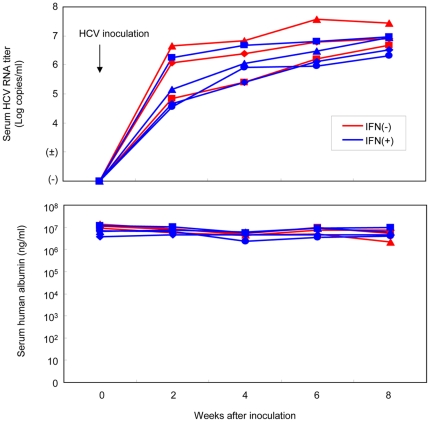
Human serum containing HCV genotype 1b was injected into human hepatocyte chimeric mice. IFN-α was administered 8 weeks after inoculation, and 6 hours later human hepatocytes in the mouse livers were collected for microarray analysis.
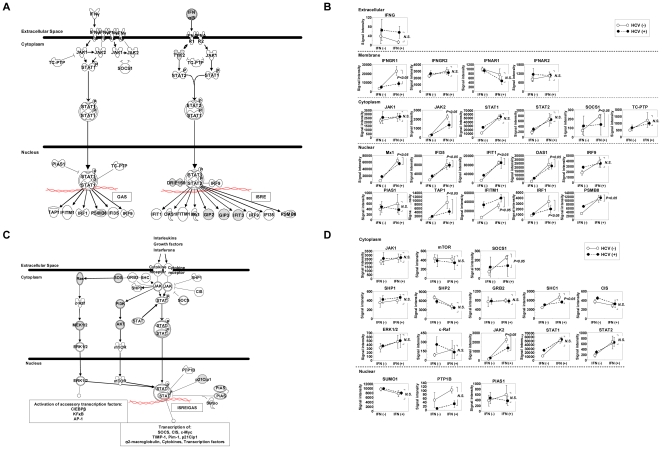
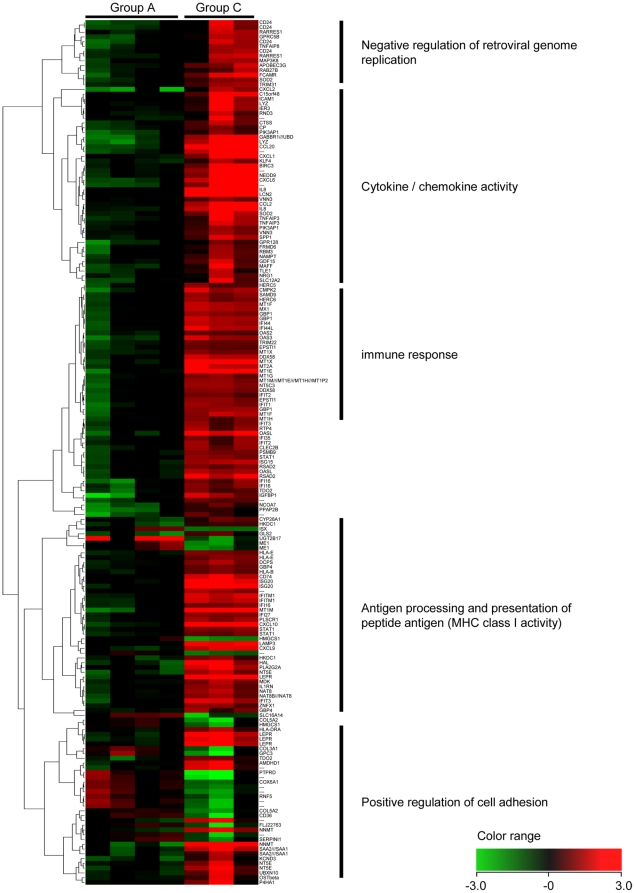
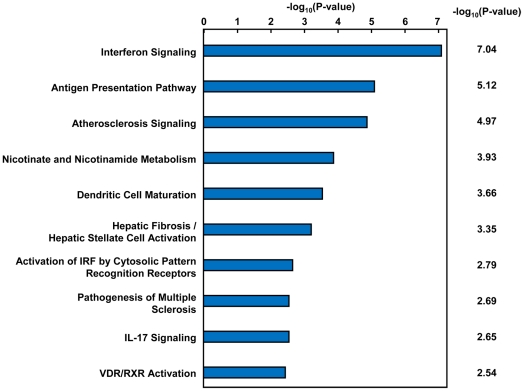
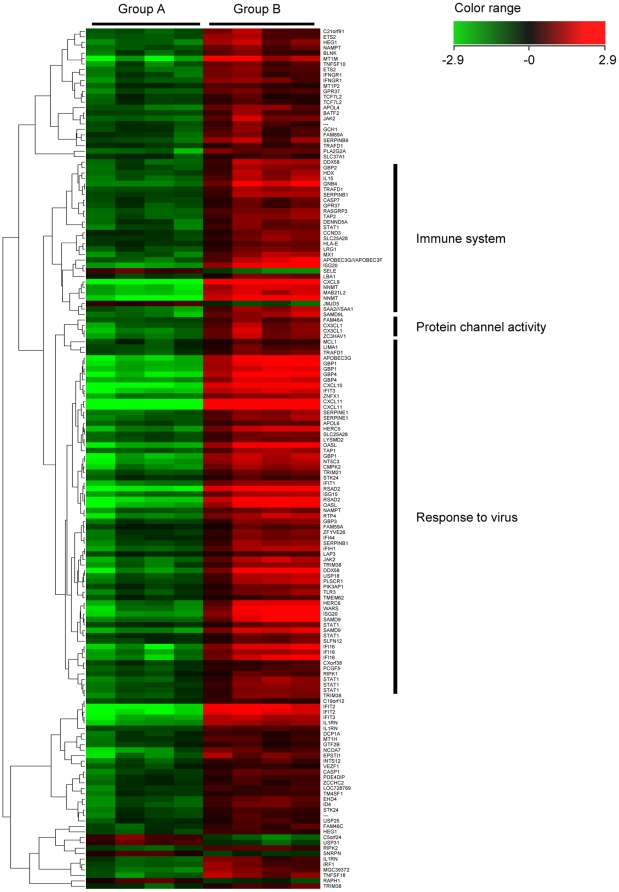
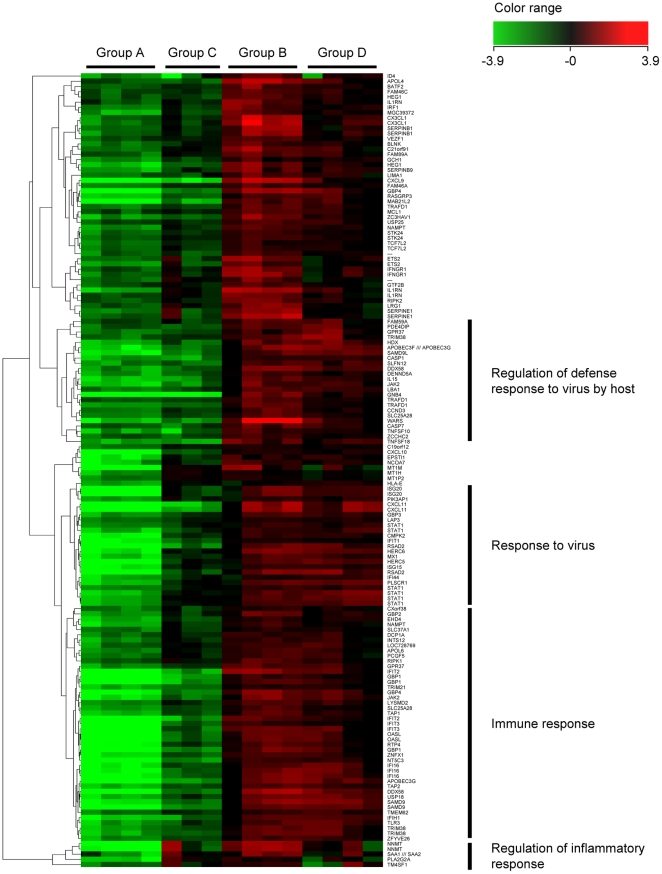
HCV infection induced a more than 3-fold change in the expression of 181 genes, especially genes related to Organismal Injury and Abnormalities, such as fibrosis or injury of the liver (P = 5.90E-16∼3.66E-03). IFN administration induced more than 3-fold up-regulation in the expression of 152 genes. Marked induction was observed in the anti-fibrotic chemokines such as CXCL9, suggesting that IFN treatment might lead not only to HCV eradication but also prevention and repair of liver fibrosis. HCV infection appeared to suppress interferon signaling via significant reduction in interferon-induced gene expression in several genes of the IFN signaling pathway, including Mx1, STAT1, and several members of the CXCL and IFI families (P = 6.0E-12). Genes associated with Antimicrobial Response and Inflammatory Response were also significantly repressed (P = 5.22×10(-10)∼1.95×10(-2)).
These results provide molecular insights into possible mechanisms used by HCV to evade innate immune responses, as well as novel therapeutic targets and a potential new indication for interferon therapy.
最近的研究表明,丙型肝炎病毒(HCV)可以调节各种基因的表达,包括干扰素信号通路相关基因,并且 HCV 上调干扰素刺激基因的表达与治疗效果密切相关。为了更深入地了解治疗耐药的分子机制,我们利用人源肝细胞嵌合体小鼠的 cDNA 微阵列分析,研究了在免疫缺陷条件下干扰素和/或 HCV 感染的直接作用。
将含有 HCV 基因型 1b 的人血清注入人源肝细胞嵌合体小鼠体内。感染 8 周后给予 IFN-α,6 小时后收集小鼠肝脏中的人源肝细胞进行微阵列分析。
HCV 感染诱导 181 个基因的表达发生超过 3 倍的变化,特别是与组织损伤和异常相关的基因,如肝纤维化或损伤(P = 5.90E-16∼3.66E-03)。IFN 给药诱导 152 个基因的表达超过 3 倍的上调。观察到抗纤维化趋化因子如 CXCL9 的显著诱导,提示 IFN 治疗不仅可能导致 HCV 清除,还可能预防和修复肝纤维化。HCV 感染似乎通过抑制 IFN 信号通路中几个基因(包括 Mx1、STAT1 和 CXCL 和 IFI 家族的几个成员)的干扰素诱导基因表达,从而抑制干扰素信号(P = 6.0E-12)。与抗菌反应和炎症反应相关的基因也受到显著抑制(P = 5.22×10(-10)∼1.95×10(-2))。
这些结果为 HCV 逃避先天免疫反应的可能机制提供了分子见解,也为新的治疗靶点和 IFN 治疗的潜在新适应证提供了依据。