Nishida Seiichiro, Satoh Hiroyasu
Department of Pharmacology, Division of Traditional Medicine, Nara Medical University, Kashihara, Nara 634-8521, Japan.
Drug Target Insights. 2007;2:97-104. Epub 2007 Apr 18.
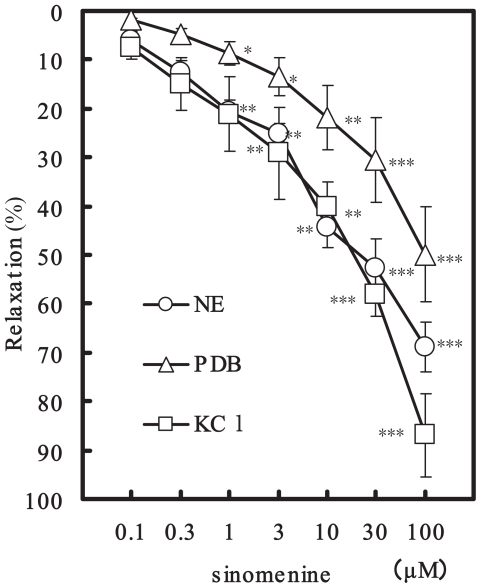
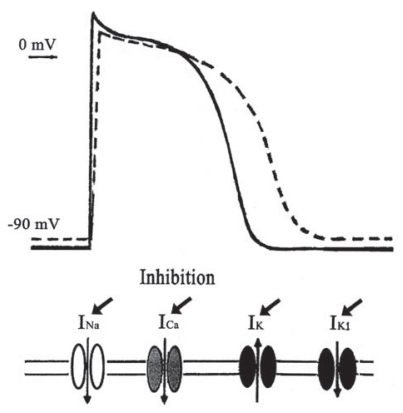
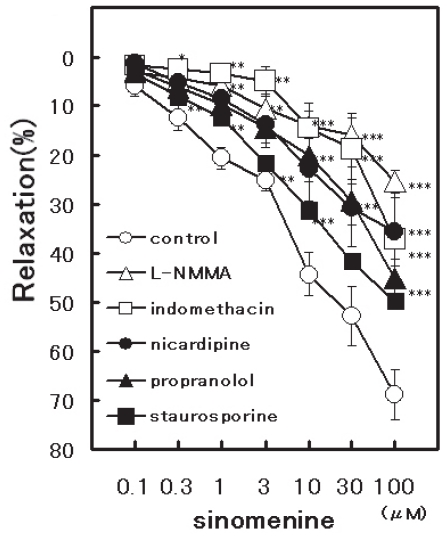
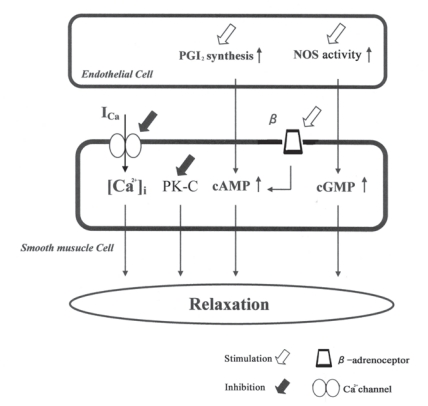
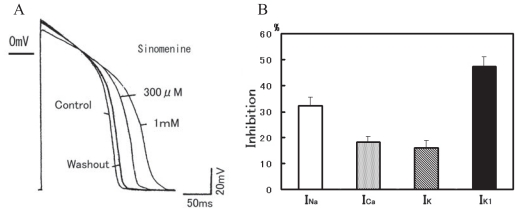
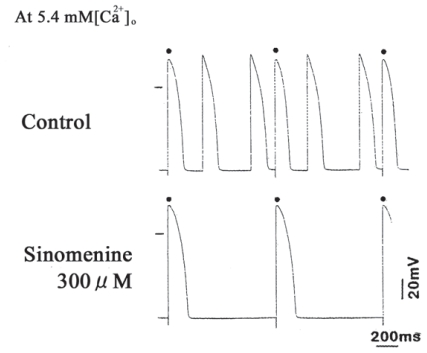
Sinomenine is one of the alkaloids extracted from Chinese medical plant, Sinomenium acutum Rehder et Wilson. Sinomenine has been used for Rheumatoid arthritis as an anti-inflammatory and immunomodulative drugs. We have so far been investigated the cardiovascular pharmacological actions of sinomenine. Sinomenine dilated NE (5 μM)-, KCl (60 mM)- and PDB (300 nM)-induced vasoconstrictions. The pretreatment with nicardipine (0.1 μM), staurosporine (30 nM), L-NMMA (100 μM), indomethacin (10 μM) or propranolol significantly attenuated the sinomenine-induced vasorelaxation. Therefore, these results indicate that sinomenine causes the vasorelaxation by the involvement with the inhibitions of Ca(2+) current (I(Ca)) and PK-C, β-adrenoceptor stimulation, and the activation of NO and PGI(2) syntheses in endothelium. On the other hand, in the ventricular cardiomyocytes of guinea pig, sinomenine inhibits I(Ca) and simultaneously decreases the delayed rectifier K(+) current (I(K)), resulting in the prolongation of action potential duration. Sinomenine also suppresses the dysrhysmias induced by triggered activities under the Ca(2+) overload condition. Therefore, sinomenine may be expected as one of effective therapeutic drugs for heart failure and dysrhythmias, and may maintain the cardiovascular functions due to modulation of cardiac ionic channels and blood vessels.
青藤碱是从中国药用植物青风藤中提取的生物碱之一。青藤碱作为一种抗炎和免疫调节药物已被用于治疗类风湿性关节炎。我们迄今为止一直在研究青藤碱的心血管药理作用。青藤碱可舒张由去甲肾上腺素(5 μM)、氯化钾(60 mM)和佛波酯(300 nM)诱导的血管收缩。用尼卡地平(0.1 μM)、星形孢菌素(30 nM)、L-硝基精氨酸甲酯(100 μM)、吲哚美辛(10 μM)或普萘洛尔预处理可显著减弱青藤碱诱导的血管舒张。因此,这些结果表明,青藤碱通过抑制钙电流(I(Ca))和蛋白激酶C、刺激β-肾上腺素能受体以及激活内皮细胞中一氧化氮和前列环素(PGI(2))的合成而引起血管舒张。另一方面,在豚鼠心室肌细胞中,青藤碱抑制I(Ca),同时降低延迟整流钾电流(I(K)),导致动作电位时程延长。青藤碱还可抑制钙超载条件下触发活动诱导的心律失常。因此,青藤碱有望成为治疗心力衰竭和心律失常的有效治疗药物之一,并可能通过调节心脏离子通道和血管来维持心血管功能。