Zhang Meng-Wan, Wang Xiao-Hui, Shi Jing, Yu Jian-Guang
Department of Pharmacy, Shanghai Chest Hospital, Shanghai Jiao Tong University, Shanghai, China.
Front Cardiovasc Med. 2021 Oct 1;8:749113. doi: 10.3389/fcvm.2021.749113. eCollection 2021.
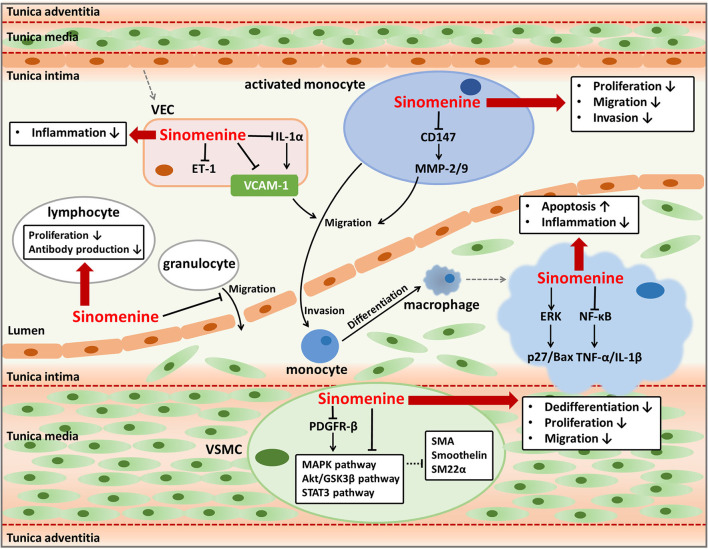
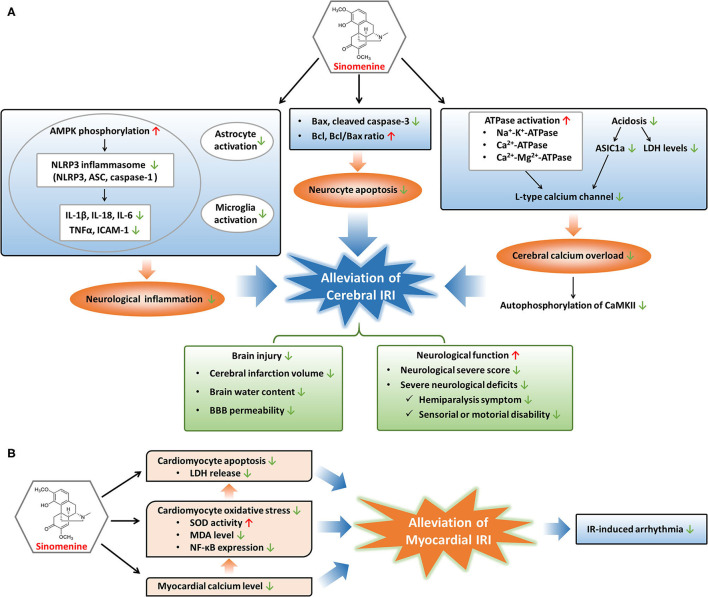
Cardio-cerebrovascular diseases, as a major cause of health loss all over the world, contribute to an important part of the global burden of disease. A large number of traditional Chinese medicines have been proved effective both clinically and in pharmacological investigations, with the acceleration of the modernization of Chinese medicine. Sinomenine is the main active constituent of sinomenium acutum and has been generally used in therapies of rheumatoid arthritis and neuralgia. Varieties of pharmacological effects of sinomenine in cardio-cerebrovascular system have been discovered recently, suggesting an inspiring application prospect of sinomenine in cardio-cerebrovascular diseases. Sinomenine may retard the progression of atherosclerosis by attenuating endothelial inflammation, regulating immune cells function, and inhibiting the proliferation of vascular smooth muscle cells. Sinomenine also alleviates chronic cardiac allograft rejection relying on its anti-inflammatory and anti-hyperplastic activities and suppresses autoimmune myocarditis by immunosuppression. Prevention of myocardial or cerebral ischemia-reperfusion injury by sinomenine is associated with its modulation of cardiomyocyte death, inflammation, calcium overload, and oxidative stress. The regulatory effects on vasodilation and electrophysiology make sinomenine a promising drug to treat hypertension and arrhythmia. Here, in this review, we will illustrate the pharmacological activities of sinomenine in cardio-cerebrovascular system and elaborate the underlying mechanisms, as well as give an overview of the potential therapeutic roles of sinomenine in cardio-cerebrovascular diseases, trying to provide clues and bases for its clinical usage.
心脑血管疾病作为全球健康损失的主要原因,在全球疾病负担中占重要部分。随着中医药现代化进程的加快,大量中药已在临床和药理研究中被证明有效。青藤碱是青风藤的主要活性成分,已普遍用于类风湿性关节炎和神经痛的治疗。最近发现青藤碱在心血管系统中具有多种药理作用,提示其在心脑血管疾病中具有令人鼓舞的应用前景。青藤碱可通过减轻内皮炎症、调节免疫细胞功能和抑制血管平滑肌细胞增殖来延缓动脉粥样硬化的进展。青藤碱还依靠其抗炎和抗增生活性减轻慢性心脏移植排斥反应,并通过免疫抑制作用抑制自身免疫性心肌炎。青藤碱预防心肌或脑缺血再灌注损伤与其对心肌细胞死亡、炎症、钙超载和氧化应激的调节有关。青藤碱对血管舒张和电生理的调节作用使其成为治疗高血压和心律失常的有前景的药物。在此综述中,我们将阐述青藤碱在心血管系统中的药理活性并详细说明其潜在机制,同时概述青藤碱在心脑血管疾病中的潜在治疗作用,试图为其临床应用提供线索和依据。