Institute of Neuroscience, University of Oregon, Eugene, Oregon, United States of America.
PLoS Genet. 2011 Aug;7(8):e1002246. doi: 10.1371/journal.pgen.1002246. Epub 2011 Aug 25.
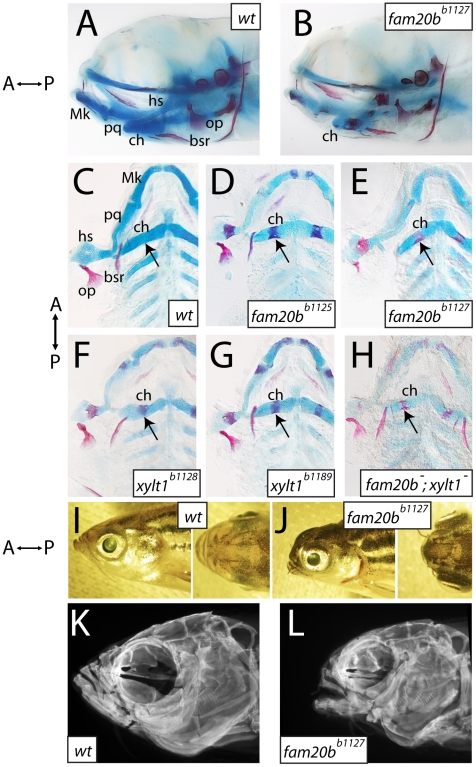
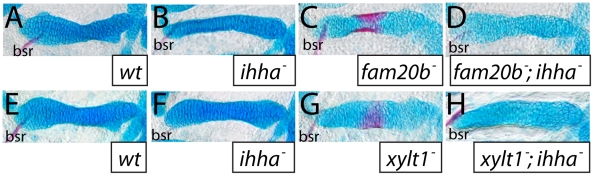
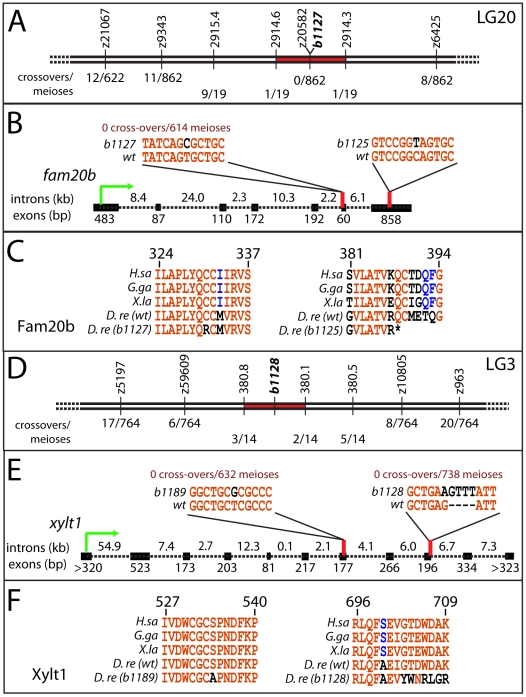
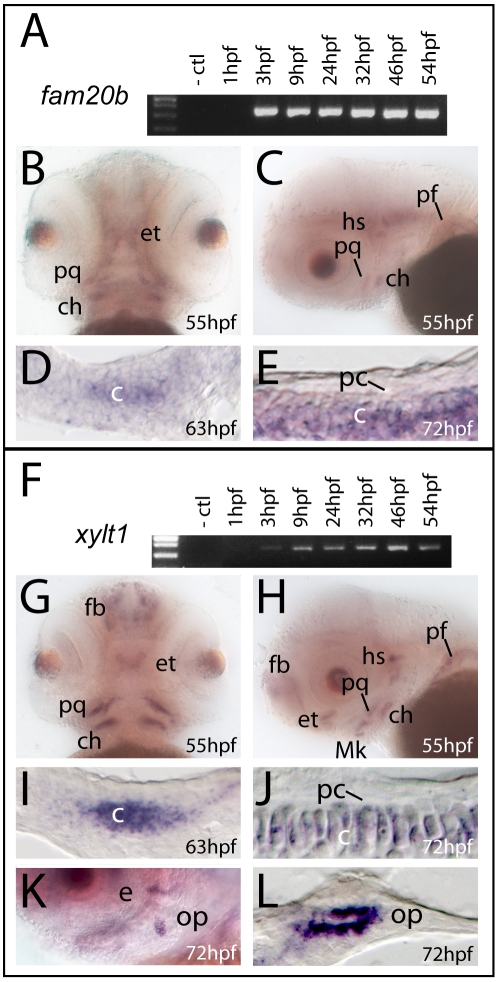
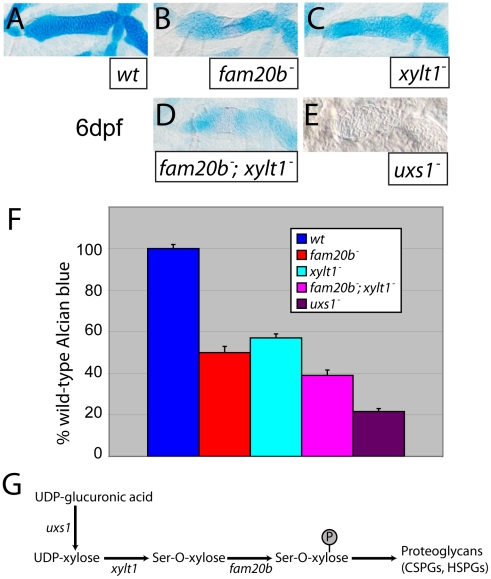
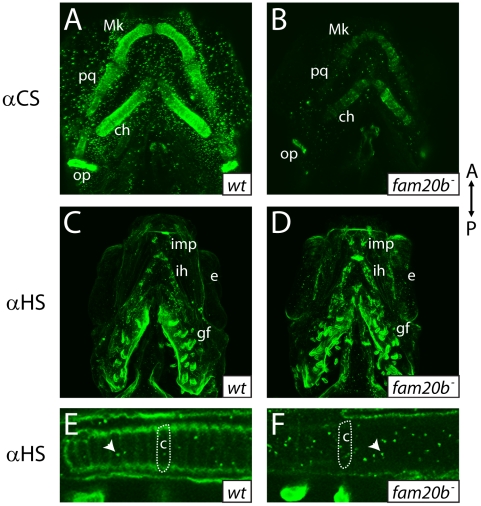
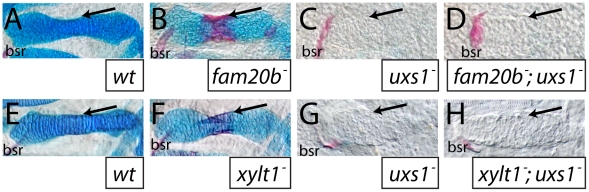
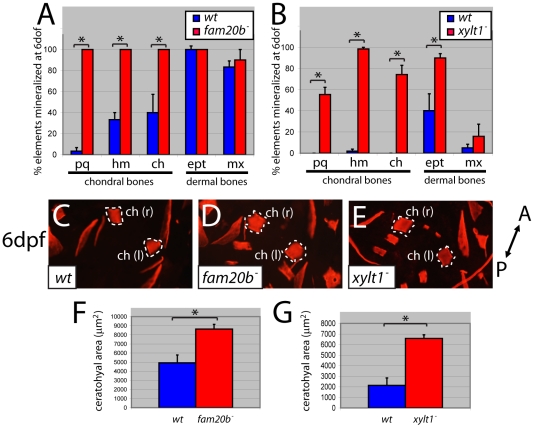
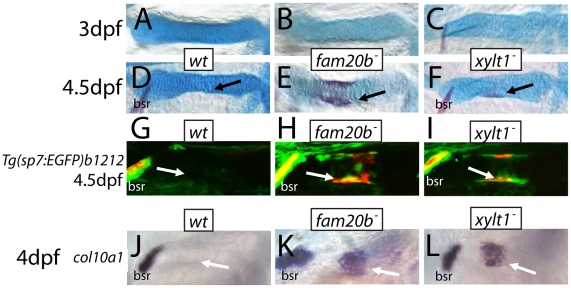
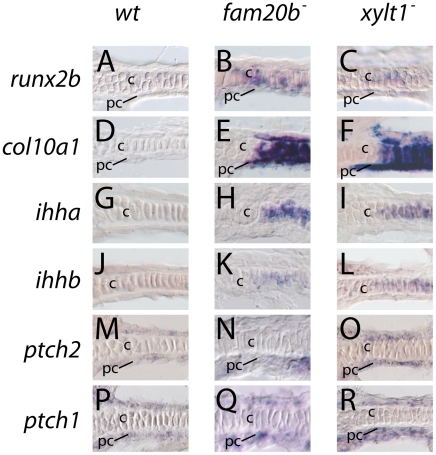
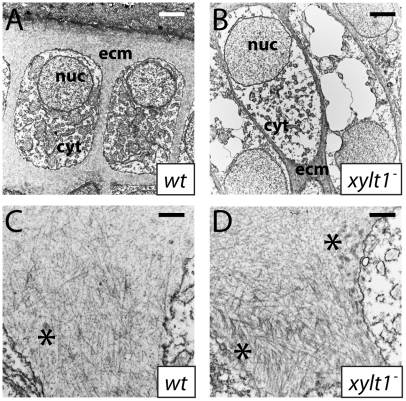
Differentiating cells interact with their extracellular environment over time. Chondrocytes embed themselves in a proteoglycan (PG)-rich matrix, then undergo a developmental transition, termed "maturation," when they express ihh to induce bone in the overlying tissue, the perichondrium. Here, we ask whether PGs regulate interactions between chondrocytes and perichondrium, using zebrafish mutants to reveal that cartilage PGs inhibit chondrocyte maturation, which ultimately dictates the timing of perichondral bone development. In a mutagenesis screen, we isolated a class of mutants with decreased cartilage matrix and increased perichondral bone. Positional cloning identified lesions in two genes, fam20b and xylosyltransferase1 (xylt1), both of which encode PG synthesis enzymes. Mutants failed to produce wild-type levels of chondroitin sulfate PGs, which are normally abundant in cartilage matrix, and initiated perichondral bone formation earlier than their wild-type siblings. Primary chondrocyte defects might induce the bone phenotype secondarily, because mutant chondrocytes precociously initiated maturation, showing increased and early expression of such markers as runx2b, collagen type 10a1, and ihh co-orthologs, and ihha mutation suppressed early perichondral bone in PG mutants. Ultrastructural analyses demonstrated aberrant matrix organization and also early cellular features of chondrocyte hypertrophy in mutants. Refining previous in vitro reports, which demonstrated that fam20b and xylt1 were involved in PG synthesis, our in vivo analyses reveal that these genes function in cartilage matrix production and ultimately regulate the timing of skeletal development.
分化细胞会随着时间的推移与细胞外环境相互作用。软骨细胞嵌入富含蛋白聚糖(PG)的基质中,然后经历一个发育转变,称为“成熟”,此时它们表达 ihh 以诱导覆盖组织(软骨膜)中的骨形成。在这里,我们通过使用斑马鱼突变体来研究 PG 是否调节软骨细胞和软骨膜之间的相互作用,揭示软骨 PG 抑制软骨细胞成熟,而这最终决定了软骨膜骨发育的时间。在诱变筛选中,我们分离出一类软骨基质减少和软骨膜骨增加的突变体。定位克隆鉴定出两个基因 fam20b 和木糖基转移酶 1(xylt1)的突变,这两个基因都编码 PG 合成酶。突变体不能产生正常丰富于软骨基质中的软骨素硫酸 PG,并且比其野生型兄弟姐妹更早地启动软骨膜骨形成。原发性软骨细胞缺陷可能继发地诱导骨表型,因为突变软骨细胞过早地启动成熟,表现出增加和早期表达如 runt 相关转录因子 2B(runx2b)、胶原类型 10a1 和 ihh 同源物,并且 ihha 突变抑制了 PG 突变体中的早期软骨膜骨。超微结构分析表明突变体中存在异常的基质组织和软骨细胞肥大的早期细胞特征。细化先前的体外报告,表明 fam20b 和 xylt1 参与 PG 合成,我们的体内分析表明这些基因在软骨基质产生中起作用,并最终调节骨骼发育的时间。