Department of Pharmacology, College of Medicine, 1656 E Mabel St. Rm 119, PO Box 245215, University of Arizona, Tucson, AZ 85724, USA Research Service, VA Medical Center, One Veterans Drive, Minneapolis, MN 55417, USA GRECC, VA Medical Center, One Veterans Drive, Minneapolis, MN 55417, USA Arizona Cancer Center, University of Arizona, Tucson, AZ 85724, USA.
Pain. 2011 Nov;152(11):2564-2574. doi: 10.1016/j.pain.2011.07.020. Epub 2011 Sep 9.
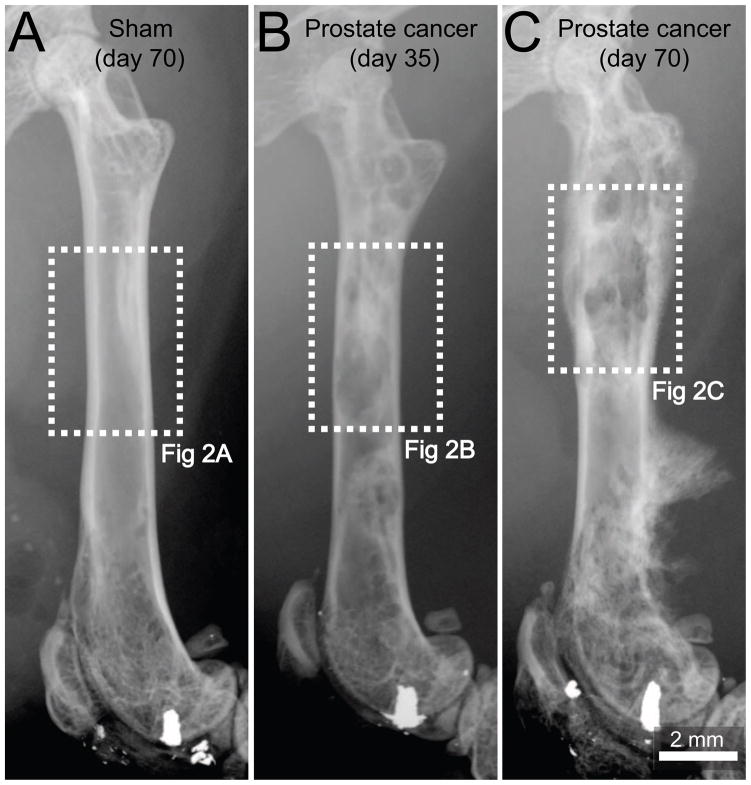
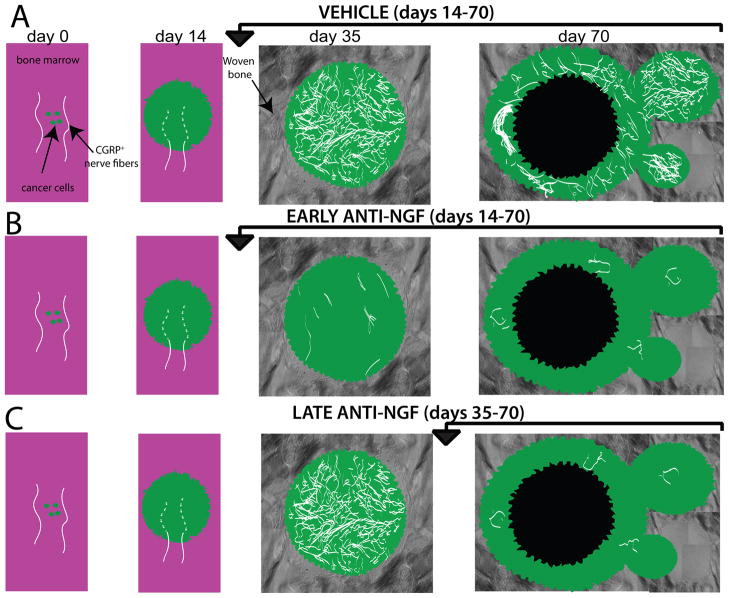
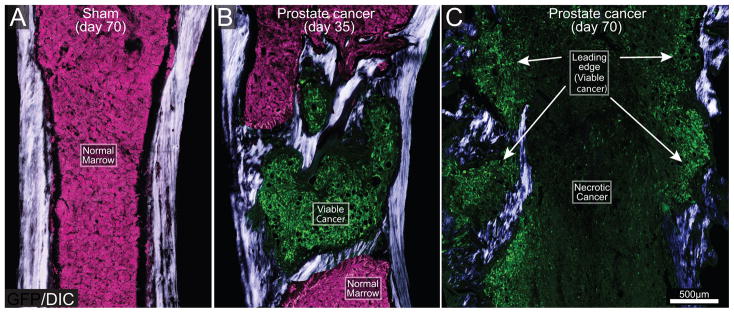
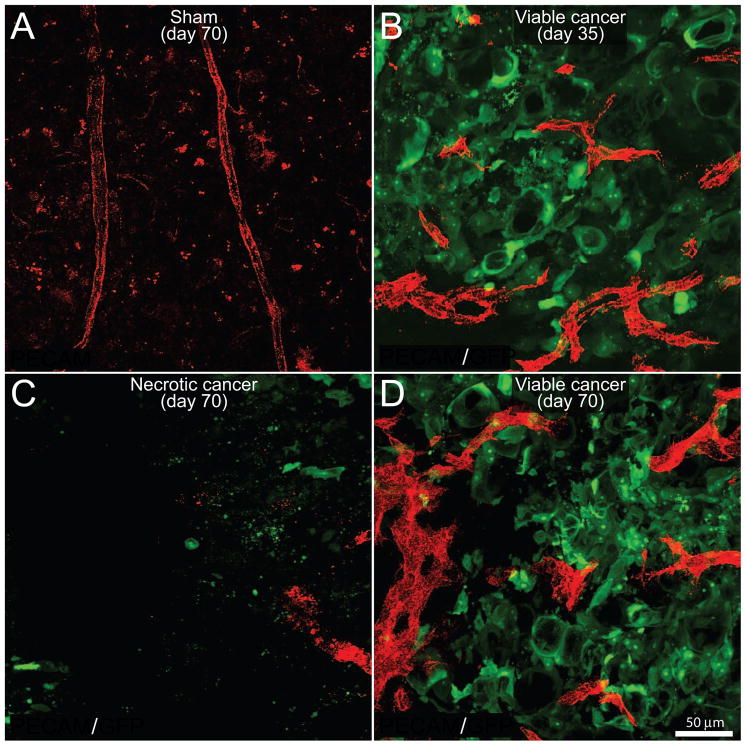
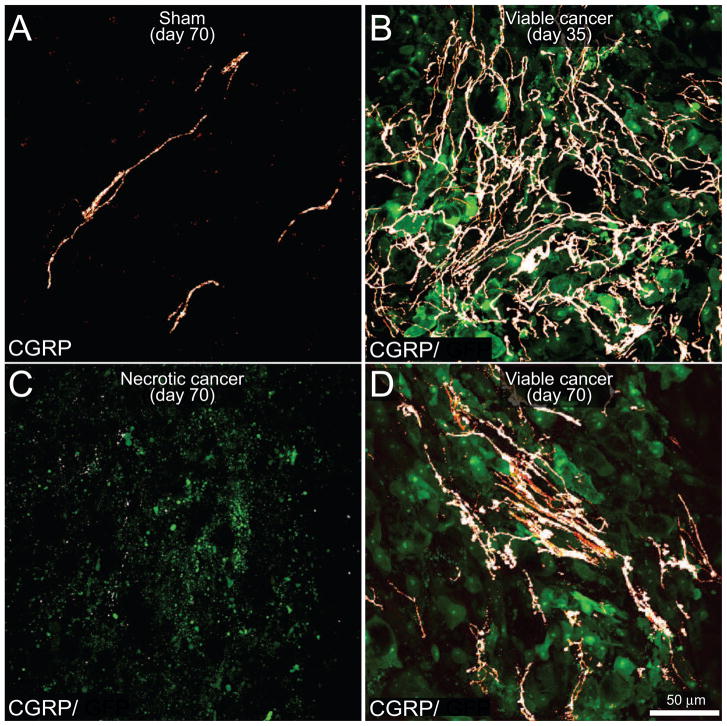
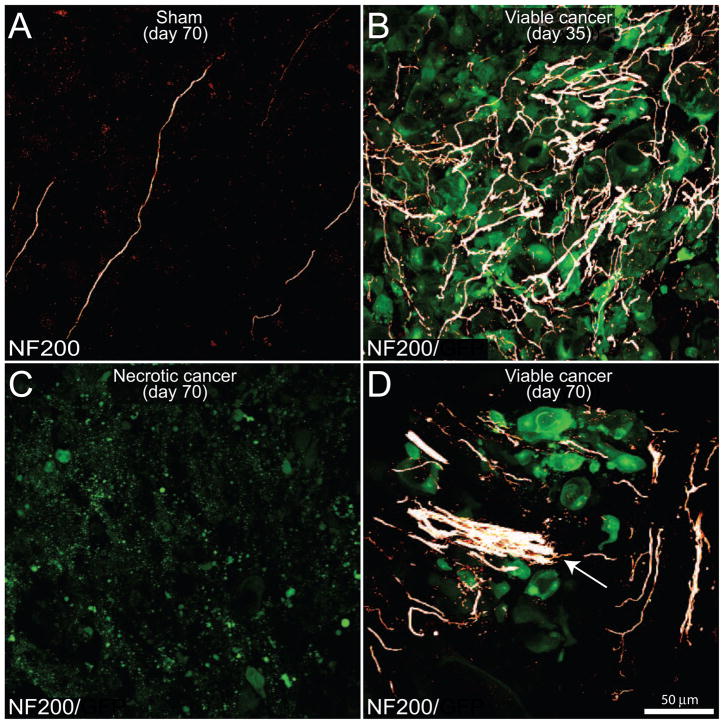
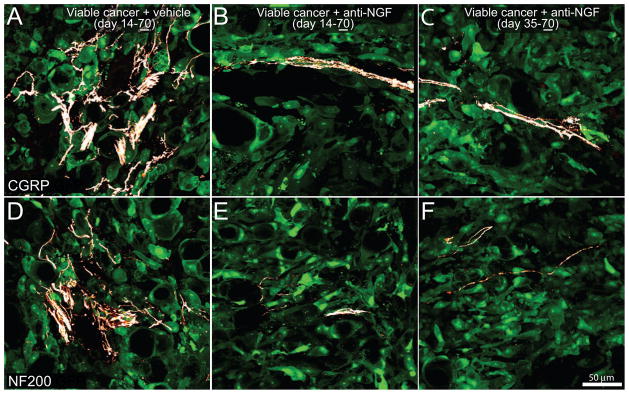
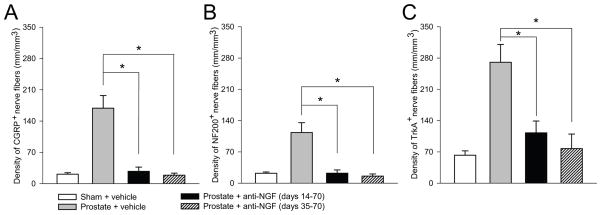
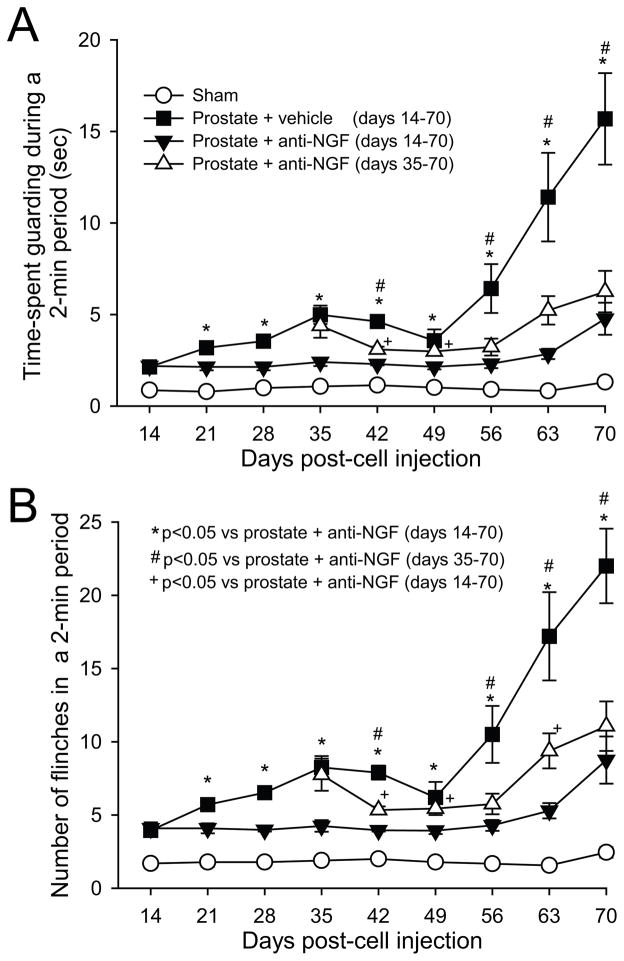
Early, preemptive blockade of nerve growth factor (NGF)/tropomyosin receptor kinase A (TrkA) attenuates tumor-induced nerve sprouting and bone cancer pain. A critical unanswered question is whether late blockade of NGF/TrkA can attenuate cancer pain once NGF-induced nerve sprouting and neuroma formation has occurred. By means of a mouse model of prostate cancer-induced bone pain, anti-NGF was either administered preemptively at day 14 after tumor injection when nerve sprouting had yet to occur, or late at day 35, when extensive nerve sprouting had occurred. Animals were humanely killed at day 70 when, in vehicle-treated animals, significant nerve sprouting and neuroma formation was present in the tumor-bearing bone. Although preemptive and sustained administration (days 14-70) of anti-NGF more rapidly attenuated bone cancer nociceptive behaviors than late and sustained administration (days 35-70), by day 70 after tumor injection, both preemptive and late administration of anti-NGF significantly reduced nociceptive behaviors, sensory and sympathetic nerve sprouting, and neuroma formation. In this model, as in most cancers, the individual cancer cell colonies have a limited half-life because they are constantly proliferating, metastasizing, and undergoing necrosis as the parent cancer cell colony outgrows its blood supply. Similarly, the sensory and sympathetic nerve fibers that innervate the tumor undergo sprouting at the viable/leading edge of the parent tumor, degenerate as the parent cancer cell colony becomes necrotic, and resprout in the viable, newly formed daughter cell colonies. These results suggest that preemptive or late-stage blockade of NGF/TrkA can attenuate nerve sprouting and cancer pain.
早期、预防性阻断神经生长因子(NGF)/原肌球蛋白受体激酶 A(TrkA)可减轻肿瘤诱导的神经末梢生长和骨癌痛。一个关键的未解决问题是,一旦 NGF 诱导的神经末梢生长和神经瘤形成发生,晚期阻断 NGF/TrkA 是否可以减轻癌症疼痛。通过前列腺癌诱导的骨痛小鼠模型,抗 NGF 要么在肿瘤注射后第 14 天(此时神经末梢生长尚未发生)预防性给药,要么在第 35 天(此时广泛的神经末梢生长已经发生)晚期给药。当在载体处理的动物中,在肿瘤骨中存在明显的神经末梢生长和神经瘤形成时,动物在第 70 天被人道处死,此时,在载体处理的动物中,在肿瘤骨中存在明显的神经末梢生长和神经瘤形成。尽管预防性和持续(第 14-70 天)给予抗 NGF 比晚期和持续(第 35-70 天)给予抗 NGF 更快地减轻骨癌伤害感受行为,但在肿瘤注射后第 70 天,预防性和晚期给予抗 NGF 均显著减少伤害感受行为、感觉和交感神经末梢生长和神经瘤形成。在这个模型中,与大多数癌症一样,单个癌细胞菌落的半衰期有限,因为它们不断增殖、转移和坏死,因为母癌细胞菌落超出其血液供应。同样,支配肿瘤的感觉和交感神经纤维在母肿瘤的存活/前缘处生长,随着母癌细胞菌落坏死而退化,并在存活的新形成的子细胞菌落中重新生长。这些结果表明,预防性或晚期阻断 NGF/TrkA 可以减轻神经末梢生长和癌症疼痛。