Whitehead Institute for Biomedical Research, Cambridge, Massachusetts, USA.
Nat Struct Mol Biol. 2011 Sep 11;18(10):1139-46. doi: 10.1038/nsmb.2115.
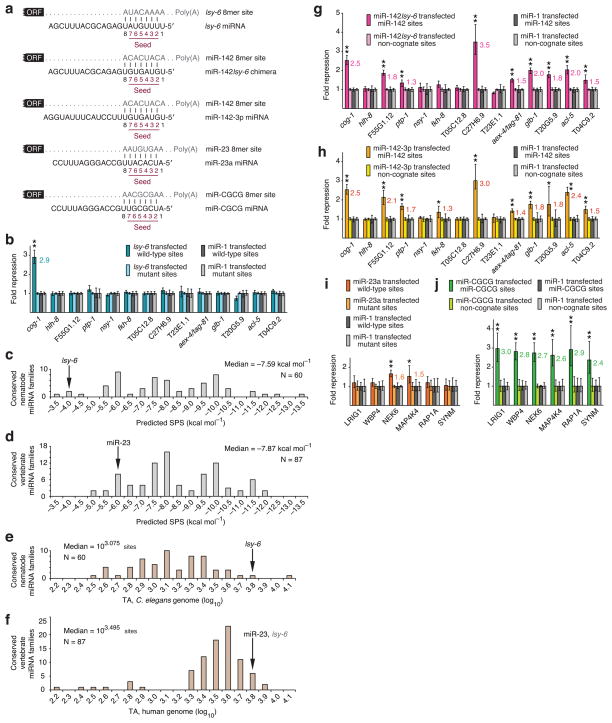
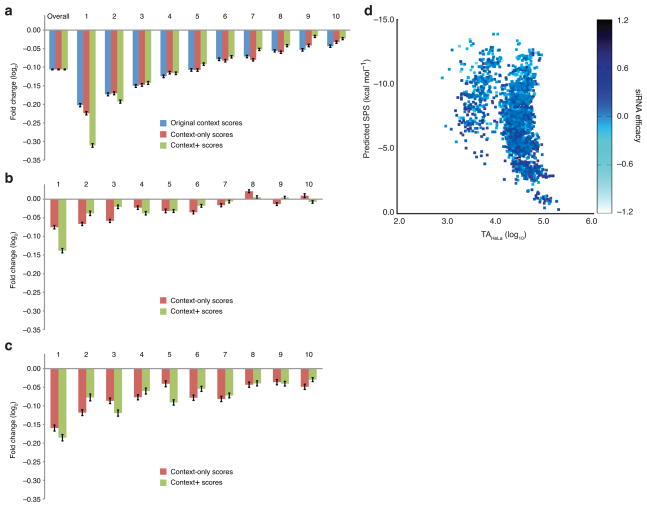
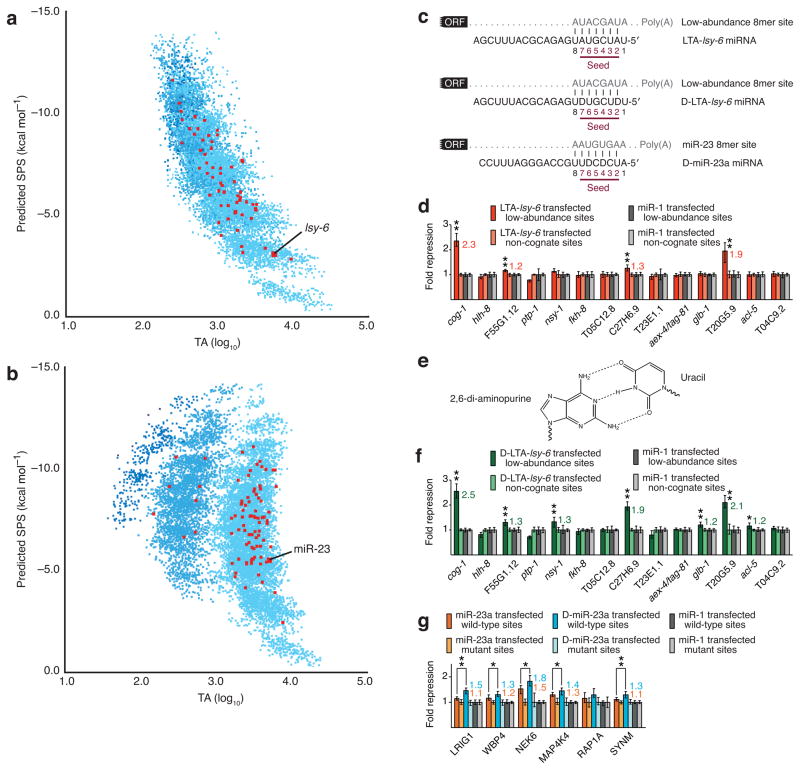
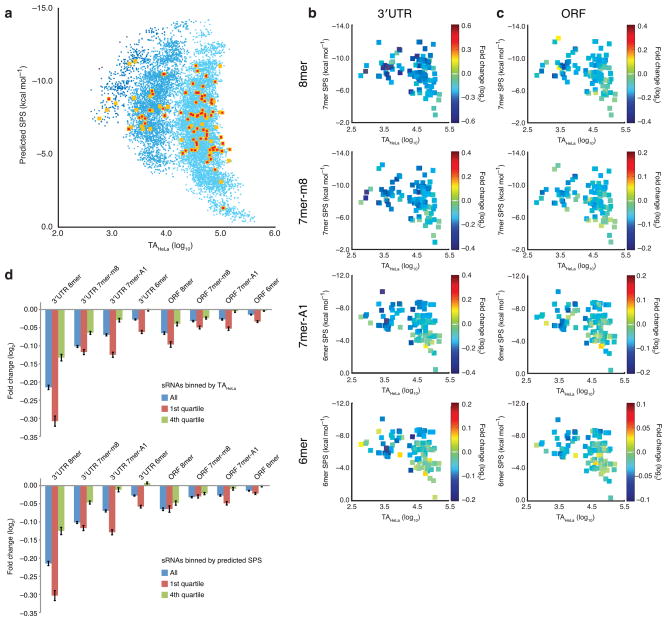
Most metazoan microRNAs (miRNAs) target many genes for repression, but the nematode lsy-6 miRNA is much less proficient. Here we show that the low proficiency of lsy-6 can be recapitulated in HeLa cells and that miR-23, a mammalian miRNA, also has low proficiency in these cells. Reporter results and array data indicate two properties of these miRNAs that impart low proficiency: their weak predicted seed-pairing stability (SPS) and their high target-site abundance (TA). These two properties also explain differential propensities of small interfering RNAs (siRNAs) to repress unintended targets. Using these insights, we expand the TargetScan tool for quantitatively predicting miRNA regulation (and siRNA off-targeting) to model differential miRNA (and siRNA) proficiencies, thereby improving prediction performance. We propose that siRNAs designed to have both weaker SPS and higher TA will have fewer off-targets without compromised on-target activity.
大多数后生动物 microRNAs(miRNAs)靶向许多基因进行抑制,但线虫 lsy-6 miRNA 的抑制效率要低得多。在这里,我们表明 lsy-6 的低效率可以在 HeLa 细胞中重现,并且哺乳动物 miRNA miR-23 在这些细胞中也具有低效率。报告结果和数组数据表明,这些 miRNA 具有两种赋予低效率的特性:它们弱的预测种子配对稳定性(SPS)和它们高的靶位丰度(TA)。这两个特性也解释了小干扰 RNA(siRNA)抑制非预期靶位的不同倾向。利用这些见解,我们扩展了 TargetScan 工具,用于定量预测 miRNA 调控(和 siRNA 脱靶),以模拟 miRNA(和 siRNA)的不同效率,从而提高预测性能。我们提出,设计具有较弱 SPS 和更高 TA 的 siRNA 将具有更少的脱靶,而不会影响靶标活性。