Department of Civil and Environmental Engineering, New Jersey Institute of Technology, University Heights, Newark, NJ 07102, USA.
Int J Environ Res Public Health. 2011 Aug;8(8):3496-513. doi: 10.3390/ijerph8083496. Epub 2011 Aug 24.
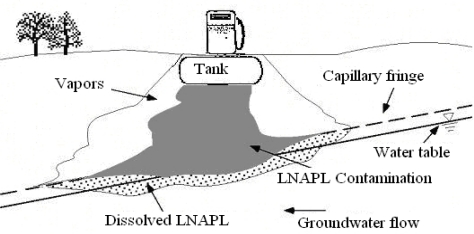
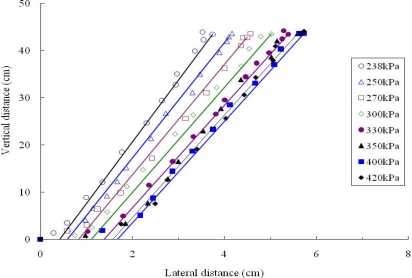
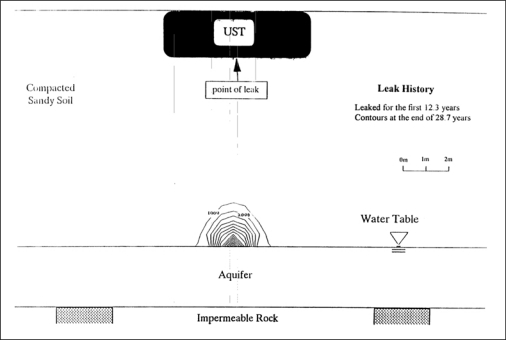
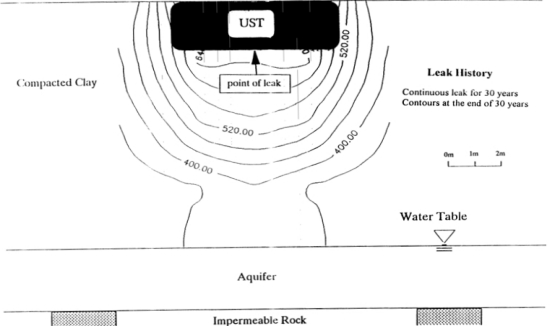
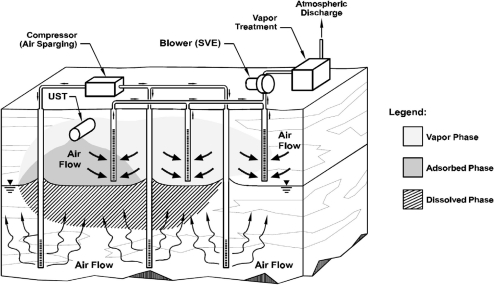
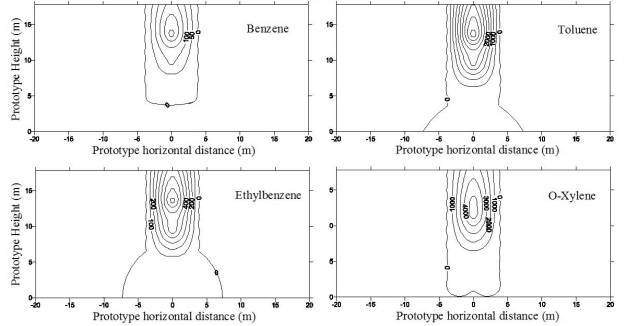
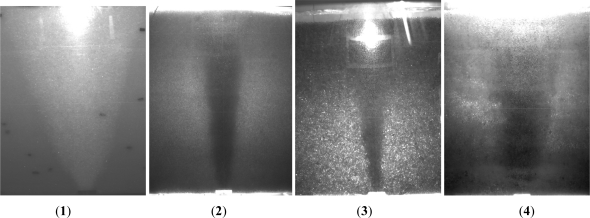
Leaking underground storage tanks (USTs) containing gasoline represent a significant public health hazard. Virtually undetectable to the UST owner, gasoline leaks can contaminate groundwater supplies. In order to develop remediation plans one must know the extent of gasoline contamination. Centrifugal simulations showed that in silty and sandy soils gasoline moved due to the physical process of advection and was retained as a pool of free products above the water table. However, in clayey soils there was a limited leak with lateral spreading and without pooling of free products above the water table. Amount leaked depends on both the type of soil underneath the USTs and the amount of corrosion. The soil vapor extraction (SVE) technology seems to be an effective method to remove contaminants from above the water table in contaminated sites. In-situ air sparging (IAS) is a groundwater remediation technology for contamination below the water table, which involves the injection of air under pressure into a well installed into the saturated zone. However, current state of the art is not adequate to develop a design guide for site implementation. New information is being currently generated by both centrifugal tests as well as theoretical models to develop a design guide for IAS. The petroleum contaminated soils excavated from leaking UST sites can be used for construction of highway pavements, specifically as sub-base material or blended and used as hot or cold mix asphalt concrete. Cost analysis shows that 5% petroleum contaminated soils is included in hot or cold mix asphalt concrete can save US$5.00 production cost per ton of asphalt produced.
地下储油罐(UST)泄漏的含汽油物质对公共健康构成了重大威胁。UST 所有者几乎无法察觉汽油泄漏,而泄漏的汽油可能会污染地下水供应。为了制定补救计划,必须了解汽油污染的程度。离心模拟表明,在粉质土和沙土地壤中,汽油会因对流的物理过程而移动,并在地下水位以上保留为自由产品的油池。然而,在粘土地壤中,泄漏量有限,仅发生侧向扩展,且地下水位以上没有自由产品的积聚。泄漏量取决于 UST 下方土壤的类型以及腐蚀的程度。土壤气相抽提(SVE)技术似乎是一种从受污染场地地下水位以上去除污染物的有效方法。原位空气注入(IAS)是一种用于地下水修复的技术,用于处理地下水位以下的污染,包括将空气在压力下注入安装在饱和带中的井中。然而,目前的技术水平还不足以为现场实施开发设计指南。离心测试和理论模型正在生成新信息,以开发 IAS 的设计指南。从泄漏 UST 场地挖掘出的受石油污染的土壤可用于建造公路路面,特别是作为基层材料,或混合使用并作为热拌或冷拌沥青混凝土使用。成本分析表明,在热拌或冷拌沥青混凝土中加入 5%的受石油污染的土壤可以节省每吨生产的沥青 5.00 美元的生产成本。