Leeds Institute of Molecular Medicine, Wellcome Brenner Building, St. James's University Hospital, University of Leeds, Leeds, United Kingdom.
PLoS One. 2011;6(9):e22842. doi: 10.1371/journal.pone.0022842. Epub 2011 Sep 6.
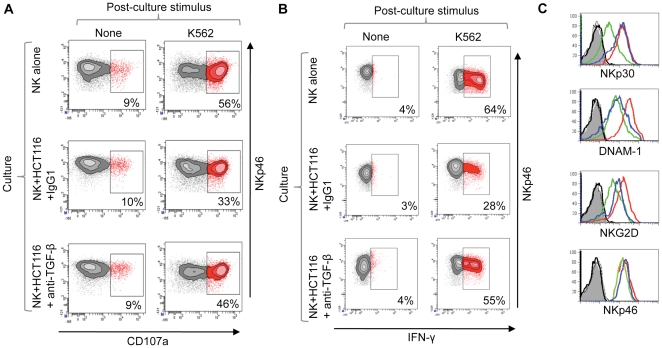
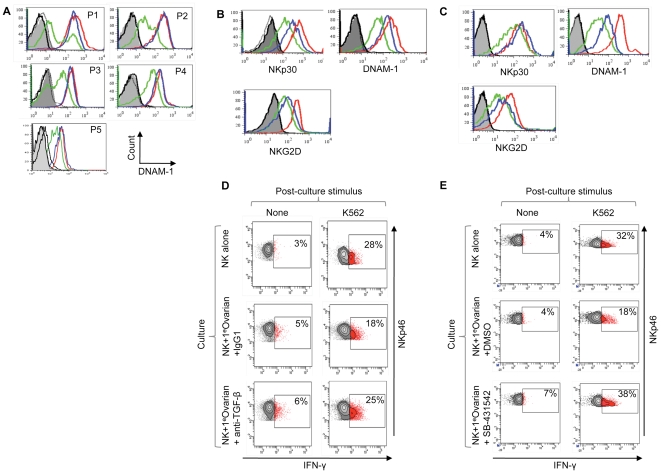
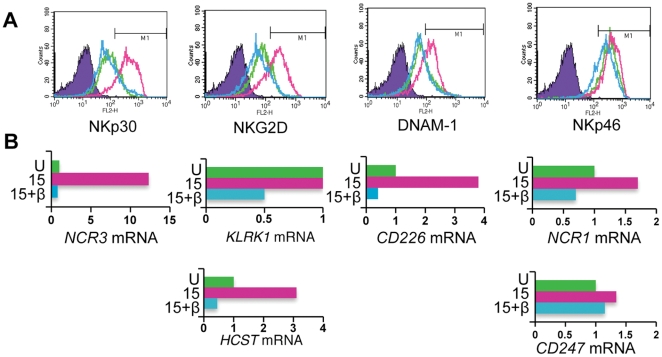
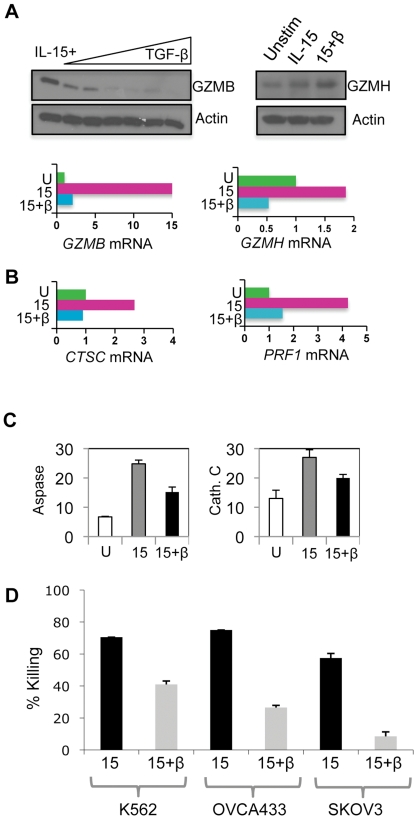
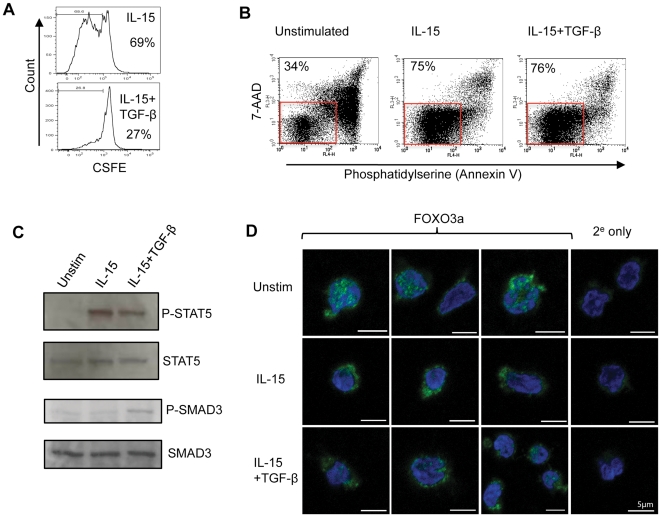
Immune evasion is now recognized as a key feature of cancer progression. In animal models, the activity of cytotoxic lymphocytes is suppressed in the tumour microenvironment by the immunosuppressive cytokine, Transforming Growth Factor (TGF)-β. Release from TGF-β-mediated inhibition restores anti-tumour immunity, suggesting a therapeutic strategy for human cancer. We demonstrate that human natural killer (NK) cells are inhibited in a TGF-β dependent manner following chronic contact-dependent interactions with tumour cells in vitro. In vivo, NK cell inhibition was localised to the human tumour microenvironment and primary ovarian tumours conferred TGF-β dependent inhibition upon autologous NK cells ex vivo. TGF-β antagonized the interleukin (IL)-15 induced proliferation and gene expression associated with NK cell activation, inhibiting the expression of both NK cell activation receptor molecules and components of the cytotoxic apparatus. Interleukin-15 also promotes NK cell survival and IL-15 excluded the pro-apoptotic transcription factor FOXO3 from the nucleus. However, this IL-15 mediated pathway was unaffected by TGF-β treatment, allowing NK cell survival. This suggested that NK cells in the tumour microenvironment might have their activity restored by TGF-β blockade and both anti-TGF-β antibodies and a small molecule inhibitor of TGF-β signalling restored the effector function of NK cells inhibited by autologous tumour cells. Thus, TGF-β blunts NK cell activation within the human tumour microenvironment but this evasion mechanism can be therapeutically targeted, boosting anti-tumour immunity.
免疫逃避现已被认为是癌症进展的一个关键特征。在动物模型中,细胞毒性淋巴细胞在肿瘤微环境中的活性受到免疫抑制细胞因子转化生长因子 (TGF)-β的抑制。从 TGF-β介导的抑制中释放出来会恢复抗肿瘤免疫,这表明了一种针对人类癌症的治疗策略。我们证明,人类自然杀伤 (NK) 细胞在体外与肿瘤细胞进行慢性接触依赖性相互作用后,以 TGF-β依赖的方式受到抑制。在体内,NK 细胞抑制局限于人类肿瘤微环境,原发性卵巢肿瘤在体外赋予自体 NK 细胞 TGF-β 依赖性抑制。TGF-β拮抗白细胞介素 (IL)-15 诱导的与 NK 细胞激活相关的增殖和基因表达,抑制 NK 细胞激活受体分子和细胞毒性装置的组成部分的表达。白细胞介素-15 还促进 NK 细胞存活,IL-15 将促凋亡转录因子 FOXO3 排除在核外。然而,这种 IL-15 介导的途径不受 TGF-β 处理的影响,从而允许 NK 细胞存活。这表明肿瘤微环境中的 NK 细胞可能通过 TGF-β 阻断恢复其活性,并且抗 TGF-β 抗体和 TGF-β 信号转导的小分子抑制剂恢复了被自体肿瘤细胞抑制的 NK 细胞的效应功能。因此,TGF-β 在人类肿瘤微环境中削弱了 NK 细胞的激活,但这种逃避机制可以作为治疗靶点,增强抗肿瘤免疫。