Department of Medicine, University of Washington, Seattle, Washington, USA.
Diabetes. 2011 Nov;60(11):2792-801. doi: 10.2337/db11-0255. Epub 2011 Sep 12.
Proinflammatory activation of Kupffer cells is implicated in the effect of high-fat feeding to cause liver insulin resistance. We sought to determine whether reduced endothelial nitric oxide (NO) signaling contributes to the effect of high-fat feeding to increase hepatic inflammatory signaling and if so, whether this effect 1) involves activation of Kupffer cells and 2) is ameliorated by increased NO signaling.
Effect of NO/cGMP signaling on hepatic inflammation and on isolated Kupffer cells was examined in C57BL/6 mice, eNos(-/-) mice, and Vasp(-/-) mice fed a low-fat or high-fat diet.
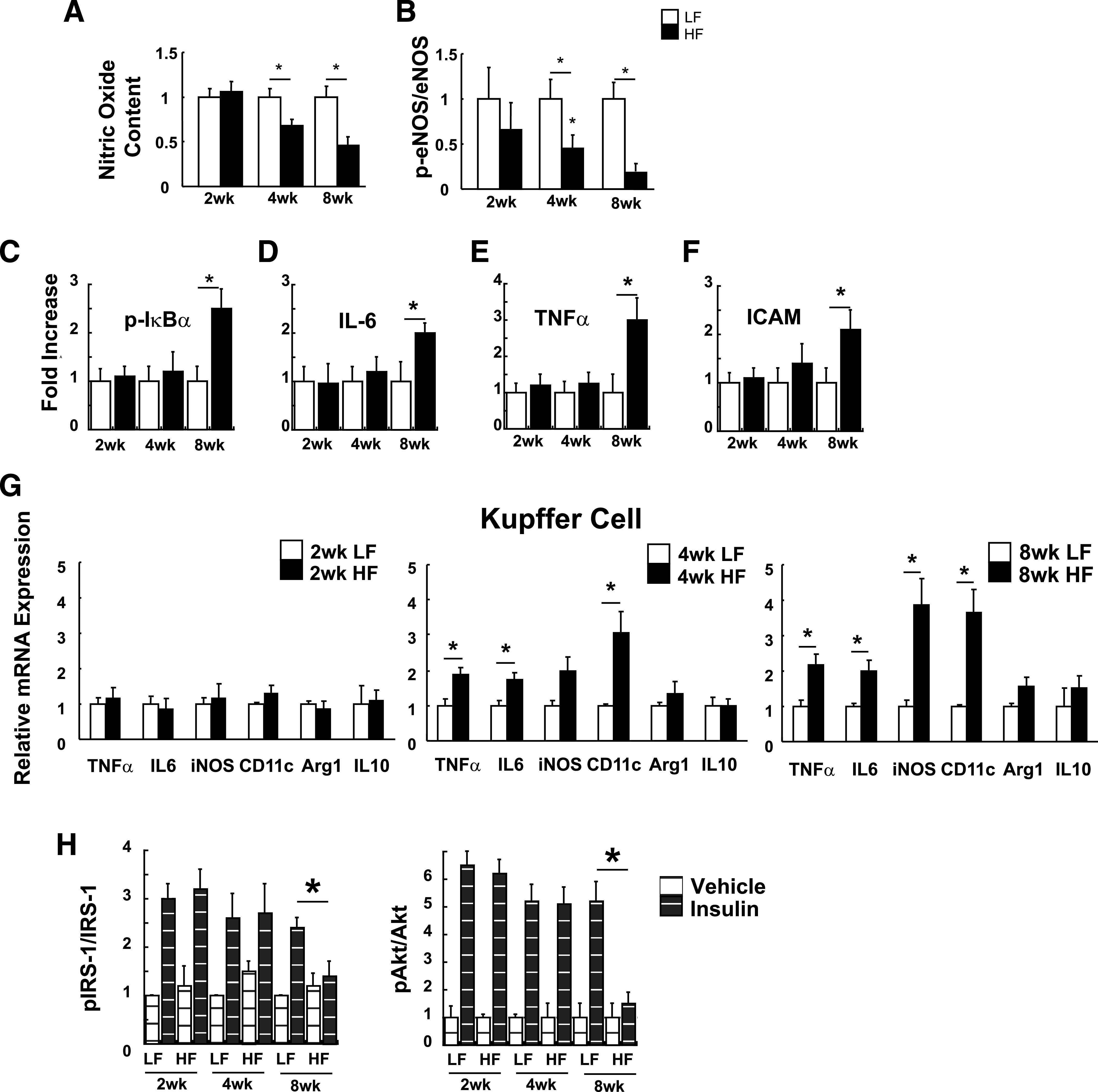
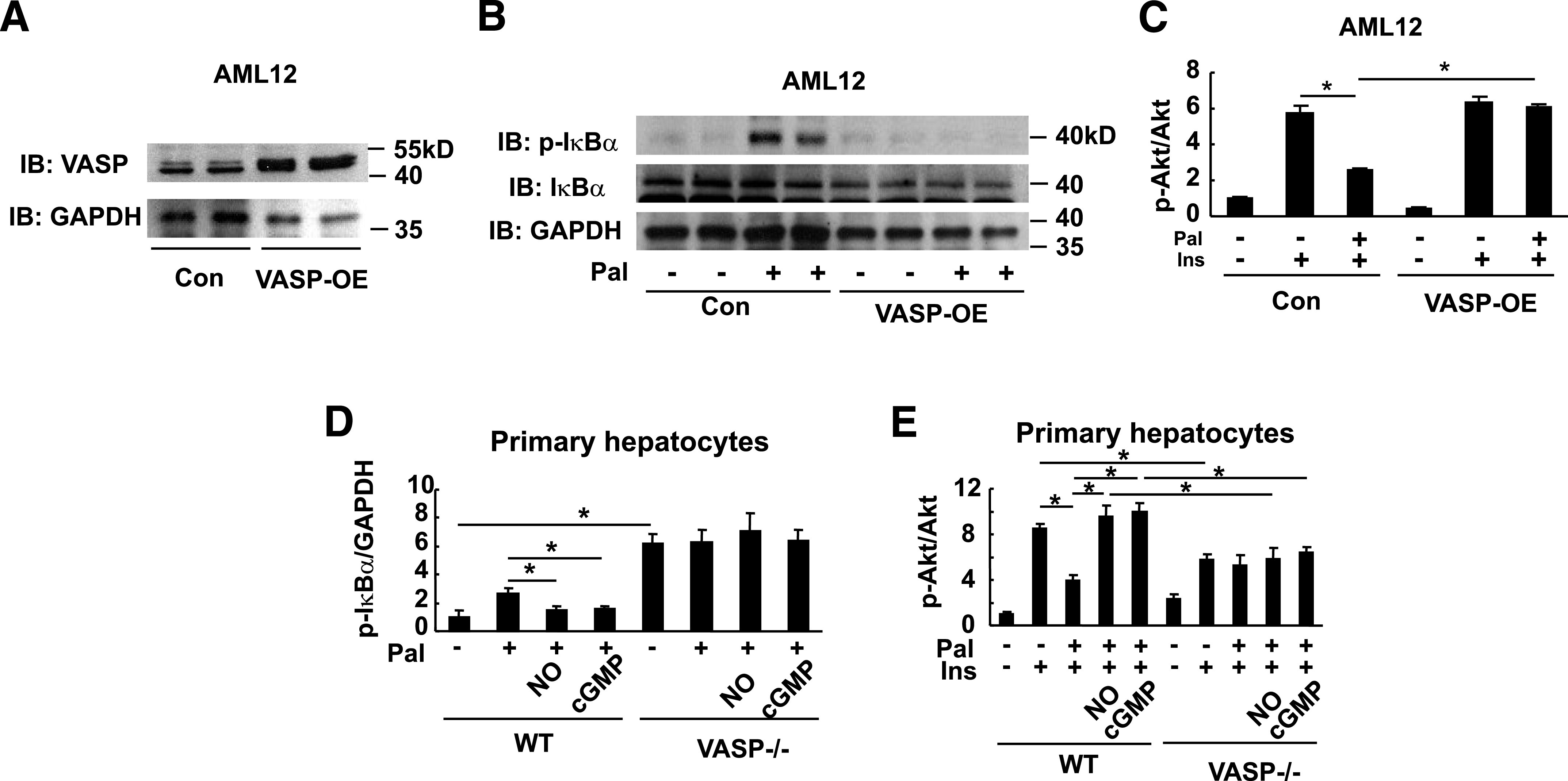
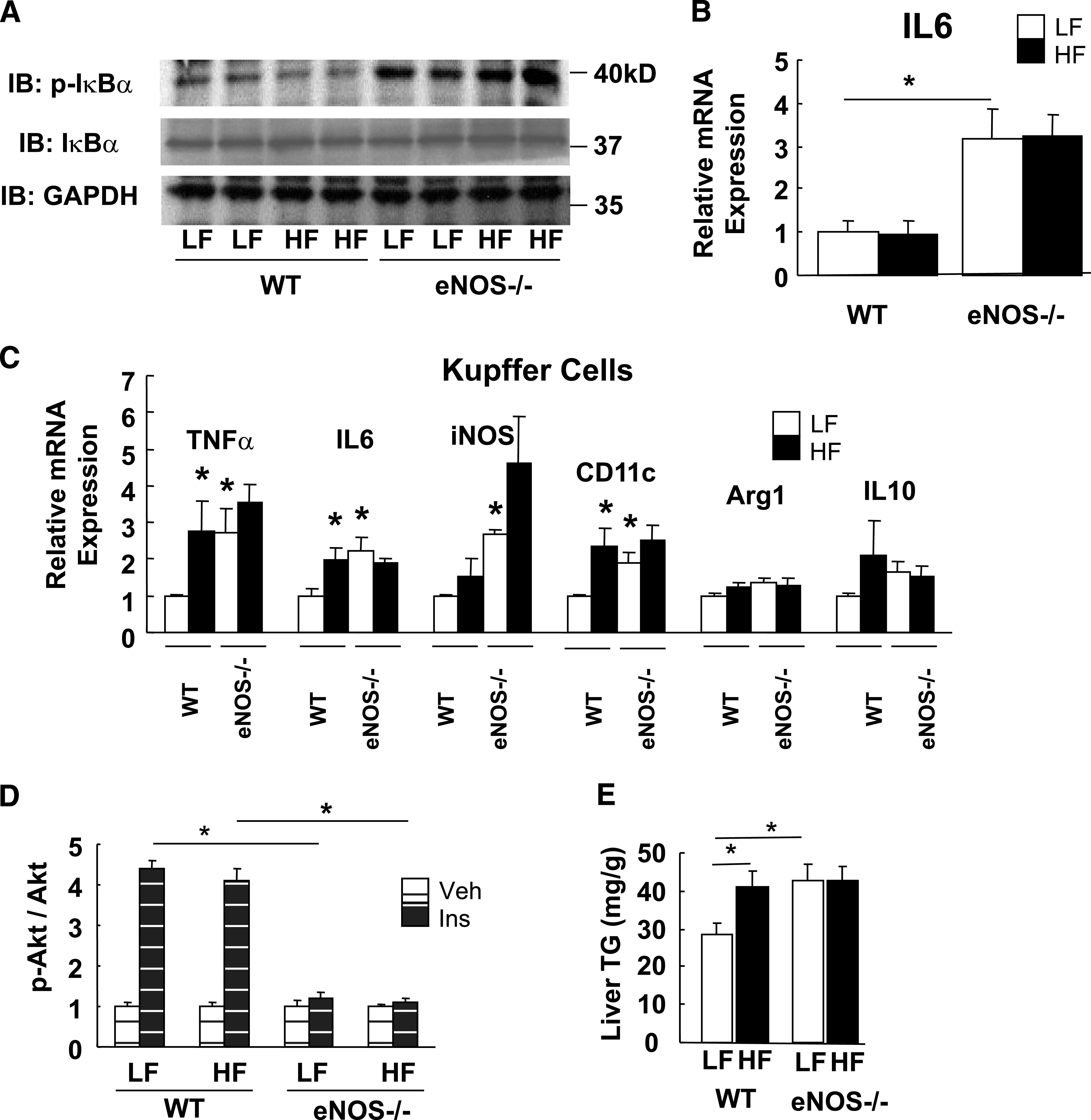
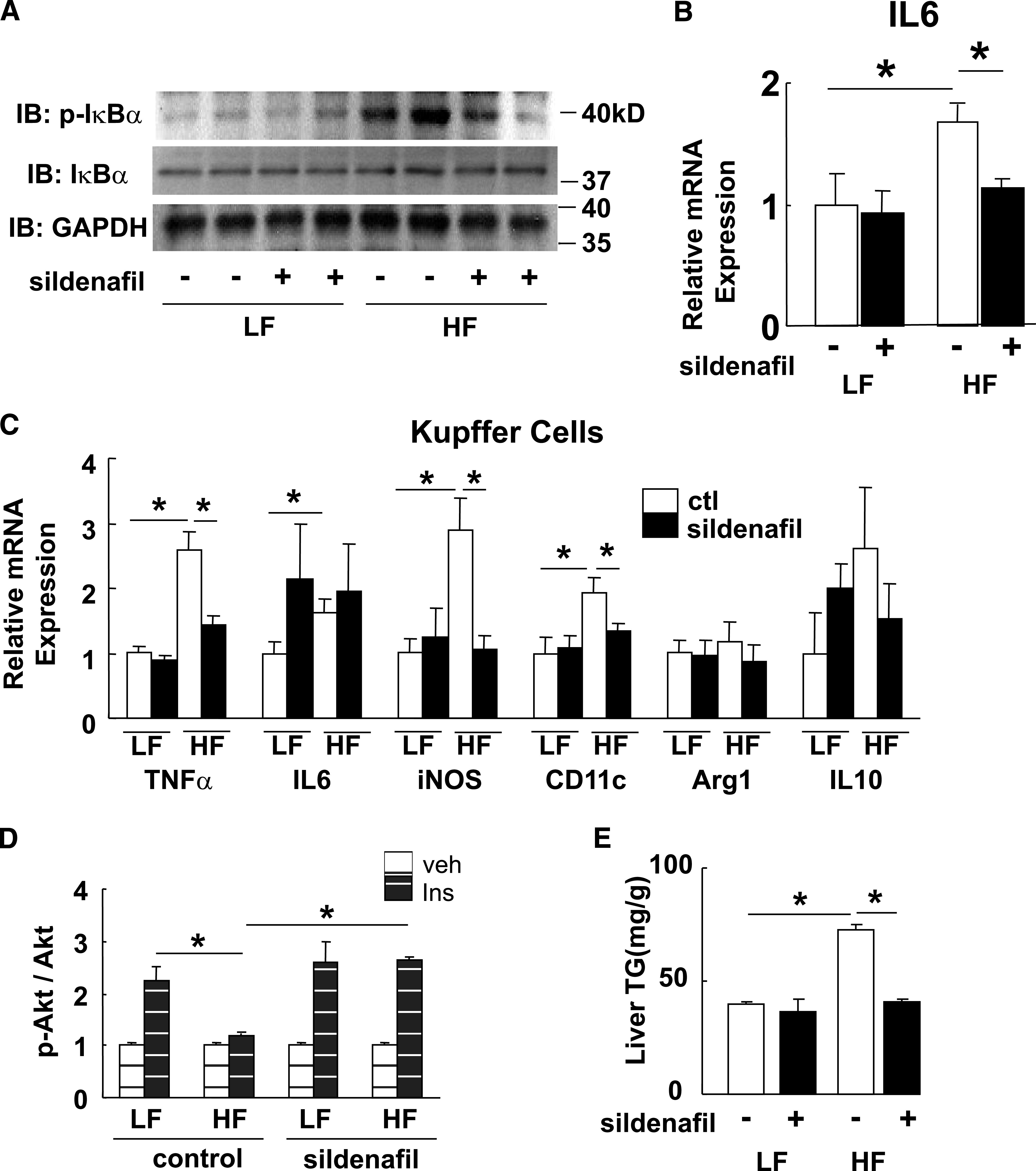
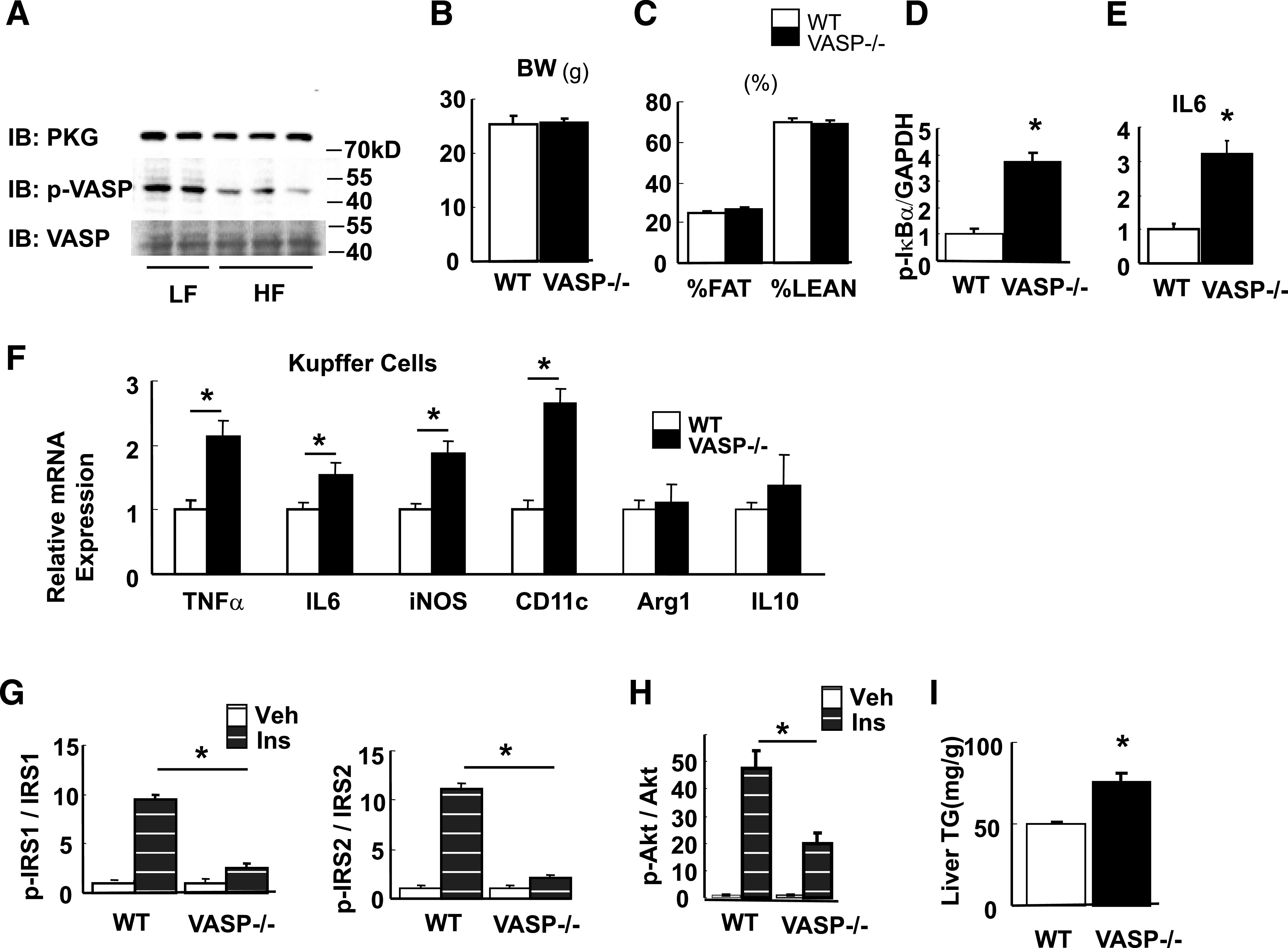
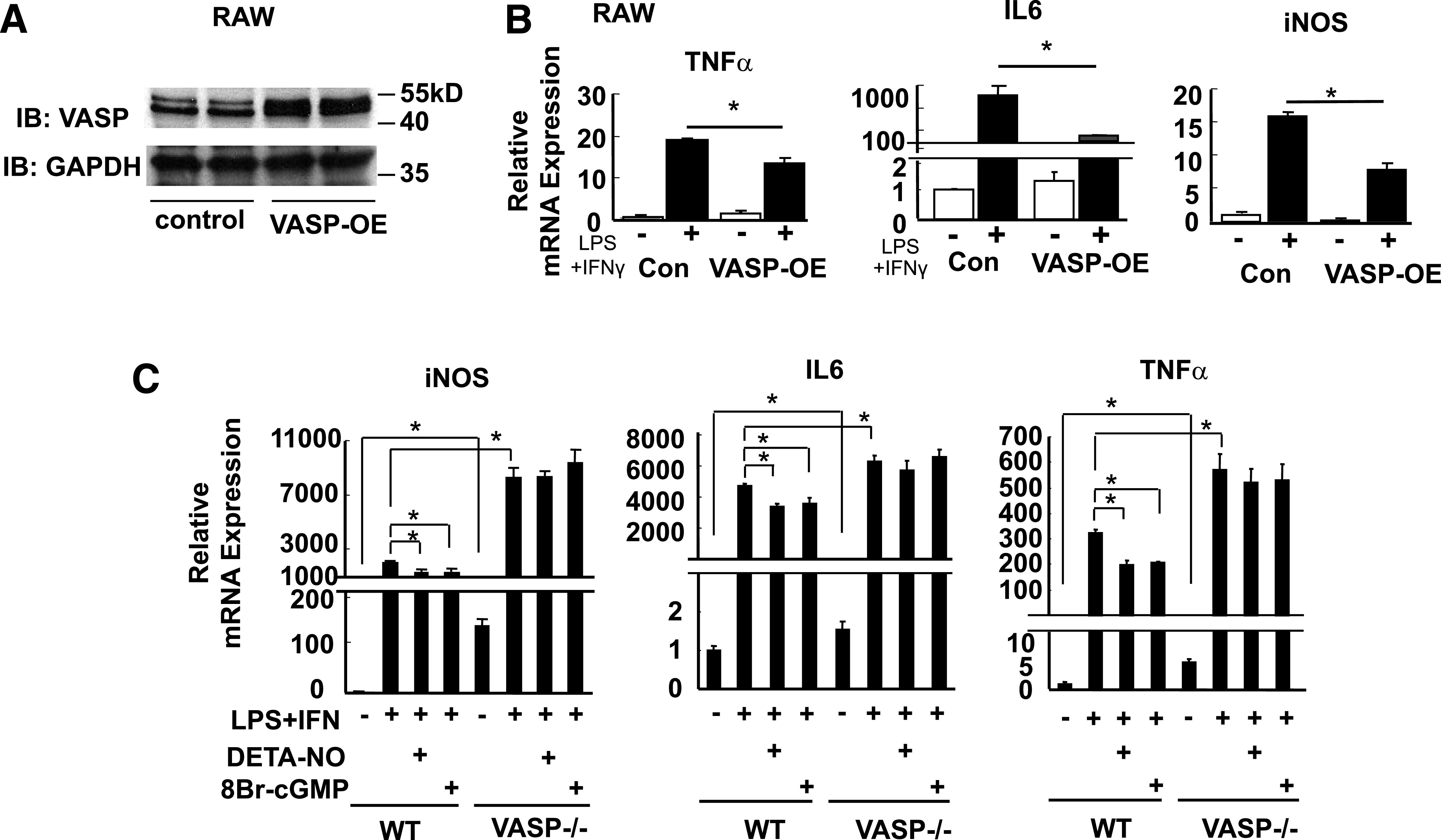
We show that high-fat feeding induces proinflammatory activation of Kupffer cells in wild-type mice coincident with reduced liver endothelial nitric oxide synthase activity and NO content while, conversely, enhancement of signaling downstream of endogenous NO by phosphodiesterase-5 inhibition protects against high fat-induced inflammation in Kupffer cells. Furthermore, proinflammatory activation of Kupffer cells is evident in eNos(-/-) mice even on a low-fat diet. Targeted deletion of vasodilator-stimulated phosphoprotein (VASP), a key downstream target of endothelially derived NO, similarly predisposes to hepatic and Kupffer cell inflammation and abrogates the protective effect of NO signaling in both macrophages and hepatocytes studied in a cell culture model.
These results collectively imply a physiological role for endothelial NO to limit obesity-associated inflammation and insulin resistance in hepatocytes and support a model in which Kupffer cell activation during high-fat feeding is dependent on reduced NO signaling. Our findings also identify the NO/VASP pathway as a novel potential target for the treatment of obesity-associated liver insulin resistance.
库普弗细胞的促炎激活被认为是高脂肪喂养导致肝脏胰岛素抵抗的原因。我们试图确定内皮一氧化氮(NO)信号的减少是否有助于高脂肪喂养增加肝炎症信号,如果是这样,这种效应 1)是否涉及库普弗细胞的激活,2)是否可以通过增加 NO 信号得到改善。
在 C57BL/6 小鼠、eNOS(-/-)小鼠和 Vasp(-/-)小鼠中,检查 NO/cGMP 信号对肝脏炎症和分离的库普弗细胞的影响,这些小鼠分别喂食低脂或高脂肪饮食。
我们表明,高脂肪喂养会诱导野生型小鼠的库普弗细胞发生促炎激活,同时伴有肝内皮型一氧化氮合酶活性和 NO 含量降低,而内源性 NO 信号下游的磷酸二酯酶-5 抑制作用增强则可以防止高脂肪诱导的库普弗细胞炎症。此外,即使在低脂饮食下,eNOS(-/-)小鼠的库普弗细胞也会发生促炎激活。血管舒张刺激磷蛋白(VASP)是内皮衍生的 NO 的关键下游靶标,其靶向缺失同样容易导致肝脏和库普弗细胞炎症,并在细胞培养模型中消除了 NO 信号对巨噬细胞和肝细胞的保护作用。
这些结果共同表明内皮一氧化氮在限制肥胖相关的炎症和肝细胞胰岛素抵抗方面具有生理作用,并支持这样一种模型,即在高脂肪喂养期间库普弗细胞的激活依赖于减少的 NO 信号。我们的发现还确定了 NO/VASP 途径作为治疗肥胖相关的肝脏胰岛素抵抗的一种新的潜在靶点。