Department of Microbiology and Immunology, Health Sciences Center, University of Louisville Louisville, KY, USA.
Front Microbiol. 2011 Sep 5;2:180. doi: 10.3389/fmicb.2011.00180. eCollection 2011.
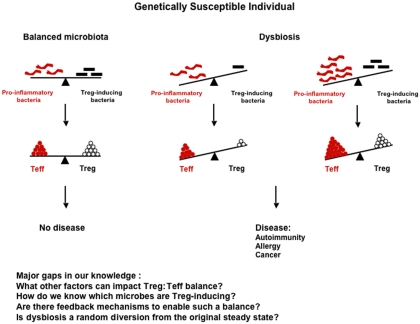
Our immune system has evolved to recognize and eradicate pathogenic microbes. However, we have a symbiotic relationship with multiple species of bacteria that occupy the gut and comprise the natural commensal flora or microbiota. The microbiota is critically important for the breakdown of nutrients, and also assists in preventing colonization by potentially pathogenic bacteria. In addition, the gut commensal bacteria appear to be critical for the development of an optimally functioning immune system. Various studies have shown that individual species of the microbiota can induce very different types of immune cells (e.g., Th17 cells, Foxp3(+) regulatory T cells) and responses, suggesting that the composition of the microbiota can have an important influence on the immune response. Although the microbiota resides in the gut, it appears to have a significant impact on the systemic immune response. Indeed, specific gut commensal bacteria have been shown to affect disease development in organs other than the gut, and depending on the species, have been found to have a wide range of effects on diseases from induction and exacerbation to inhibition and protection. In this review, we will focus on the role that the gut microbiota plays in the development and progression of inflammatory/autoimmune disease, and we will also touch upon its role in allergy and cancer.
我们的免疫系统已经进化到能够识别和消除病原微生物。然而,我们与多种细菌共生,这些细菌占据了肠道,构成了自然共生菌群或微生物群。微生物群对于营养物质的分解至关重要,还有助于防止潜在的病原菌定植。此外,肠道共生细菌似乎对免疫系统的最佳功能的发展至关重要。各种研究表明,微生物群的不同物种可以诱导非常不同类型的免疫细胞(例如 Th17 细胞、Foxp3(+)调节性 T 细胞)和反应,这表明微生物群的组成可以对免疫反应产生重要影响。尽管微生物群存在于肠道中,但它似乎对全身免疫反应有重大影响。事实上,已经证明特定的肠道共生细菌会影响肠道以外的器官的疾病发展,并且取决于物种,它们对从诱导和恶化到抑制和保护的各种疾病都有广泛的影响。在这篇综述中,我们将重点讨论肠道微生物群在炎症/自身免疫性疾病的发展和进展中所起的作用,同时也将探讨它在过敏和癌症中的作用。