School of Materials Science and Engineering, Nanyang Technological University, Singapore, Singapore.
PLoS One. 2011;6(9):e24513. doi: 10.1371/journal.pone.0024513. Epub 2011 Sep 9.
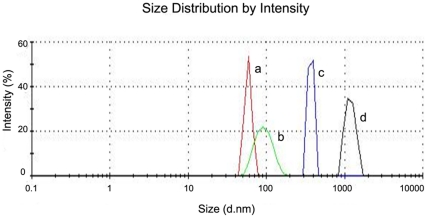
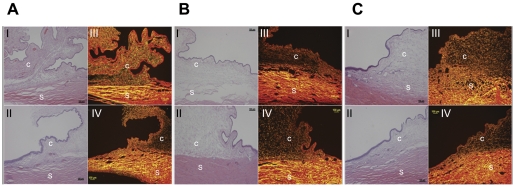
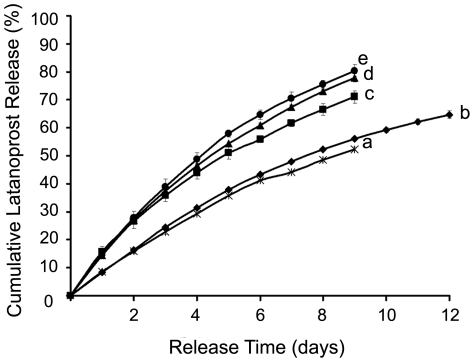
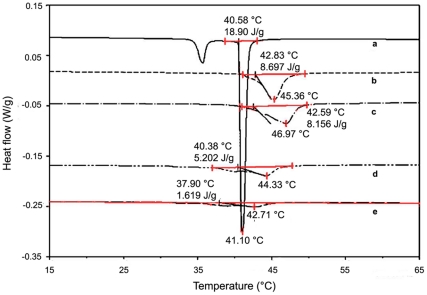
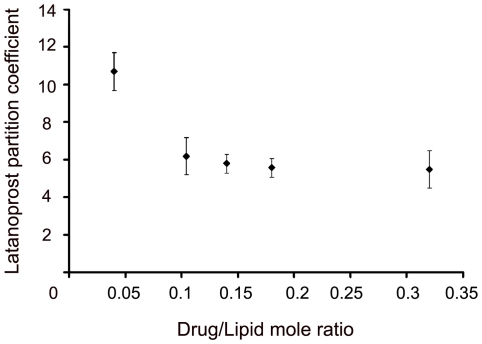
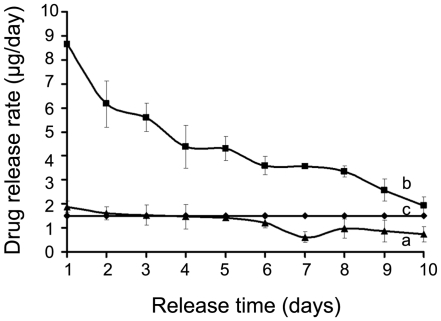
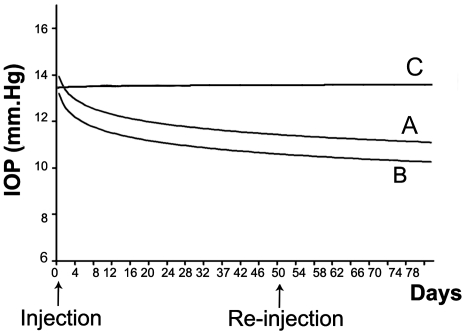
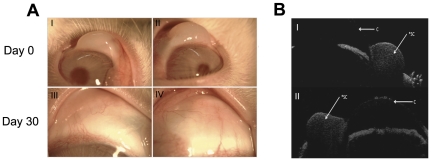
Topical medication remains the first line treatment of glaucoma; however, sustained ocular drug delivery via topical administration is difficult to achieve. Most drugs have poor penetration due to the multiple physiological barriers of the eye and are rapidly cleared if applied topically. Currently, daily topical administration for lowering the intra-ocular pressure (IOP), has many limitations, such as poor patient compliance and ocular allergy from repeated drug administration. Poor compliance leads to suboptimal control of IOP and disease progression with eventual blindness. The delivery of drugs in a sustained manner could provide the patient with a more attractive alternative by providing optimal therapeutic dosing, with minimal local toxicity and inconvenience. To investigate this, we incorporated latanoprost into LUVs (large unilamellar vesicles) derived from the liposome of DPPC (di-palmitoyl-phosphatidyl-choline) by the film hydration technique. Relatively high amounts of drug could be incorporated into this vesicle, and the drug resides predominantly in the bilayer. Vesicle stability monitored by size measurement and DSC (differential scanning calorimetry) analysis showed that formulations with a drug/lipid mole ratio of about 10% have good physical stability during storage and release. This formulation demonstrated sustained release of latanoprost in vitro, and then tested for efficacy in 23 rabbits. Subconjunctival injection and topical eye drop administration of the latanoprost/liposomal formulation were compared with conventional daily administration of latanoprost eye drops. The IOP lowering effect with a single subconjunctival injection was shown to be sustained for up to 50 days, and the extent of IOP lowering was comparable to daily eye drop administration. Toxicity and localized inflammation were not observed in any treatment groups. We believe that this is the first demonstration, in vivo, of sustained delivery to the anterior segment of the eye that is safe and efficacious for 50 days.
局部用药仍然是治疗青光眼的一线治疗方法;然而,通过局部给药实现持续的眼部药物输送是困难的。大多数药物由于眼部的多种生理屏障而渗透不良,如果局部应用则迅速清除。目前,每天通过局部给药降低眼内压(IOP)存在许多限制,例如患者顺应性差和反复药物给药引起的眼部过敏。顺应性差导致 IOP 控制不佳和疾病进展,最终导致失明。以持续的方式输送药物可以为患者提供更有吸引力的替代方案,提供最佳治疗剂量,局部毒性和不便最小。为了研究这一点,我们通过薄膜水化技术将拉坦前列素纳入由 DPPC(二棕榈酰磷脂酰胆碱)脂质体衍生的 LUVs(大单室囊泡)中。可以将相对大量的药物掺入这种囊泡中,并且药物主要驻留在双层中。通过粒径测量和 DSC(差示扫描量热法)分析监测囊泡稳定性表明,药物/脂质摩尔比约为 10%的制剂在储存和释放过程中具有良好的物理稳定性。该制剂在体外表现出拉坦前列素的持续释放,然后在 23 只兔子中进行了功效测试。将拉坦前列素/脂质体制剂的结膜下注射和局部滴眼与常规的拉坦前列素滴眼剂每日给药进行了比较。单次结膜下注射的降压效果持续长达 50 天,降压程度与每日滴眼给药相当。在任何治疗组中均未观察到毒性和局部炎症。我们相信,这是首次在体内证明对前节的持续输送是安全且有效的,持续时间长达 50 天。