School of Pharmacy, Shanghai Jiao Tong University, Shanghai, China.
PLoS One. 2011;6(9):e24680. doi: 10.1371/journal.pone.0024680. Epub 2011 Sep 13.
Irradiation commonly causes long-term bone marrow injury charactertized by defective HSC self-renewal and a decrease in HSC reserve. However, the effect of high-dose IR on global gene expression during bone marrow recovery remains unknown.
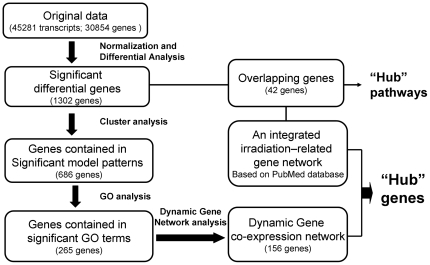
Microarray analysis was used to identify differentially expressed genes that are likely to be critical for bone marrow recovery. Multiple bioinformatics analyses were conducted to identify key hub genes, pathways and biological processes.
Comparisons to other gene array datasets indicate that global gene expression profiles of irradiation damaged bone marrow show significant differences between injury and recovery phases. Our data suggest that immune response (including hematopoiesis) can be considered as a critical biological process in bone marrow recovery. Several critical hub genes that are key members of significant pathways or gene networks were identified by our comprehensive analysis.
辐照通常会导致长期的骨髓损伤,表现为造血干细胞(HSC)自我更新缺陷和 HSC 储备减少。然而,高剂量辐照对骨髓恢复过程中的全基因表达的影响尚不清楚。
使用微阵列分析来鉴定可能对骨髓恢复至关重要的差异表达基因。进行了多种生物信息学分析,以鉴定关键的枢纽基因、途径和生物学过程。
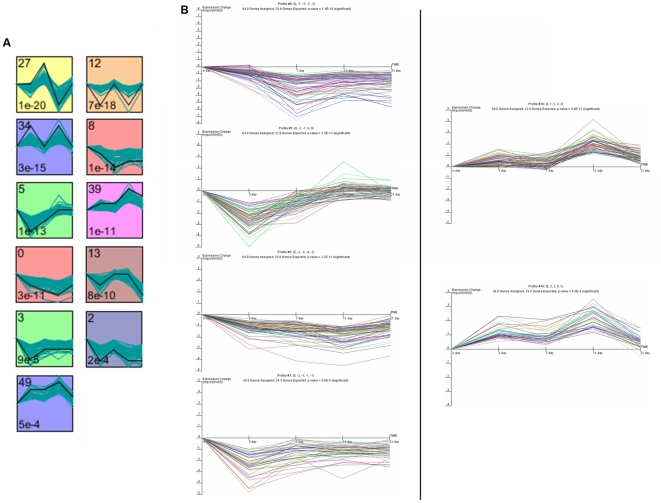
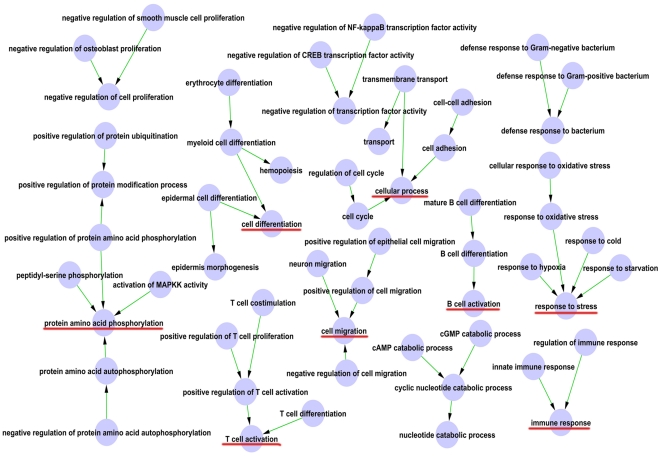
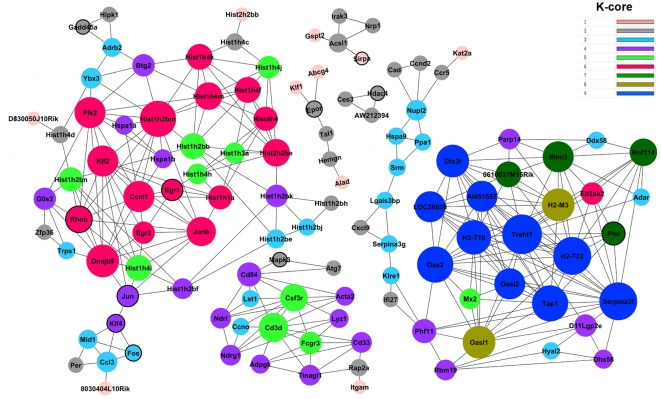
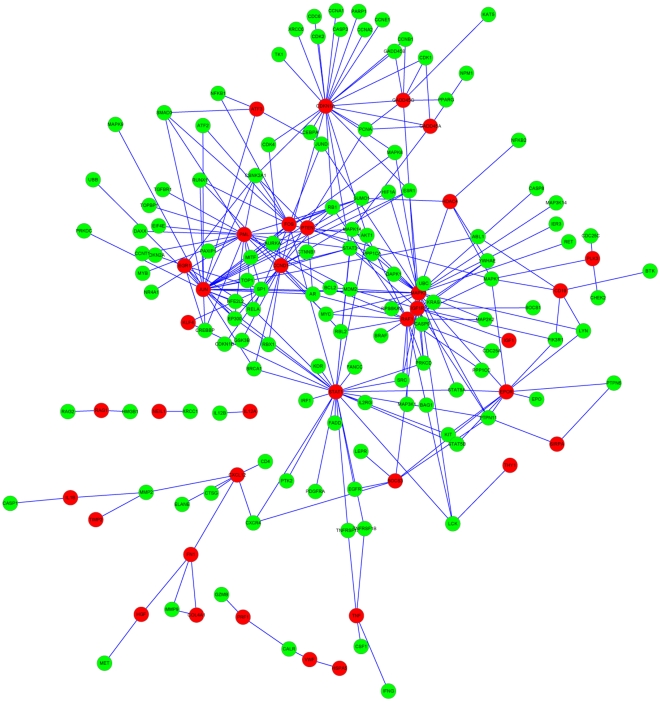
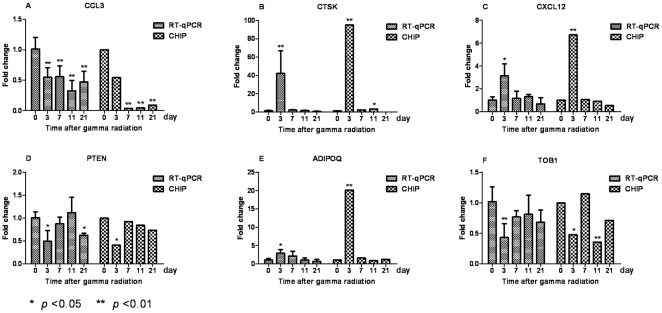
1)我们在辐照后 3、7、11 和 21 天的小鼠骨髓中鉴定出 1302 个差异表达基因。其中 11 个基因已知与 HSC 自我更新相关,包括 Adipoq、Ccl3、Ccnd1、Ccnd2、Cdkn1a、Cxcl12、Junb、Pten、Tal1、Thy1 和 Tnf;2)这些差异表达的 1302 个基因在包括造血和对刺激的反应在内的免疫的多个生物学过程中起作用,以及包括细胞增殖、分化、黏附和信号传导在内的细胞过程;3)动态基因网络分析确定了一组 25 个核心基因,它们参与免疫反应、转录调节和核小体组装;4)将我们的数据与文献中提取的已知辐照相关基因进行比较,发现有 42 个基因与我们的微阵列分析结果相匹配,从而证明了研究之间的一致性;5)蛋白质-蛋白质相互作用网络和途径分析表明了几个重要的蛋白质-蛋白质相互作用和信号通路,包括焦点粘附和几个免疫相关的信号通路。
与其他基因芯片数据集的比较表明,辐照损伤骨髓的全基因表达谱在损伤和恢复阶段之间存在显著差异。我们的数据表明,免疫反应(包括造血)可以被认为是骨髓恢复的一个关键生物学过程。通过我们的综合分析,确定了几个关键的枢纽基因,它们是重要途径或基因网络的关键成员。