Suppr超能文献

不同商业来源肝素的结构特征分析。

Structural characterization of heparins from different commercial sources.

机构信息

Department of Chemical and Biological Engineering, Center for Biotechnology and Interdisciplinary Studies, Rensselaer Polytechnic Institute, Troy, NY 12180, USA.

出版信息

Anal Bioanal Chem. 2011 Nov;401(9):2793-803. doi: 10.1007/s00216-011-5367-7. Epub 2011 Sep 20.

Abstract

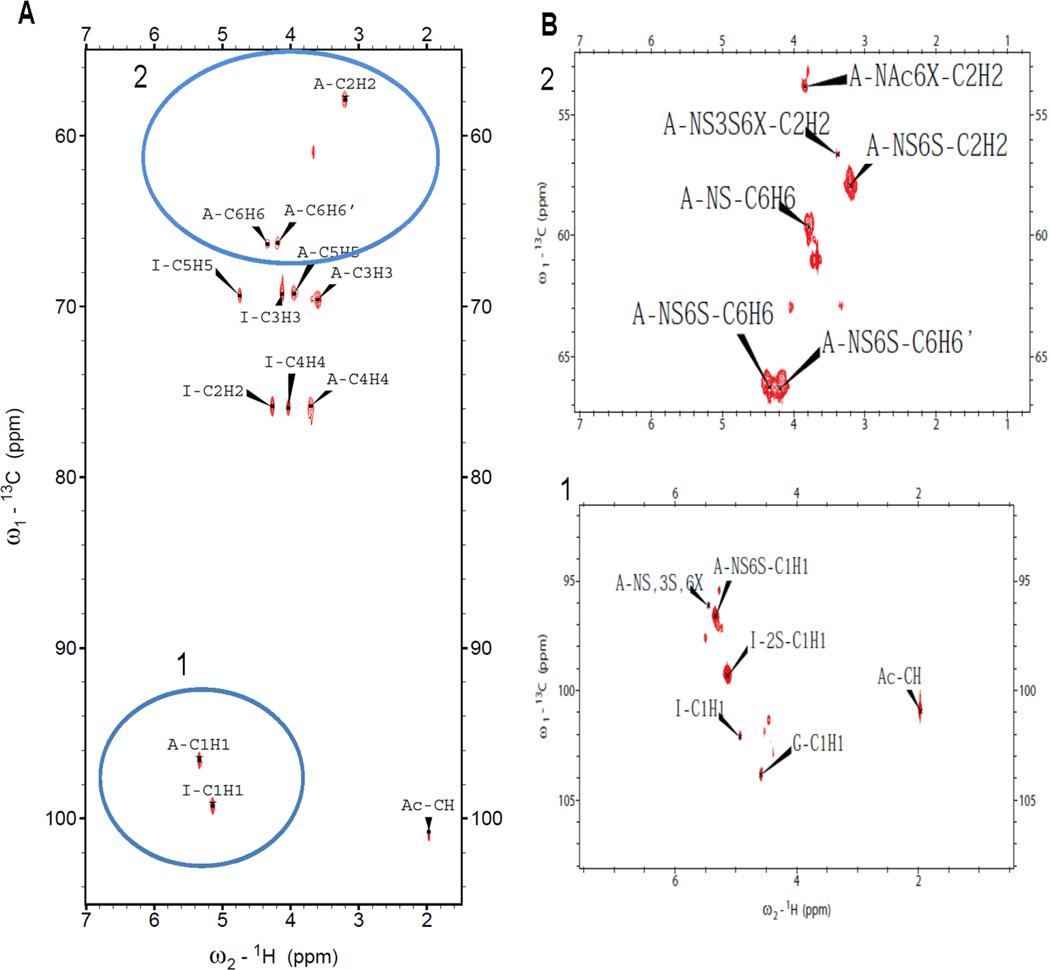
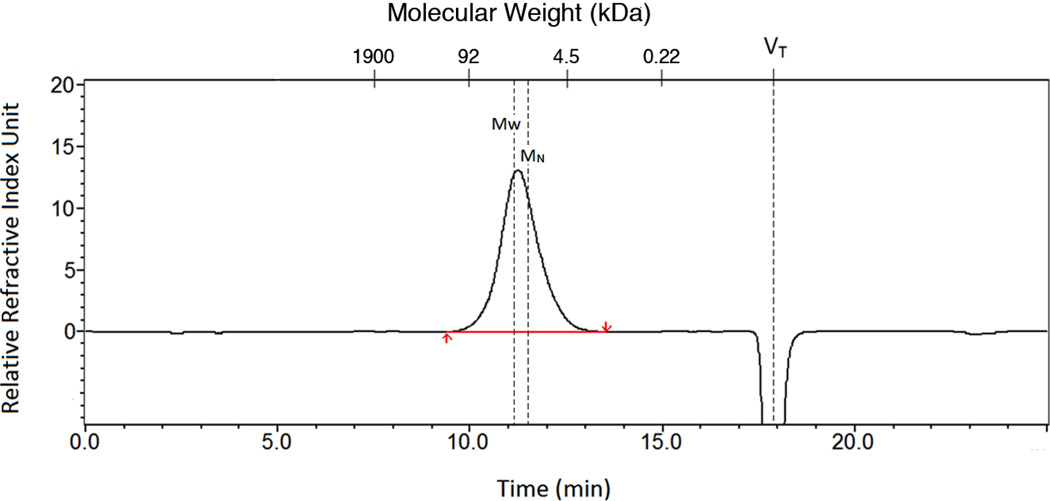
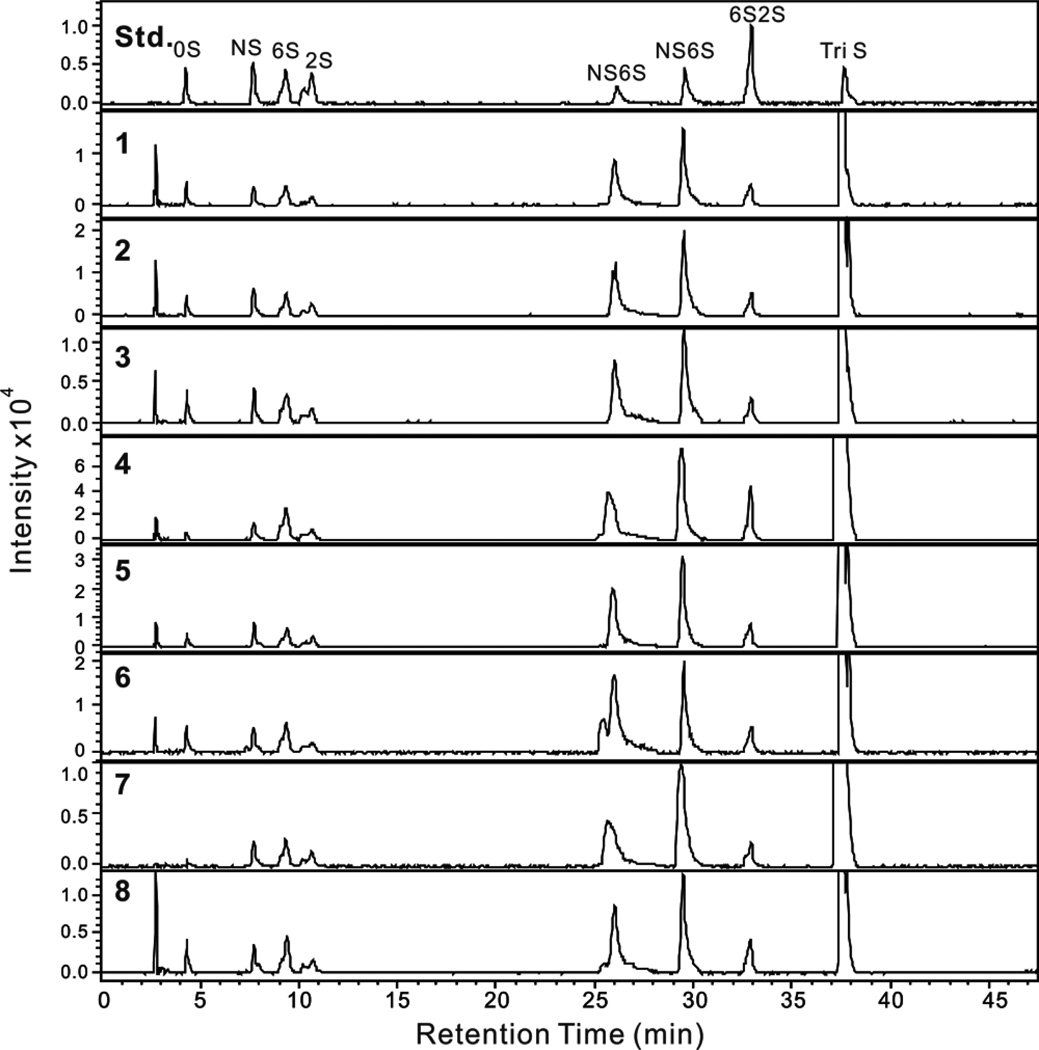
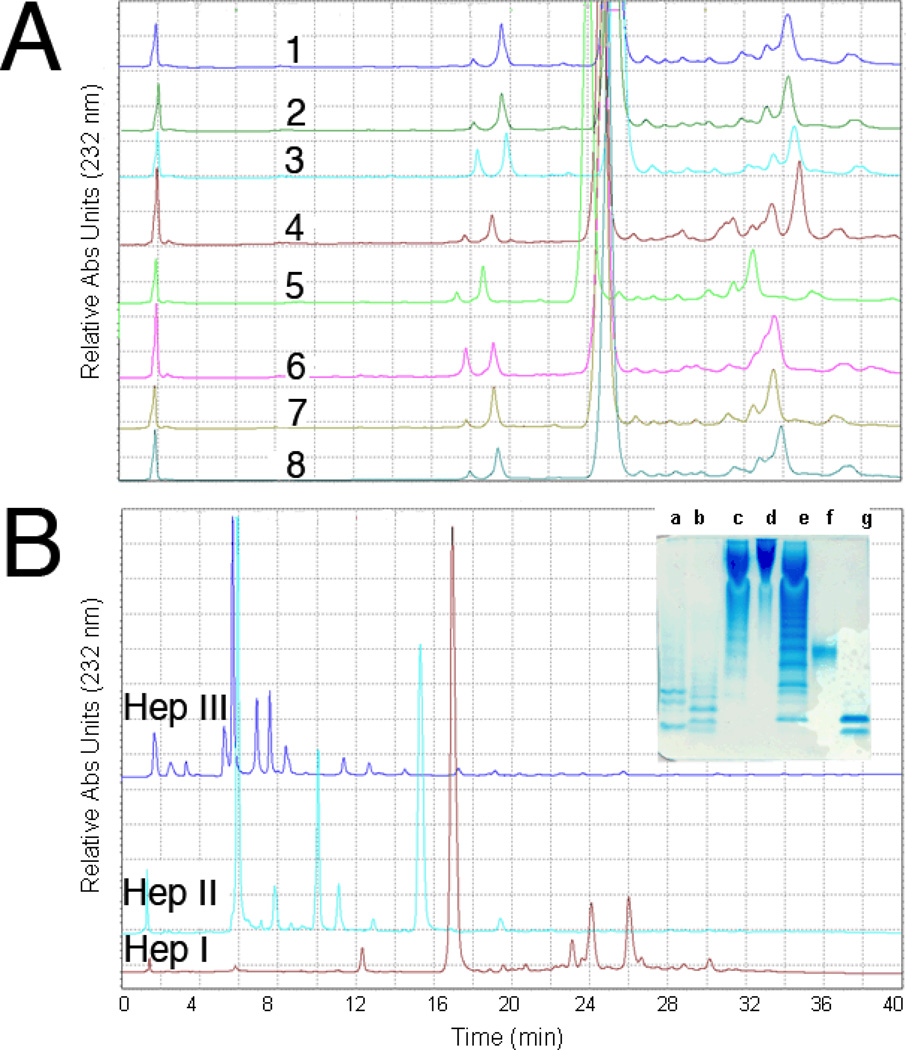
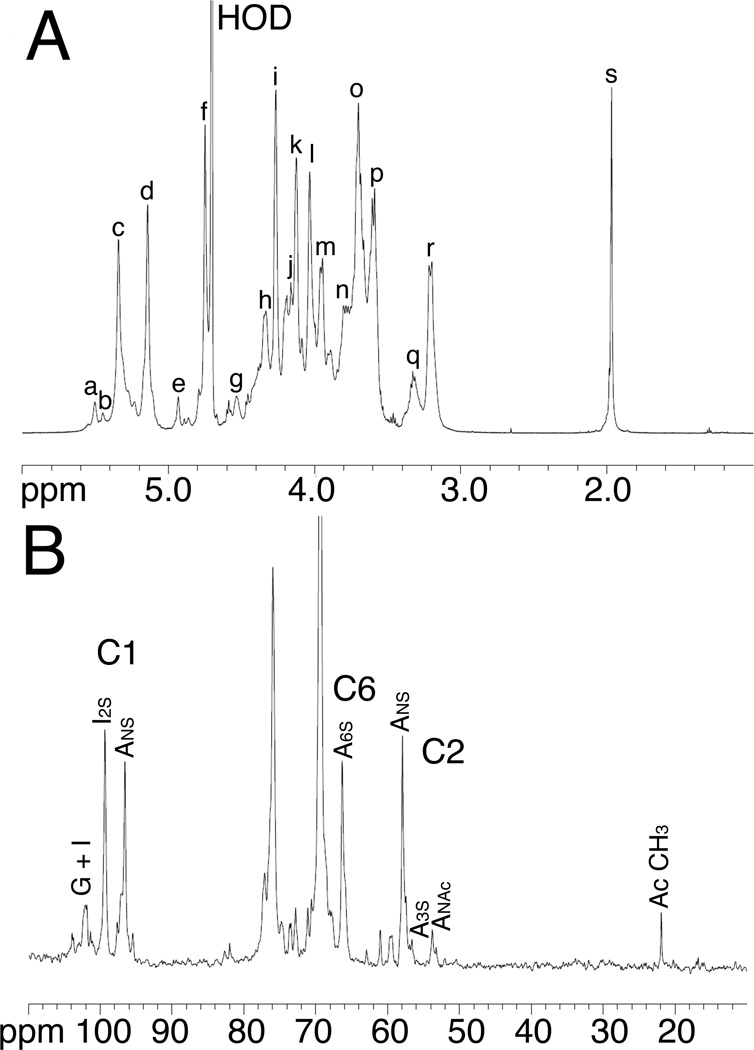
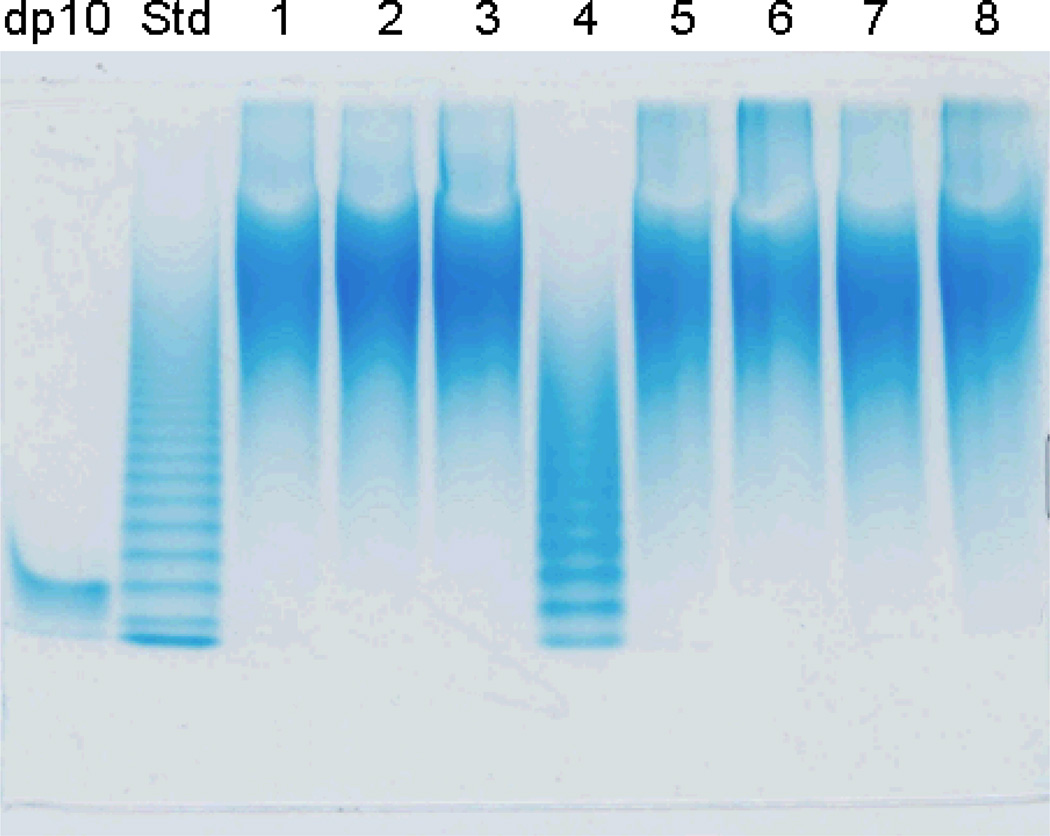
Seven commercial heparin active pharmaceutical ingredients and one commercial low molecular weight from different manufacturers were characterized with a view profiling their physicochemical properties. All heparins had similar molecular weight properties as determined by polyacrylamide gel electrophoresis (M(N), 10-11 kDa; M(W), 13-14 kDa; polydispersity (PD), 1.3-1.4) and by size exclusion chromatography (M(N), 14-16 kDa; M (W), 21-25 kDa; PD, 1.4-1.6). one-dimensional (1)H- and (13)C-nuclear magnetic resonance (NMR) evaluation of the heparin samples was performed, and peaks were fully assigned using two-dimensional NMR. The percentage of glucosamine residues with 3-O-sulfo groups and the percentage of N-sulfo groups and N-acetyl groups ranged from 5.8-7.9%, 78-82%, to 13-14%, respectively. There was substantial variability observed in the disaccharide composition, as determined by high performance liquid chromatography (HPLC)-mass spectral analysis of heparin lyase I-III digested heparins. Heparin oligosaccharide mapping was performed using HPLC following separate treatments with heparin lyase I, II, and III. These maps were useful in qualitatively and quantitatively identifying structural differences between these heparins. The binding affinities of these heparins to antithrombin III and thrombin were evaluated by using a surface plasmon resonance competitive binding assay. This study provides the physicochemical and activity characterization necessary for the appropriate design and synthesis of a generic bioengineered heparin.

摘要

七种商业来源的肝素原料药和一种商业来源的低分子肝素,来自不同的制造商,其理化性质特征已被鉴定。所有肝素的重均分子量(M(W))和数均分子量(M(N))均相似,通过聚丙烯酰胺凝胶电泳(M(N),10-11 kDa;M(W),13-14 kDa;多分散系数(PD),1.3-1.4)和凝胶排阻色谱(M(N),14-16 kDa;M(W),21-25 kDa;PD,1.4-1.6)确定。采用一维(1)H-和(13)C-核磁共振(NMR)对肝素样品进行评估,并用二维 NMR 对所有峰进行了完全归属。 3-O-磺酸基葡萄糖醛酸残基和 N-磺酸基及 N-乙酰基的百分比范围分别为 5.8-7.9%、78-82%和 13-14%。通过肝素酶 I-III 消化肝素的高效液相色谱(HPLC)-质谱分析,确定了二糖组成存在很大差异。使用肝素酶 I、II 和 III 分别处理后,进行肝素寡糖图谱分析。这些图谱有助于定性和定量识别这些肝素之间的结构差异。通过表面等离子体共振竞争结合测定法,评估了这些肝素与抗凝血酶 III 和凝血酶的结合亲和力。本研究为通用生物工程肝素的合理设计和合成提供了必要的理化性质和活性特征。
相似文献

1
Structural characterization of heparins from different commercial sources.
Anal Bioanal Chem. 2011 Nov;401(9):2793-803. doi: 10.1007/s00216-011-5367-7. Epub 2011 Sep 20.
2
Structural characterization of pharmaceutical heparins prepared from different animal tissues.
J Pharm Sci. 2013 May;102(5):1447-57. doi: 10.1002/jps.23501. Epub 2013 Mar 21.
4
Controllable production of low molecular weight heparins by combinations of heparinase I/II/III.
Carbohydr Polym. 2014 Jan 30;101:484-92. doi: 10.1016/j.carbpol.2013.09.052. Epub 2013 Sep 23.
5
Analysis of 3-O-sulfo group-containing heparin tetrasaccharides in heparin by liquid chromatography-mass spectrometry.
Anal Biochem. 2014 Jun 15;455:3-9. doi: 10.1016/j.ab.2014.02.033. Epub 2014 Mar 28.
8
Preparation and structural characterization of large heparin-derived oligosaccharides.
Glycobiology. 1995 Feb;5(1):83-95. doi: 10.1093/glycob/5.1.83.

引用本文的文献

2
Molecular determinants of the interaction between HSV-1 glycoprotein D and heparan sulfate.
Front Mol Biosci. 2022 Nov 7;9:1043713. doi: 10.3389/fmolb.2022.1043713. eCollection 2022.
4
Recent advances in biotechnology for heparin and heparan sulfate analysis.
Talanta. 2020 Nov 1;219:121270. doi: 10.1016/j.talanta.2020.121270. Epub 2020 Jun 14.
5
Tools for the Quality Control of Pharmaceutical Heparin.
Medicina (Kaunas). 2019 Sep 25;55(10):636. doi: 10.3390/medicina55100636.
6
Comparison of Low-Molecular-Weight Heparins Prepared From Ovine Heparins With Enoxaparin.
Clin Appl Thromb Hemost. 2019 Jan-Dec;25:1076029619840701. doi: 10.1177/1076029619840701.
8
Modernization of Enoxaparin Molecular Weight Determination Using Homogeneous Standards.
Pharmaceuticals (Basel). 2017 Jul 22;10(3):66. doi: 10.3390/ph10030066.
9
A purification process for heparin and precursor polysaccharides using the pH responsive behavior of chitosan.
Biotechnol Prog. 2015 Sep-Oct;31(5):1348-59. doi: 10.1002/btpr.2144. Epub 2015 Jul 16.
10
Combinatorial one-pot chemoenzymatic synthesis of heparin.
Carbohydr Polym. 2015 May 20;122:399-407. doi: 10.1016/j.carbpol.2014.10.054. Epub 2014 Nov 7.

本文引用的文献

2
Control of the heparosan N-deacetylation leads to an improved bioengineered heparin.
Appl Microbiol Biotechnol. 2011 Jul;91(1):91-9. doi: 10.1007/s00253-011-3231-5. Epub 2011 Apr 12.
3
Impact of autoclave sterilization on the activity and structure of formulated heparin.
J Pharm Sci. 2011 Aug;100(8):3396-3404. doi: 10.1002/jps.22527. Epub 2011 Mar 17.
4
Heparin mapping using heparin lyases and the generation of a novel low molecular weight heparin.
J Med Chem. 2011 Jan 27;54(2):603-10. doi: 10.1021/jm101381k. Epub 2010 Dec 17.
5
Mass balance analysis of contaminated heparin product.
Anal Biochem. 2011 Jan 1;408(1):147-56. doi: 10.1016/j.ab.2010.09.015. Epub 2010 Sep 17.
6
Chemoenzymatic design of heparan sulfate oligosaccharides.
J Biol Chem. 2010 Oct 29;285(44):34240-9. doi: 10.1074/jbc.M110.159152. Epub 2010 Aug 21.
7
E. coli K5 fermentation and the preparation of heparosan, a bioengineered heparin precursor.
Biotechnol Bioeng. 2010 Dec 15;107(6):964-73. doi: 10.1002/bit.22898.
8
Orthogonal analytical approaches to detect potential contaminants in heparin.
Proc Natl Acad Sci U S A. 2009 Oct 6;106(40):16956-61. doi: 10.1073/pnas.0906861106. Epub 2009 Sep 23.
10
Solution structures of chemoenzymatically synthesized heparin and its precursors.
J Am Chem Soc. 2008 Oct 1;130(39):12998-3007. doi: 10.1021/ja8026345. Epub 2008 Sep 4.

文献AI研究员

20分钟写一篇综述,助力文献阅读效率提升50倍。

立即体验

用中文搜PubMed

大模型驱动的PubMed中文搜索引擎

马上搜索

文档翻译

学术文献翻译模型,支持多种主流文档格式。

立即体验