Donders Institute for Brain, Cognition and Behaviour, Department of Paediatric Neurology, Radboud University Nijmegen Medical Centre, Nijmegen, The Netherlands.
Eur J Pediatr. 2012 Mar;171(3):409-14. doi: 10.1007/s00431-011-1570-y. Epub 2011 Sep 20.
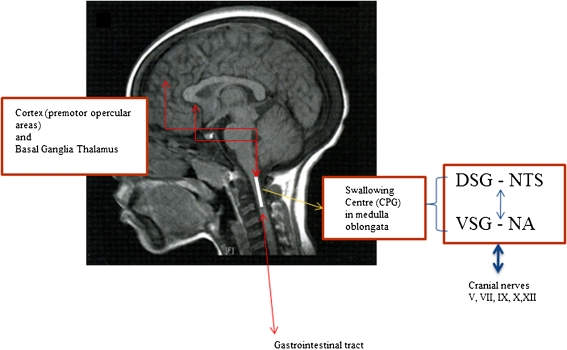
Cerebral palsy (CP) is the most common physical disability in early childhood. The worldwide prevalence of CP is approximately 2-2.5 per 1,000 live births. It has been clinically defined as a group of motor, cognitive, and perceptive impairments secondary to a non-progressive defect or lesion of the developing brain. Children with CP can have swallowing problems with severe drooling as one of the consequences. Malnutrition and recurrent aspiration pneumonia can increase the risk of morbidity and mortality. Early attention should be given to dysphagia and excessive drooling and their substantial contribution to the burden of a child with CP and his/her family. This review displays the important functional and anatomical issues related to swallowing problems in children with CP based on relevant literature and expert opinion. Furthermore, based on our experience, we describe a plan for approach of investigation and treatment of swallowing problems in cerebral palsy.
脑性瘫痪(CP)是儿童早期最常见的身体残疾。全球 CP 的患病率约为每 1000 例活产儿中有 2-2.5 例。它在临床上被定义为一组运动、认知和感知障碍,继发于发育中大脑的非进行性缺陷或损伤。CP 患儿可能存在吞咽问题,严重流涎是其后果之一。营养不良和反复吸入性肺炎会增加发病率和死亡率的风险。应早期关注吞咽问题和过度流涎,因为它们对 CP 患儿及其家庭的负担有重要影响。本综述根据相关文献和专家意见,展示了与 CP 患儿吞咽问题相关的重要功能和解剖学问题。此外,根据我们的经验,我们描述了 CP 患儿吞咽问题的调查和治疗方案。