NEIKER-Tecnalia, Animal Health Department, Derio, Bizkaia, Spain.
PLoS One. 2011;6(9):e24905. doi: 10.1371/journal.pone.0024905. Epub 2011 Sep 14.
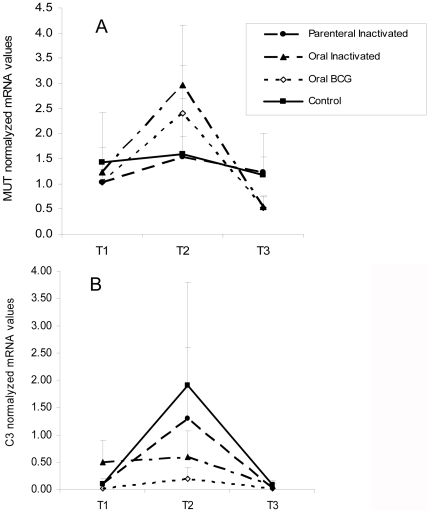
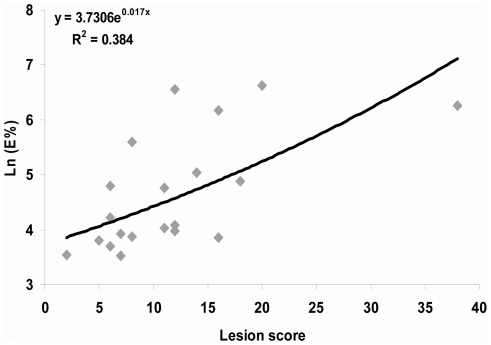
Tuberculosis (TB) caused by Mycobacterium bovis and closely related members of the Mycobacterium tuberculosis complex continues to affect humans and animals worldwide and its control requires vaccination of wildlife reservoir species such as Eurasian wild boar (Sus scrofa). Vaccination efforts for TB control in wildlife have been based primarily on oral live BCG formulations. However, this is the first report of the use of oral inactivated vaccines for controlling TB in wildlife. In this study, four groups of 5 wild boar each were vaccinated with inactivated M. bovis by the oral and intramuscular routes, vaccinated with oral BCG or left unvaccinated as controls. All groups were later challenged with a field strain of M. bovis. The results of the IFN-gamma response, serum antibody levels, M. bovis culture, TB lesion scores, and the expression of C3 and MUT genes were compared between these four groups. The results suggested that vaccination with heat-inactivated M. bovis or BCG protect wild boar from TB. These results also encouraged testing combinations of BCG and inactivated M. bovis to vaccinate wild boar against TB. Vaccine formulations using heat-inactivated M. bovis for TB control in wildlife would have the advantage of being environmentally safe and more stable under field conditions when compared to live BCG vaccines. The antibody response and MUT expression levels can help differentiating between vaccinated and infected wild boar and as correlates of protective response in vaccinated animals. These results suggest that vaccine studies in free-living wild boar are now possible to reveal the full potential of protecting against TB using oral M. bovis inactivated and BCG vaccines.
牛分枝杆菌和与其密切相关的结核分枝杆菌复合群引起的结核病继续影响全球的人类和动物,其控制需要对欧亚野猪(Sus scrofa)等野生动物储存宿主进行疫苗接种。针对野生动物结核病控制的疫苗接种工作主要基于口服活卡介苗制剂。然而,这是首次报道使用口服灭活疫苗来控制野生动物中的结核病。在这项研究中,每组 5 头野猪的 4 个组分别通过口服和肌肉内途径用灭活的牛分枝杆菌、口服卡介苗或不接种疫苗作为对照进行了疫苗接种。所有组随后都用一株田间分离的牛分枝杆菌进行了攻毒。比较了这 4 组之间的 IFN-γ反应、血清抗体水平、牛分枝杆菌培养、结核病病变评分以及 C3 和 MUT 基因的表达。结果表明,用热灭活的牛分枝杆菌或卡介苗接种可保护野猪免受结核病感染。这些结果还鼓励测试卡介苗和灭活牛分枝杆菌的组合来为野猪接种疫苗以预防结核病。与活卡介苗疫苗相比,用于野生动物结核病控制的热灭活牛分枝杆菌疫苗制剂在环境安全性和野外条件下的稳定性方面具有优势。抗体反应和 MUT 表达水平有助于区分接种和感染的野猪,并作为接种动物保护反应的相关指标。这些结果表明,现在可以对自由放养的野猪进行疫苗研究,以充分利用口服牛分枝杆菌灭活和卡介苗疫苗来预防结核病。