Department of Radiology, Breast and Imaging Center, Memorial Sloan Kettering Cancer Center, 300 E 66th St, Rm 705, New York, NY 10065, USA.
AJR Am J Roentgenol. 2011 Oct;197(4):897-906. doi: 10.2214/AJR.10.6330.
Nearly 25% of solid renal tumors are indolent cancer or benign and can be managed conservatively in selected patients. This prospective study was performed to determine whether preoperative IV microbubble contrast-enhanced ultrasound can be used to differentiate indolent and benign renal tumors from more aggressive clear cell carcinoma.
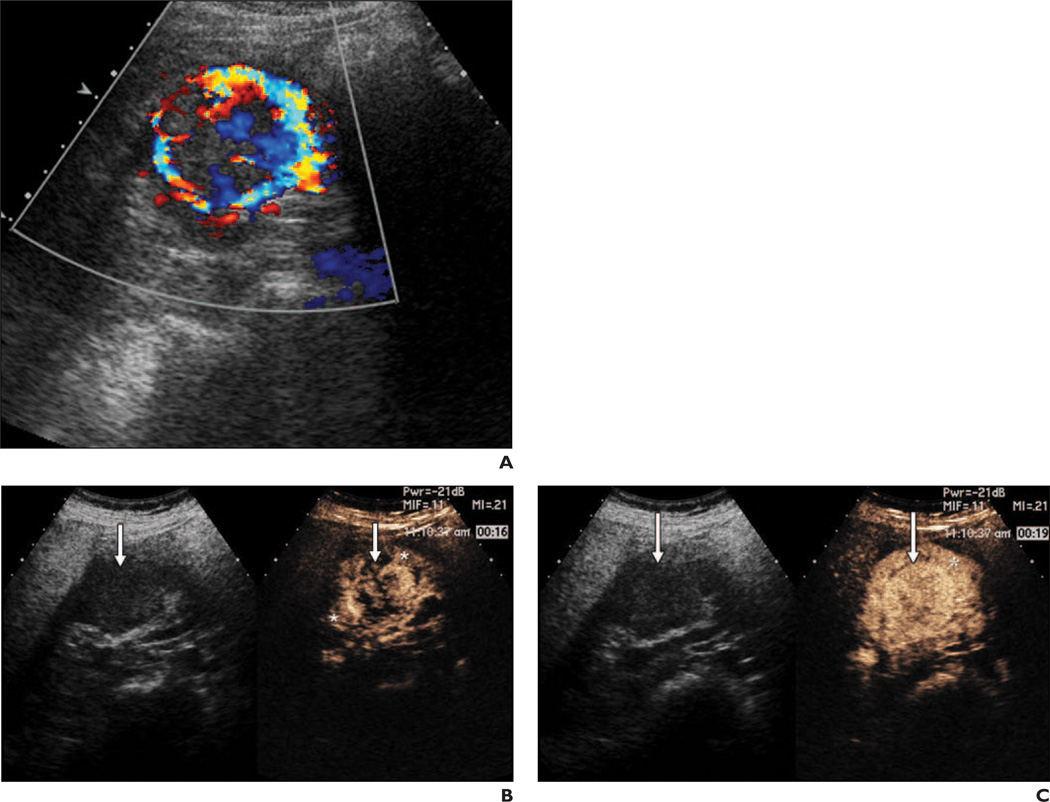
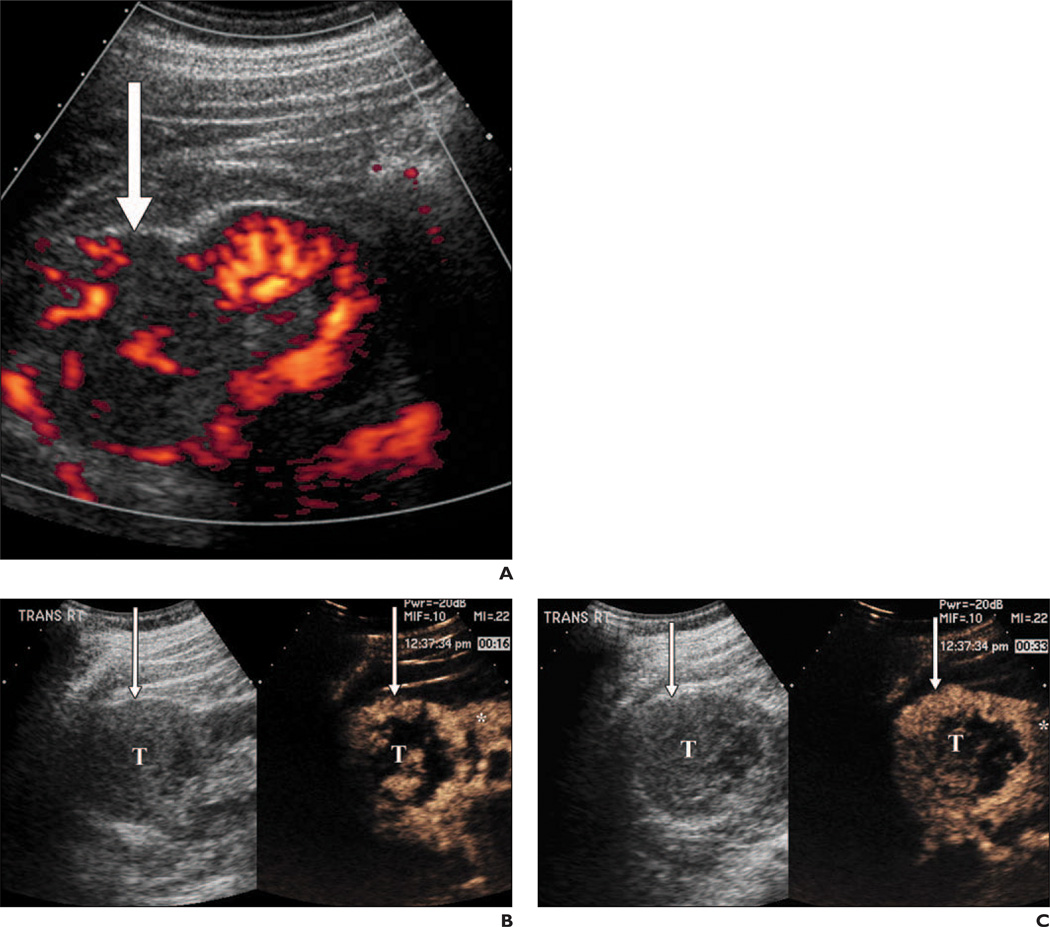
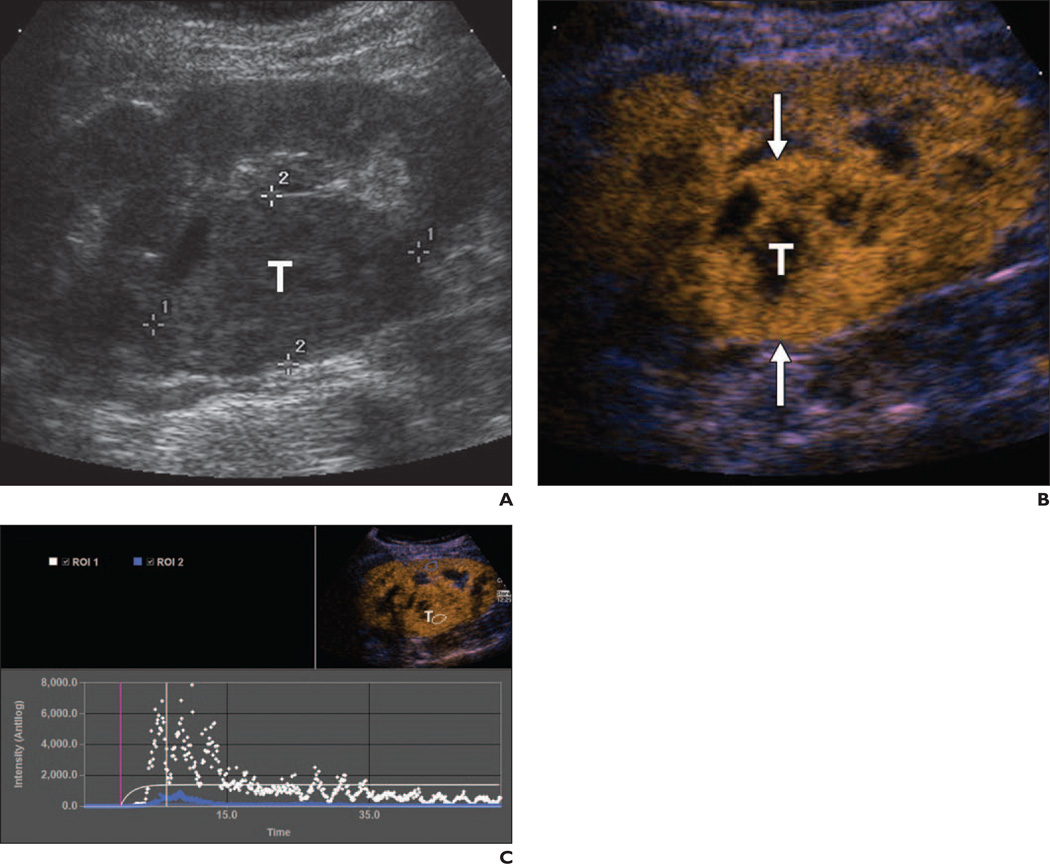
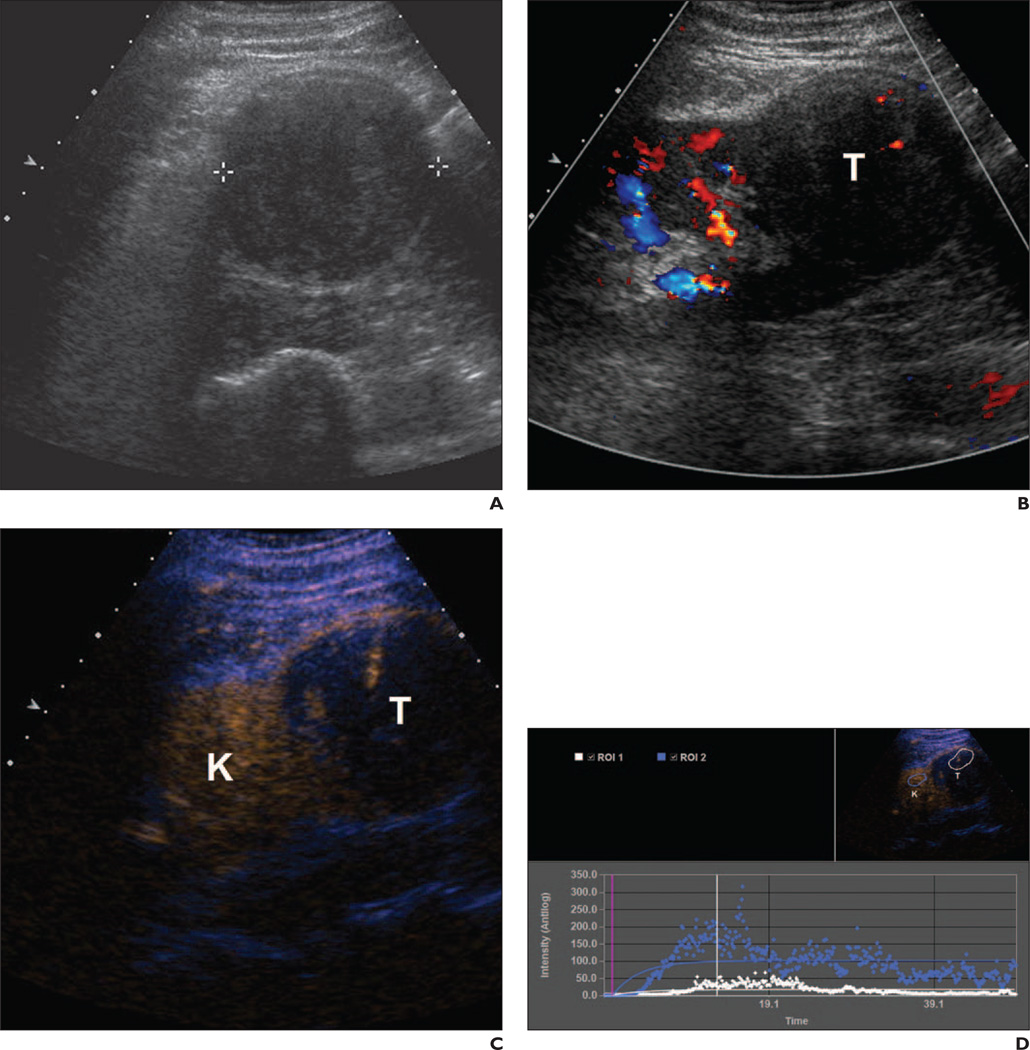
Thirty-four patients with renal tumors underwent preoperative gray-scale, color, power Doppler, and octafluoropropane microbubble IV contrast-enhanced ultrasound. Three blinded radiologists reading in consensus compared rate of contrast wash-in, grade and pattern of enhancement, and contrast washout compared with adjacent parenchyma. Contrast ultrasound findings were compared with surgical histopathologic findings for all patients.
The 34 patients had 23 clear cell carcinomas, three type 1 papillary carcinomas, one chromophobe carcinoma, one clear rare multilocular low-grade malignant tumor, two unclassified lesions, three oncocytomas, and one benign angiomyolipoma. The combination of heterogeneous lesion echotexture and delayed lesion washout had 85% positive predictive value, 43% negative predictive value, 48% sensitivity, and 82% specificity for predicting whether a lesion was conventional clear cell carcinoma or another tumor. Diminished lesion enhancement grade had 75% positive predictive value, 81% negative predictive value, 55% sensitivity, and 91% specificity for non-clear cell histologic features, either benign or low-grade malignant. Combining delayed washout with quantitative lesion peak intensity of at least 20% of kidney peak intensity had 91% positive predictive value, 40% negative predictive value, 63% sensitivity, and 80% specificity in the prediction of clear cell histologic features.
Ultrasound features of gray-scale heterogeneity, lesion washout, grade of contrast enhancement, and quantitative measure of peak intensity may be useful for differentiating clear cell carcinoma and non-clear cell renal tumors.
近 25%的肾脏实体肿瘤为惰性癌或良性肿瘤,在某些特定患者中可通过保守治疗进行管理。本前瞻性研究旨在确定术前 IV 微泡对比增强超声是否可用于区分惰性和良性肿瘤与侵袭性更强的透明细胞癌。
34 例患有肾脏肿瘤的患者接受了术前灰阶、彩色、能量多普勒和八氟丙烷微泡 IV 对比增强超声检查。3 位盲法读片的放射科医生进行一致性读片,比较对比剂增强的上升率、增强程度和模式以及与邻近实质的对比剂廓清。所有患者的对比超声结果均与手术病理结果进行比较。
34 例患者中包括 23 例透明细胞癌、3 例 1 型乳头状癌、1 例嫌色细胞癌、1 例透明罕见多房低度恶性肿瘤、2 例未分类病变、3 例嗜酸细胞瘤和 1 例良性血管平滑肌脂肪瘤。不均匀的病灶回声和延迟的病灶廓清相结合,对预测病灶是否为常规透明细胞癌或其他肿瘤具有 85%的阳性预测值、43%的阴性预测值、48%的敏感性和 82%的特异性。病变增强程度降低,对非透明细胞组织学特征(良性或低度恶性)具有 75%的阳性预测值、81%的阴性预测值、55%的敏感性和 91%的特异性。将延迟廓清与定量病变峰值强度至少为肾峰值强度的 20%相结合,对预测透明细胞组织学特征具有 91%的阳性预测值、40%的阴性预测值、63%的敏感性和 80%的特异性。
灰阶不均匀性、病灶廓清、增强程度和定量测量峰值强度的超声特征可能有助于区分透明细胞癌和非透明细胞肾肿瘤。